When you set an Australian custom joinery quote alongside a factory proposal from Foshan, the initial price gap can look extraordinary. A local quote might come in as an all-inclusive installed package, while a Chinese factory quotation often appears as a Free on Board (FOB) goods price that is a fraction of that number.
It is easy to treat that difference as instant cash savings. In practice, comparing a local contract directly to an overseas factory invoice compares two completely different delivery boundaries. A typical domestic joinery contract bundles site check-measures, pre-assembled rigid boxes, local transport, trimming around out-of-square walls, and on-site trade installation. An FOB quotation from China, by definition, covers manufactured goods delivered on board the vessel at the named port and cleared for export.
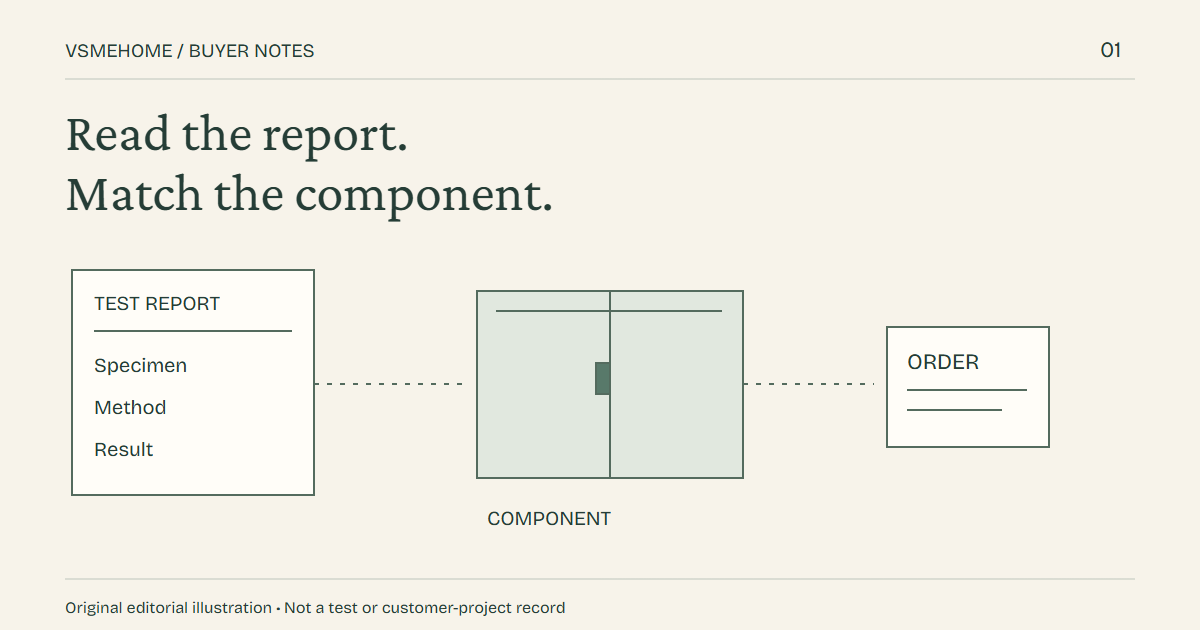
To evaluate whether sourcing from China makes genuine commercial sense for your project, you need to map every unpriced step between the overseas loading dock and your finished floors.
Where the Headline Comparison Breaks Down
Budget surprises rarely happen because factory fabrication costs were wrong. They happen because buyers assume the factory invoice makes up almost the entire final expense. When importing joinery to Australia, several cost categories sit entirely outside the factory price.
1. On-Site Trade Labor and Fitting
In Australia, joinery installation is an independent trade service. Local cabinetmakers generally incorporate site templating, leveling, filler adjustments, and scribing into their contract price. When you import cabinetry directly, you must organize your own carpenter or licensed joinery installer.
How the cabinets leave the factory fundamentally changes site labor hours. Pre-assembled (rigid) modules can be leveled, fixed to studs, and fitted relatively quickly. If cabinetry arrives in flat-pack (knock-down) format, every carcass must be built up on-site before installation begins. Ask the installer to price the actual assembly format, cabinet schedule and site conditions. Scribing panels, fillers, and kickboards around out-of-plumb plasterboard will also require experienced carpentry hours.
2. Ocean Logistics, Port Handling, and Cartage
Under FOB terms (for instance, FOB Nansha or FOB Shenzhen), the factory's contractual obligation ends once the container is loaded on board the vessel. Everything downstream is the buyer's cost and responsibility:
International Ocean Freight & Marine Cargo Insurance: Container booking or Less-than-Container Load (LCL) consolidation fees, plus transit risk coverage.
Australian Port & Terminal Charges: Wharf cartage, terminal handling charges (THC), electronic import documentation fees, and biosecurity clearance fees.
Customs Brokerage & Local Cartage: Engaging a licensed Australian customs broker to lodge import declarations, plus trucking the container from the terminal to the site or a de-stuffing depot. Sites without loading docks or forklift access typically require tail-lift delivery vehicles and manual unloading.
3. Border Clearance, Duties, and Taxes
Imported consignments require customs clearance and a budget for applicable duties and taxes. Obtain shipment-specific figures from your customs broker and compare local and imported offers on the same tax basis.
Under the China-Australia Free Trade Agreement (ChAFTA), qualifying goods can enter Australia at preferential tariff rates (often 0% duty). However, preferential treatment is not automatic. Your customs broker must receive valid proof of origin—such as an authorized ChAFTA Certificate of Origin or an origin declaration as permitted under the agreement rules—prior to border clearance. If the origin documentation does not satisfy border requirements, standard tariffs apply.
Additionally, import GST (10%) applies across the taxable importation value, which generally includes the customs value of the goods, international freight, insurance, and any applicable duties. For clear comparisons, both local and imported options should be evaluated on an identical GST-inclusive basis.
A Line-by-Line Quote Checklist
A factory quote and a local joinery quote only compare fairly once both cover the same scope. Instead of an invented example, put your two written quotes side by side and fill in every line below. Leave a line blank until someone has actually quoted it.
Cost Component
Local Joinery Quote
Direct Factory Supply
Where the Figure Comes From
Cabinetry package
Local cabinetmaker’s written quote
Factory quote. For reference, VSME’s published ranges are USD 3,000–8,000 FOB for a complete kitchen and USD 10,000–30,000 FOB for a whole-house package; orders start at USD 5,000.
Both quotes priced from the same drawings, board, door finish and hardware list
Export packing & crating
Usually not needed
Check whether packing is already in the FOB price before adding it
Factory quote
Ocean freight & cargo insurance
Not applicable
Quoted for your destination port
Freight forwarder
Port charges, brokerage, duty & biosecurity
Not applicable
Written estimate for the actual shipment
Customs broker
Local cartage & site delivery
Often included
From the container depot to your site
Local carrier
Site assembly & fitting
Usually included
Local installer quote. On-site installation is available worldwide on request, with fees quoted per project. Online video support for installation is also provided.
Installer or factory
Site adjustment reserve
Builder’s allowance
A small reserve for trims, fillers and spare hardware
Your own budget
GST
Added to the local invoice
Assessed at import
Customs broker or tax adviser
Production time
Local workshop schedule
VSME: about 45–55 days after payments reach 50% of the order value, plus sea freight and clearance
Written quotes
Add up each column only when every line carries a real figure. The gap between two headline prices usually narrows once freight, clearance, delivery, fitting and tax are added on the import side, so decide on the completed totals, not on the cabinetry line alone.
Comparing Like with Like: Materials and Hardware
When reviewing quotes from different suppliers, confirm the exact technical parameters rather than generic marketing descriptions:
Board Substrate and Formaldehyde Classification: Verify whether carcases are built from multi-layer plywood, MDF, or moisture-resistant particleboard. Panel emission grades and destination-market documentation should be checked separately from moisture resistance. If your project documentation calls for specific Australian/New Zealand building standards (AS/NZS), confirm compliance test evidence with the manufacturer beforehand.
Functional Hardware Specifications: A quote specifying "soft-close drawer slides" could mean genuine Austrian Blum hardware, or an entry-level unbranded mechanism. Sourcing Austrian Blum through verified channels, or the domestic alternative actually offered in the quotation, will noticeably influence the quote. Make sure hardware brands and models are stated in writing on each proposal.
Edge-Banding and Moisture Protection: The durability of joinery in wet areas—such as beneath kitchen sinks or around bathroom vanities—depends heavily on edge-banding adhesion and cut-out sealing. Confirm that cut-outs for plumbing and appliance venting are properly sealed.
Making the Practical Choice
Sourcing direct from an overseas manufacturer is not the right fit for every situation. For a standalone laundry, a replacement run of cabinet doors, or a project with urgent site deadlines, the fixed logistics overhead, documentation effort, and shipping lead times will often outweigh the unit savings. In those cases, a local cabinetmaker is the practical choice.
However, for a full home build or large renovation combining a custom kitchen, pantry, walk-in wardrobes, and multiple vanities, factory-direct sourcing can deliver significant design freedom, material upgrades, and financial leverage—as long as you account for the unpriced gap from the start.
If you have floor plans or a local joinery schedule you want to compare, contact our design team with your layout and finish preferences to receive an itemized factory quotation and clear specification schedule.
We use cookies to offer you a better browsing experience, analyze site traffic and personalize content. By using this site, you agree to our use of cookies. Privacy Policy