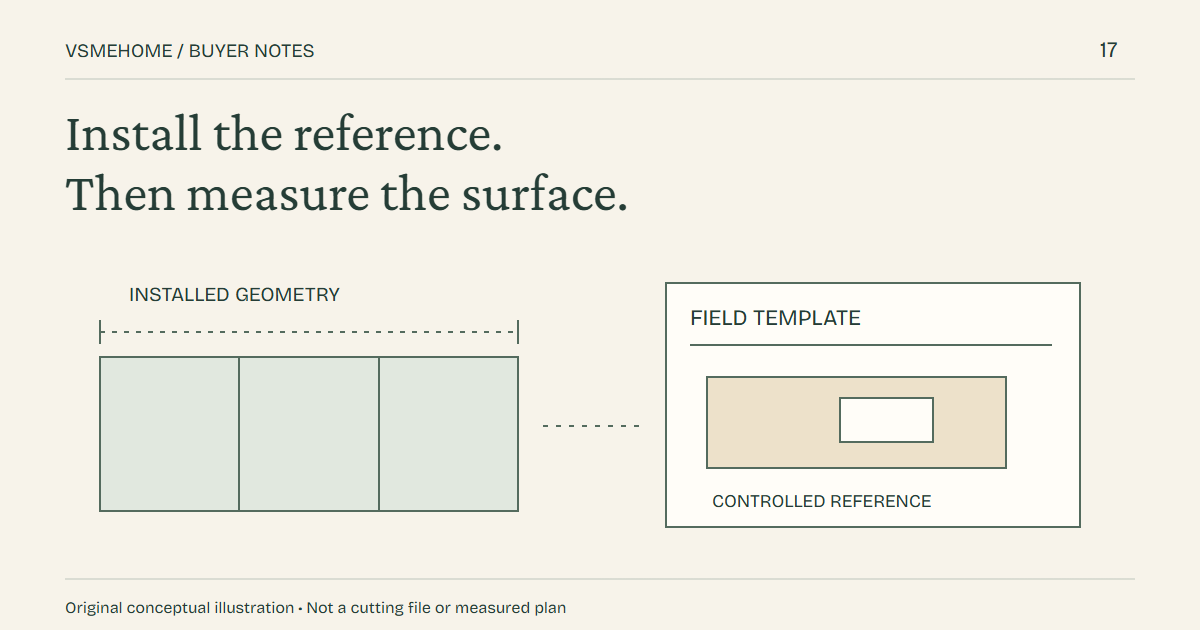
A salt-spray test result can help you check a cabinet component's corrosion evidence, but it cannot tell you how many years a finished kitchen will last beside the sea. Before accepting a report, match the tested specimen, surface treatment, test method and acceptance criterion to the exact component being quoted. Then review whether the complete cabinet and its maintenance requirements suit the intended room.
This buyer guide focuses on interpreting test evidence, not choosing a universal winning material. Use it when comparing metal cabinet bodies, hinges, runners, mounting plates or other fittings for a humid or coastal project. Source information was reviewed on 5 September 2026.
What does a salt-spray report actually establish?
Start with the scope of the named test method. The public abstract for ISO 9227:2022 describes artificial-atmosphere corrosion procedures. It does not set the exposure duration or interpretation needed for every product. The abstract also warns against using these methods to rank different materials against each other or predict their long-term corrosion resistance.
For a buyer, the implication is practical: “tested to ISO 9227” is not a complete acceptance specification. Ask which procedure was used, which part was tested, how the result was assessed and which product requirement the result is meant to satisfy. A report may be useful evidence without being a finished-cabinet certificate or an outdoor-use warranty.
Read the report as a chain of identities
Item to match
Question to resolve
What to retain with the order
Quoted component
Which cabinet part, hinge model, runner or mounting plate does this report concern?
Manufacturer, exact article number and order-line reference.
Test specimen
Was the tested item the finished fitting, a coated panel or another sample?
Report specimen description and photographs where available.
Surface condition
Does the quoted finish match the tested treatment?
Finish code and the supplier's explanation of any difference.
Method and exposure
Which standard, procedure and duration were applied?
The report's exact references, not a shortened sales description.
Acceptance criterion
What counted as an acceptable or unacceptable result?
The stated assessment and relevant product specification.
Order applicability
How is the offered component connected to the tested product?
A written applicability statement and unresolved exceptions.
This is a proposed purchasing record, not a claim that every supplier uses the same reporting system. If the identification chain breaks, ask for clarification before treating the report as evidence for your order. A company name on the cover alone does not identify the fitting inside your cabinet.
Why the number of hours is not a league table
Two current manufacturer pages show why abbreviated comparisons can mislead. Blum's BCOR overview describes 48 hours of neutral salt spray and 24 hours of acetic-acid salt spray testing for its special finish. It also explains that some hinge models are offered with standard or BCOR finishes.
The page for Hettich Veosys article 9289592 lists stainless-steel construction and 120 hours of neutral salt spray with a DIN EN 1670 reference. It also identifies mounting and door requirements for that particular hinge.
These are examples of product-specific documentation, not a recommendation to substitute one fitting for the other. Different procedures, materials, finishes and assessment requirements are involved. Adding test hours together or selecting the largest number would discard the information needed to judge the intended application.
Neither example establishes that VSME supplies that exact fitting as standard. If a named product is requested, its availability and complete specification must be confirmed in the quotation.
A tested hinge is not a tested cabinet assembly
Keep the evidence attached to the component it describes. If the report covers a hinge, record separate questions for mounting plates, screws, runners, shelf supports, cabinet-body construction and exposed finishes. Do not extend one component result to every material in the room.
Similarly, a coating quality label has its own scope. QUALICOAT's specifications page describes requirements for coating operations, materials and finished products in architectural applications. A reference to that system is a reason to check the relevant product and approval scope, not a shortcut to declaring an entire kitchen certified.
For the broader material decision, see our cabinet materials-by-exposure guide. That article covers substrate, metal grade, edges, joints and room conditions; this page supplies the report-reading checklist.
Describe the actual coastal exposure
“Near the sea” is not a complete project brief. IMOA's coastal selection guidance explains that wind, surf, terrain and other local conditions affect salt exposure. An enclosed indoor kitchen and cabinetry exposed to outdoor spray therefore need separate descriptions.
Tell the supplier where the cabinet will be installed, whether openings expose it to salt-laden air, how wet areas are used and how accessible the fittings will be for cleaning and replacement. Ask for the product's stated application limits and maintenance guidance. Where suitability remains uncertain, request an assessment from the relevant component manufacturer or a qualified project specifier.
Turn unclear evidence into a specific question
Instead of asking “Is it rustproof?”, send a request such as: “Please identify the test evidence applicable to the hinge, mounting plate and finish on this quotation line. Confirm the tested product reference, test procedure, reported result and application limitations. List any components that are not covered by that evidence.”
Can a test duration be converted into years beside the sea?
No direct conversion is established by the cited salt-spray method. Keep laboratory exposure, field suitability and warranty duration as separate questions.
Does a hardware brand name identify its corrosion treatment?
Not necessarily. Specify the exact model and finish, then check the relevant documentation. A treatment available on one version should not be assumed for another.
Should I reject every order without a complete cabinet salt-spray report?
Do not apply an arbitrary document rule to every room. Agree what evidence is relevant to the proposed components and environment, identify gaps, and obtain specialist clarification where required. The objective is evidence that fits the purchase, not the largest pile of certificates.
We use cookies to offer you a better browsing experience, analyze site traffic and personalize content. By using this site, you agree to our use of cookies. Privacy Policy