Short answer: before you pay a deposit to a cabinet factory in China, check four things separately: (1) the company you sign with and pay is a real registered business, (2) it runs a factory that actually makes your kind of product, (3) the samples, drawings and materials match what you are buying, and (4) your own order is inspected before the balance is paid. No single certificate, video or website proves all four.
Each layer answers a different question, so a pass on one does not cover the others. A genuine business licence says nothing about workmanship, and an impressive factory tour says nothing about whether your kitchen will match the approved drawing. The checklist below shows what to ask for at each step and what should make you pause.
Layer 1: Is the company you are paying a real, registered business?
Ask for the supplier's business licence and check that one company name appears consistently on the quotation, the contract, the invoice and the bank account you are asked to pay.
Check the registration. Chinese companies are listed on the National Enterprise Credit Information Publicity System (gsxt.gov.cn). The site is in Chinese and can be slow from overseas; a Chinese-speaking colleague or an inspection company can do the lookup. Note the Chinese legal name, the 18-character unified social credit code and the registered address.
Check who receives the money. The beneficiary of the bank transfer should be the same company that signs the contract. If a separate export company or a personal account is involved, ask for a written explanation before paying.
Check marketplace records. If the supplier sells on Alibaba.com or Made-in-China, compare the company name and address on the store's profile with the licence.
What this proves: the business exists legally. What it does not prove: that it owns a factory or can make your cabinets.
Layer 2: Does it run a factory that makes your kind of product?
Many suppliers are trading companies, which is not wrong in itself, but you should know which one you are dealing with. See factory-direct, trading company or sourcing agent for how the routes compare.
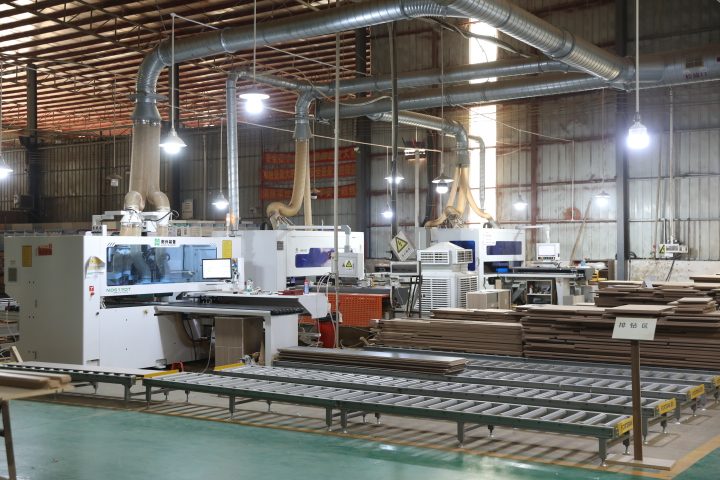
Visit or have someone visit. A visit, or a third-party factory audit, should show panel cutting, edge banding, drilling, finishing and assembly areas relevant to your order, not just a showroom.
Ask for a live video walk-through rather than a pre-recorded video, and ask to see a cabinet order like yours in production.
Compare the address. The factory you are shown should match the address on the licence or a documented production site.
Layer 3: Do the samples, drawings and materials match what you are buying?
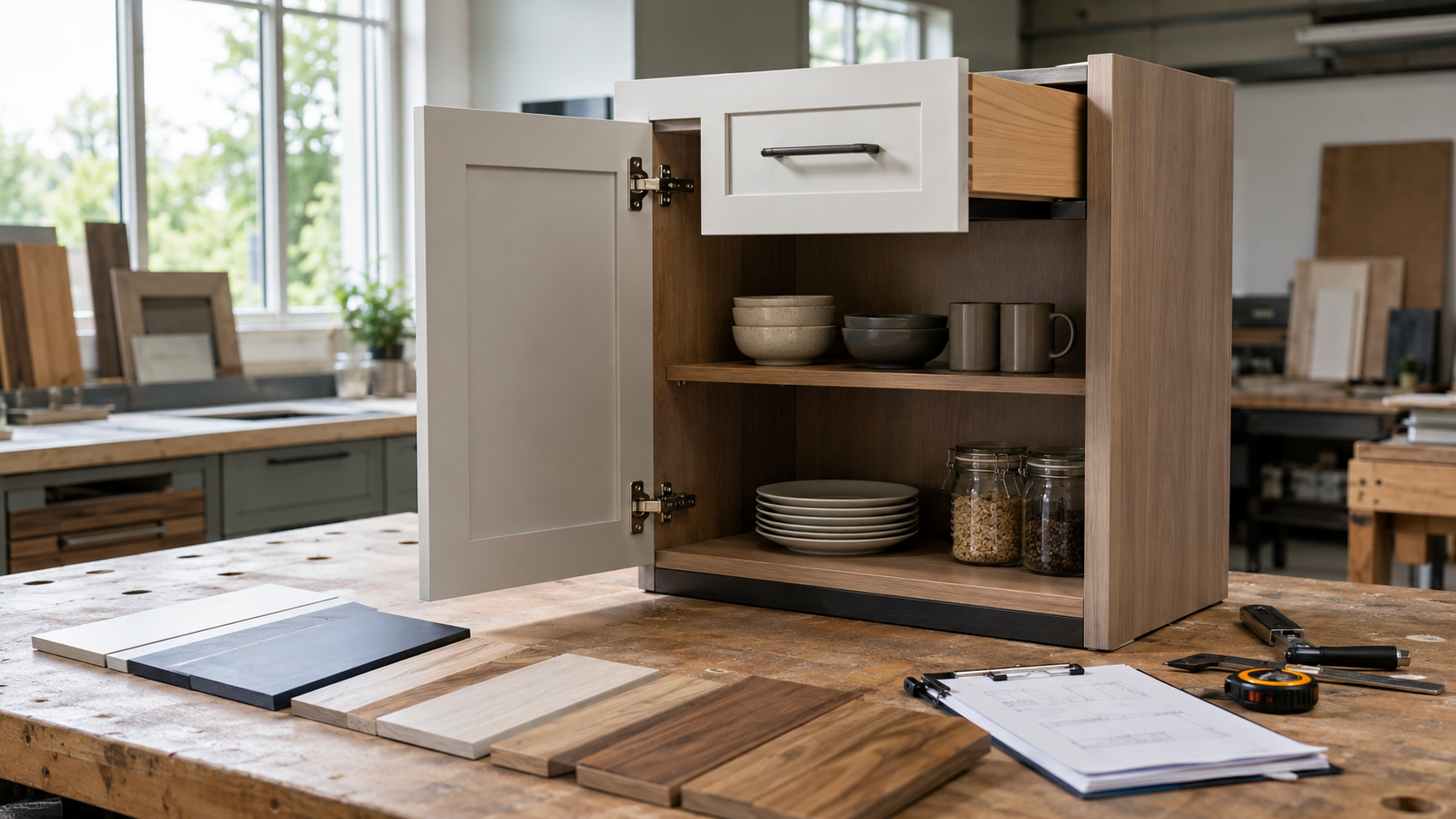
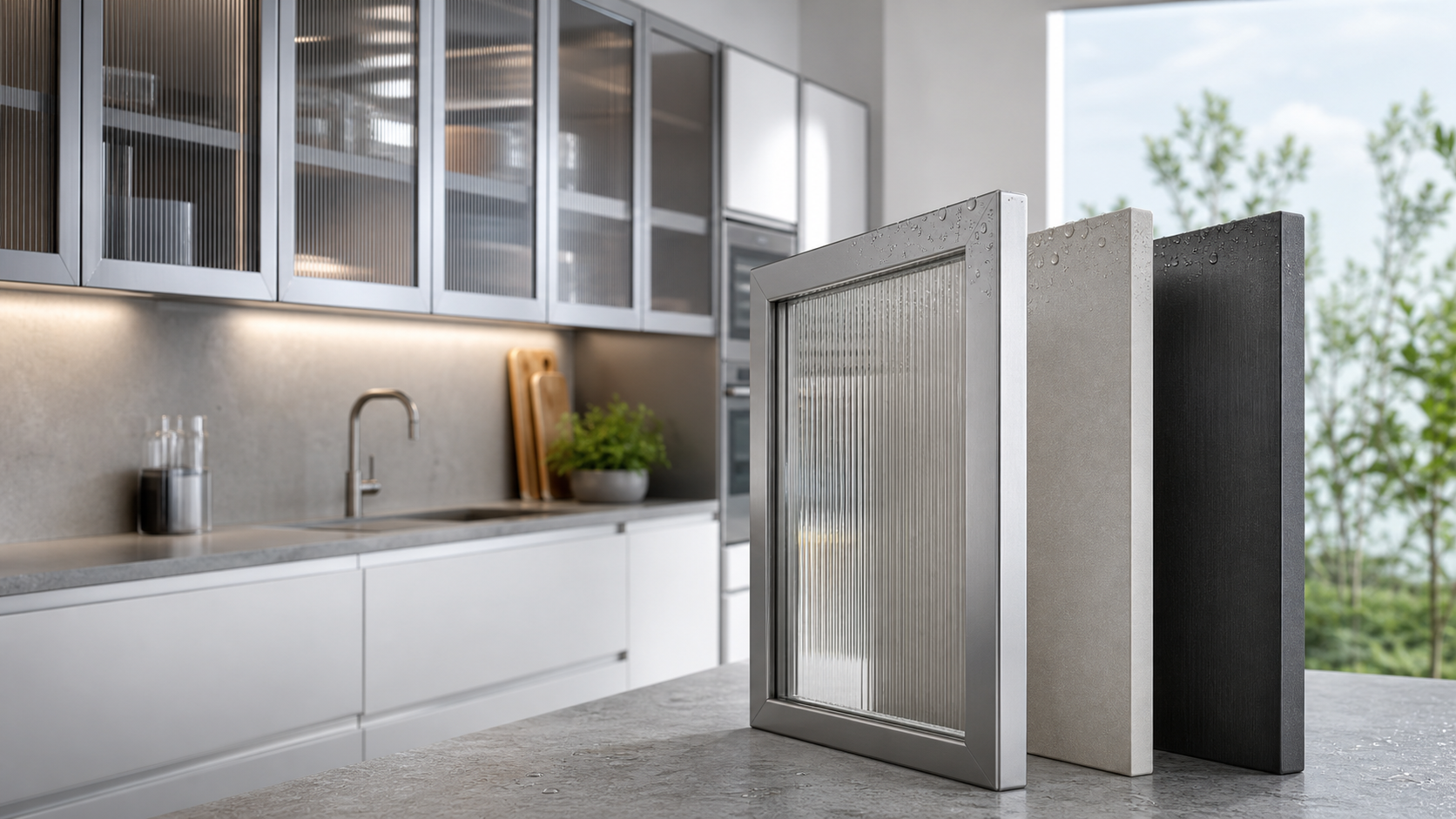
Keep an approved sample set. Door finish, carcass board, edge banding and handle samples should carry codes that also appear on the drawings and the quotation.
Name the hardware. The quote should list the hinge and runner brand and model (for example Blum, Hettich or a named Chinese brand), not "equivalent quality".
Check certificates at the source. A board or formaldehyde certificate should name the producer and product, and ideally be checkable with the body that issued it. A certificate for one board supplier does not cover every material in your order.
Agree that changes need your approval. Any substitution of finish, board or hardware should be put to you in writing before production, not discovered on arrival.
Layer 4: Is your own order checked before the balance is paid?
A capable factory can still ship an order with mistakes. Arrange a pre-shipment check of your goods against the approved drawings: quantity, dimensions, finish, hardware operation, labelling and packing. You can do this yourself on a visit, ask for detailed photos and measurements tied to cabinet numbers, or hire an independent inspection company (QIMA, SGS and Bureau Veritas are well-known examples). Pay the balance only once the inspection result is acceptable. See the four factory checks before custom cabinets are packed.
Deposit checklist
Question
Evidence to ask for
Pause if…
Is the company registered?
Business licence; registration record
Names differ between licence, contract and invoice
Who receives the money?
Bank details on company letterhead
Payment to a personal or unrelated account
Is there a real factory?
Visit, live video walk-through or third-party audit
Only a showroom or stock footage is offered
Does the product match?
Coded samples, drawings, named hardware
"Equivalent" materials or hardware without names
Will your order be checked?
Agreed inspection before balance payment
Full payment demanded before any inspection
Working with VSME
VSME is the cabinetry brand of Foshan Moyisi Home Furnishings Co., Ltd. (佛山摩一斯家居有限公司), Lecong, Shunde District, Foshan. You are welcome to ask for photo updates while your order is in production and to send an inspector before you pay the balance. Our company facts page lists our address, factory, minimum order and lead time, and our price guide shows the ranges we quote against.
Planning an order?
Tell us your rooms and wall dimensions, or send your floor plan on WhatsApp. We reply with an itemised quote, and you are welcome to ask for production photos or send an inspector before the balance payment.
Does a Chinese business licence prove the supplier owns a factory?
No. It proves the company is registered. Factory ownership, location and capability need a visit, a live walk-through or an audit.
Is a factory video enough?
Not on its own. A pre-recorded video can be selective or borrowed. A live walk-through, where you choose what to look at, is far more useful.
Can one certificate prove the whole cabinet is compliant?
Usually not. Check who holds the certificate, which product it covers, and whether that material is actually used in your order.
What is the difference between a factory audit and a pre-shipment inspection?
An audit looks at the supplier and the facility. An inspection checks your actual goods against your approved drawings. Most single-home buyers benefit most from the inspection.
We use cookies to offer you a better browsing experience, analyze site traffic and personalize content. By using this site, you agree to our use of cookies. Privacy Policy