When custom cabinets run into issues after a few years of daily use, the entire room is rarely at fault. Damage tends to concentrate in predictable spots: beneath the kitchen sink where minor plumbing drips sit quietly on raw board, beside dishwashers and built-in ovens where warmth and vapor test edge adhesives, and in coastal or humid rooms where damp air attacks panel cores and metal fittings.
Marketing descriptions often rely on broad promises like "fully waterproof" or "commercial durability." In real joinery manufacturing, no single wood panel or finish is universally impervious to every condition. The practical way to specify cabinetry is to match the carcass substrate, edge treatment, exterior finish, and hardware to how each section of the room is actually used.
The Sink Base: Standing Drips and Service Cutouts
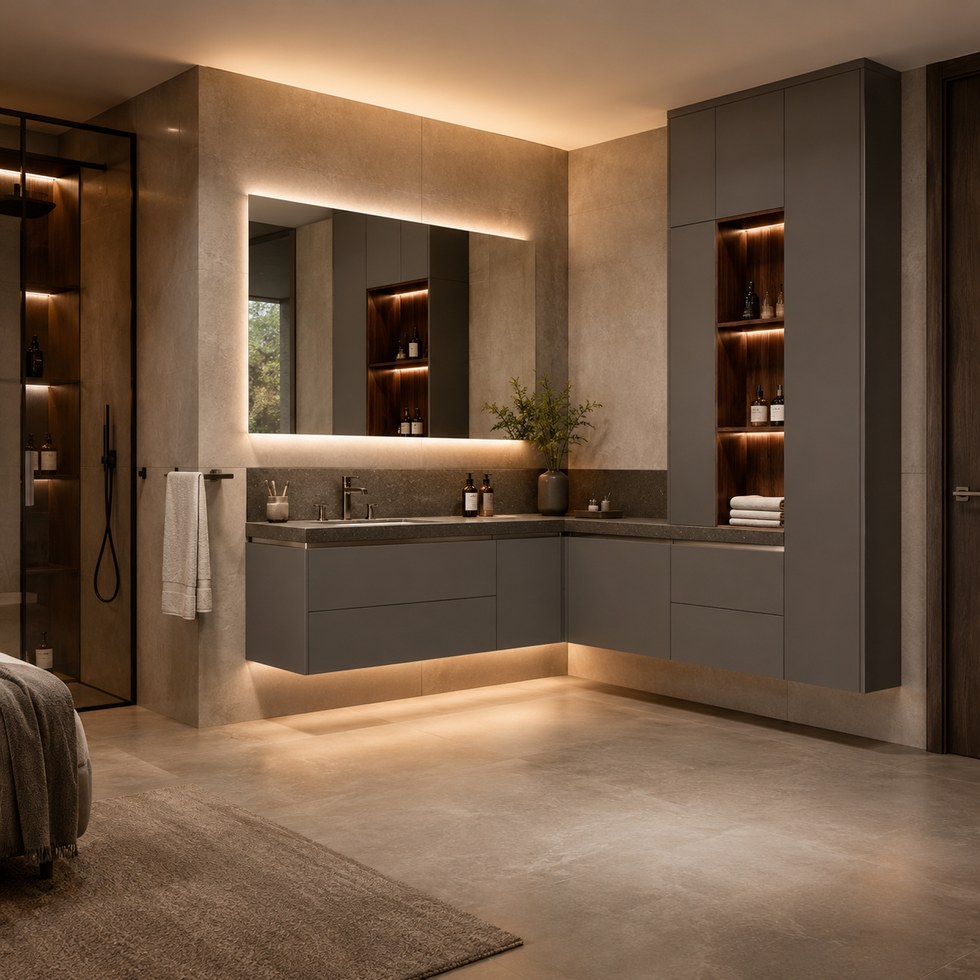
The cabinet box beneath a sink or vanity basin faces a combination of pipe condensation, slow valve drips, and cleaning spills. Standard particleboard is particularly vulnerable here: once standing water finds an open seam or an unsealed cutout, the wood core swells and permanently loses structural integrity.
Practical options for reinforcing this cabinet include:
Multi-Layer Plywood Carcass: Compare the actual plywood grade, moisture rating, thickness and joint details with the moisture-resistant board offered for the same cabinet.
Internal Metal Protection: Lining the cabinet floor with a folded stainless steel tray or protective sheet provides a clean, non-absorbent barrier that keeps occasional leaks from resting directly on the wood-based bottom shelf.
Plumbing Cutout Sealing: Factory or on-site cutouts made for drain pipes, water filter lines, and angle valves are where water damage typically begins. Require that every drilled hole and rough-cut edge be fully sealed with a sealing method suitable for the actual panel and installation during installation.
Appliance Flanks: Steam Cycles and Thermal Dissipation
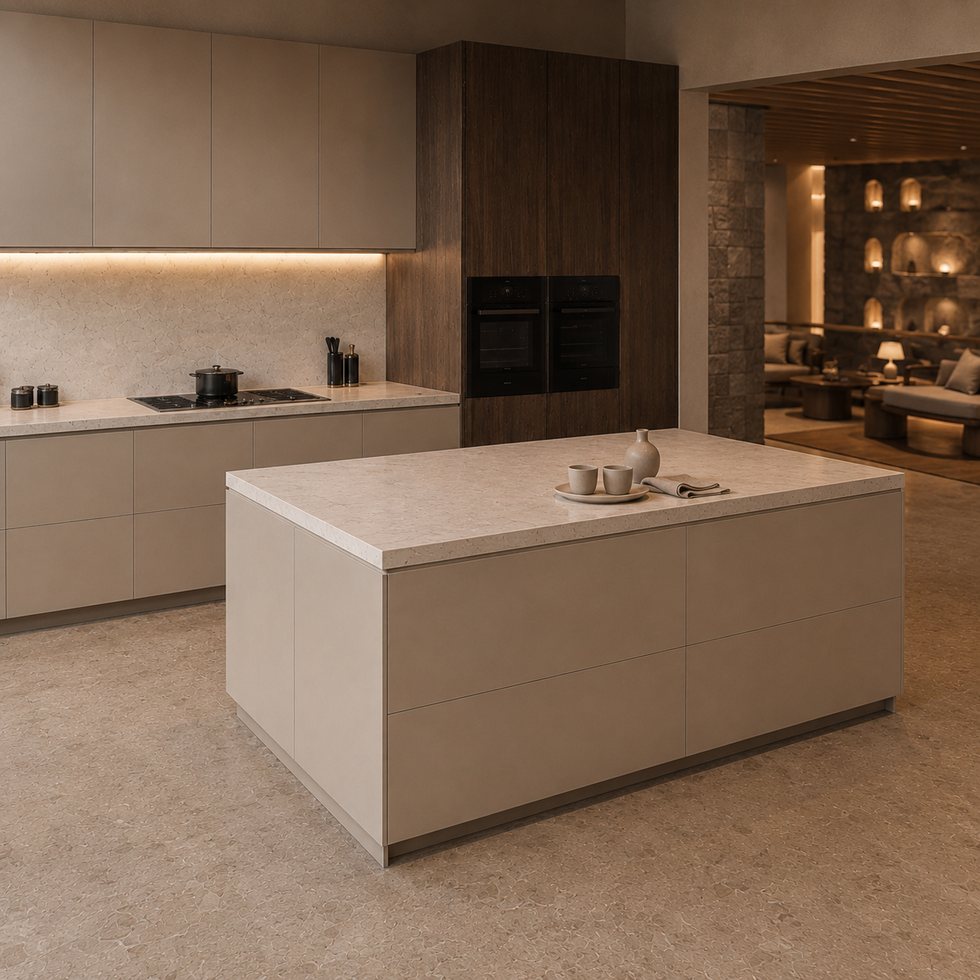
Cabinets flanking dishwashers and built-in ovens endure regular heat and moisture cycles that dry rooms never experience.
Dishwasher Edges: When a dishwasher door cracks open at the end of a cycle, hot steam escapes against the flanking cabinet gables and the underside of the countertop. Standard EVA hot-melt adhesives can soften under repeated exposure to damp heat. Ask how the offered edge treatment is intended to handle the appliance exposure.
Protective Deflector Strips: Installing steam deflector shields or moisture barriers under the stone overhang directly above the dishwasher protects the cabinet edges from direct vapor plumes.
Built-In Oven Ventilation: Built-in wall ovens generate substantial exterior heat. Always follow the specific appliance manufacturer's technical installation manual regarding minimum rear chimney depths and cutouts. Relying on generic assumptions rather than appliance-specific ventilation specs risks trapping heat, which can yellow or delaminate adjacent decorative surface foils.
Coastal Homes and Humid Climates: Moisture and Hardware Selection
In beachfront properties or consistently humid regions, joinery faces airborne moisture and salt air. In these environments, hardware is usually the earliest indicator of material fatigue.
Hardware Quality and Plating: Salt exposure makes the actual hardware finish and maintenance requirements important. For seaside installations, specify high-grade hardware with documented corrosion performance for the selected model or stainless steel hardware lines built to withstand humid air.
Core Substrates: For humid rooms, compare the specified board grade, moisture suitability and edge details; the word plywood alone does not establish performance.
Alfresco and Outdoor Areas: For outdoor kitchen islands or balconies directly open to weather, wood-based panels should generally be replaced with architectural aluminum structures, sintered stone worktops, or stainless steel cabinetry.
Carcass and Finish Quick Reference
Application Zone
Recommended Carcass & Detailing
Key Functional Advantage
Sink Base & Wet Utility
Multi-layer plywood; optional stainless steel base liner; all pipe penetrations sealed
Protects core from standing drainage puddles; maintains fastener grip under sink loads.
Dishwasher & Built-in Oven Runs
PUR-banded plywood or moisture-resistant board; manufacturer-specified appliance ventilation channels
Addresses appliance exposure when matched to the specified materials and installation.
Dry Storage (Wardrobes & TV Walls)
Plywood or high-density MDF paired with PET, cured lacquer, or wood veneer
Excellent panel flatness and surface quality; highly economical in climate-controlled spaces.
Coastal / High Humidity Spaces
Multi-layer plywood or metal sub-structures; certified corrosion-resistant hardware
Select materials and fittings for the actual exposure and maintenance plan.
Emissions Standards Do Not Mean Water Resistance
A common misunderstanding among international buyers is assuming that boards marketed as "ENF grade" or "E0 grade" are inherently waterproof. They are not.
Formaldehyde classifications such as ENF and E0 represent indoor air emission tiers under China's GB/T 39600 standard. They measure off-gassing and indoor air quality, not how a board behaves when soaked with water. Furthermore, Chinese emission classifications are not automatic legal substitutes for destination-market standards, such as US EPA TSCA Title VI / CARB regulations or European indoor air requirements.
When putting your project specification together, separate the two criteria:
Environmental Compliance: Specify appropriate indoor formaldehyde limits based on your destination country's building regulations and personal air-quality preferences.
Moisture & Mechanical Performance: Specify the physical core (e.g., multi-layer plywood vs. particleboard), adhesive chemistry (PUR edge banding vs. standard EVA), and wet-area detailing (protective trays, sealed cutouts).
Budgeting for Targeted Material Upgrades
Specifying higher-performance materials where they matter does not require upgrading an entire joinery order to commercial-grade metal or bespoke finishes. Because custom orders allow modular specification, you can allocate durable materials to high-wear spots while using practical, cost-effective options in dry areas.
For early planning, our published price references give the following indicative linear metre tiers (FOB; checked 25 October 2026):
Budget Tier (USD 50–90 / linear metre): Moisture-resistant particleboard or plywood carcass with melamine or PVC foil door fronts. Suitable for secondary storage, laundry runs, or rental fit-outs.
Mainstream Tier (USD 80–140 / linear metre): Multi-layer plywood carcass with matte PET or durable soft-touch surfaces. An ideal balance of moisture durability and cost for family kitchens.
Premium Tier (USD 110–170 / linear metre): Multi-layer plywood paired with multi-coat cured lacquer.
Select Tier (USD 140–200+ / linear metre): Plywood carcass paired with book-matched natural wood veneer, architectural metal accents, or specialty finishes.
For full custom kitchens, overall FOB costs typically range between USD 3,000 and USD 8,000 depending on final dimensions, drawer counts, and internal pull-outs. Request a separate price for any sink-base upgrade so its cost can be weighed against the rest of the kitchen.
Frequently Asked Questions
Can I use moisture-resistant particleboard across the entire kitchen?
Moisture-resistant particleboard is widely used in residential kitchens and performs well in general base and wall runs when all faces and cutouts are sealed. However, for high-risk zones like the sink base, upgrading that specific cabinet to multi-layer plywood or adding a protective drip tray offers significant extra peace of mind against unspotted leaks.
What makes PUR edge banding different from standard EVA glue?
EVA is a thermoplastic adhesive that can soften if subjected to high steam and heat, such as right next to a dishwasher seal. PUR adhesives cure differently from EVA; compare the specified adhesive and the finished edge system rather than treating either name as a guarantee.
What details should be included in the drawing sign-off for wet cabinets?
Make sure your approved shop drawings clearly confirm: (1) the core board and edge-banding type for panels flanking appliances; (2) sink-base protection preferences; (3) cutout sealing instructions; and (4) specific hardware brands and models for the selected supplier quotation to match your room's environmental exposure.
If you have architectural plans, floor dimensions, or appliance cutouts ready, visit our contact page to send over your project drawings. Our design team will help you configure practical substrates, edge treatments, and hardware tailored to your home's layout and climate.
Related guide: Who we are, our minimum order and lead time: VSME company facts.
We use cookies to offer you a better browsing experience, analyze site traffic and personalize content. By using this site, you agree to our use of cookies. Privacy Policy