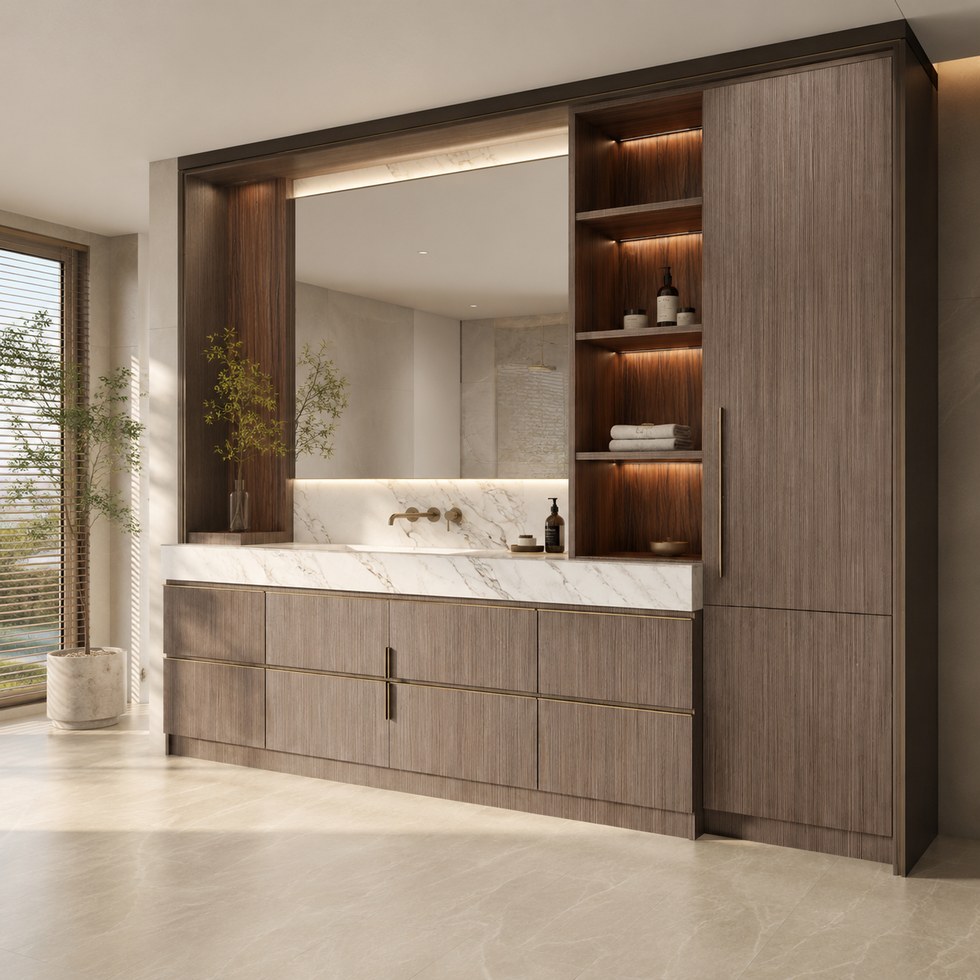
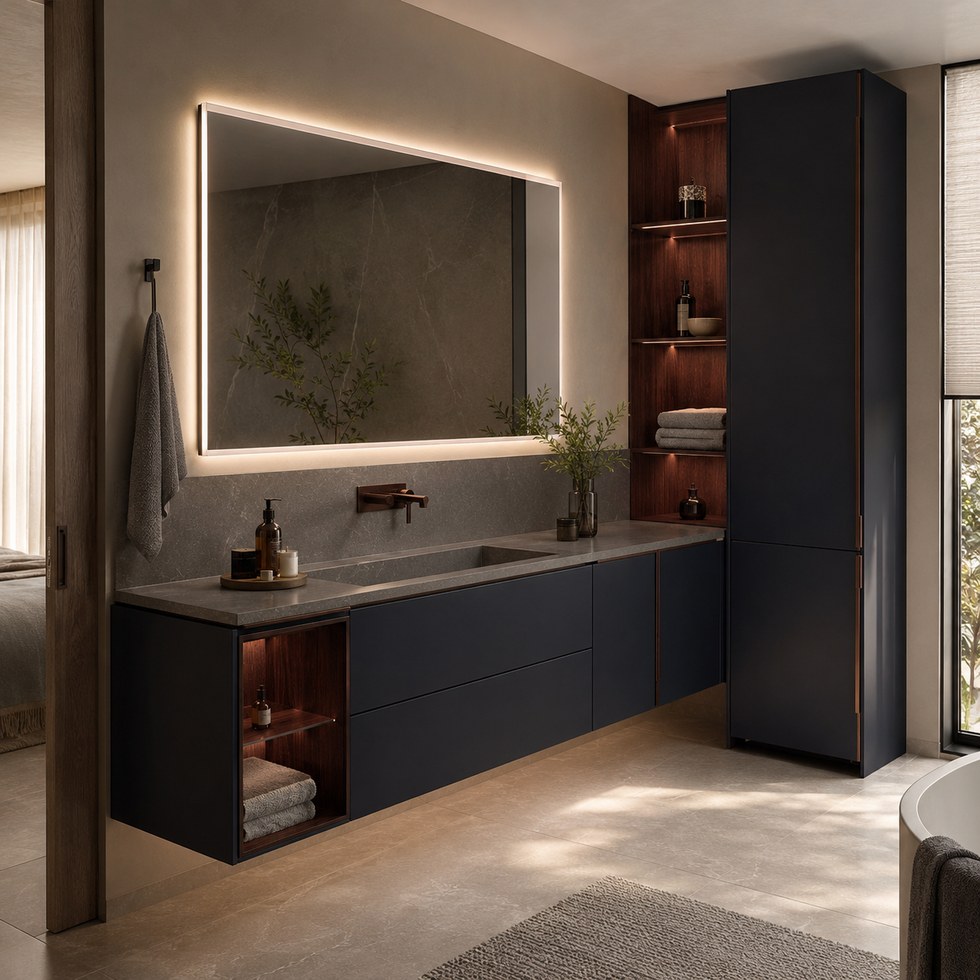
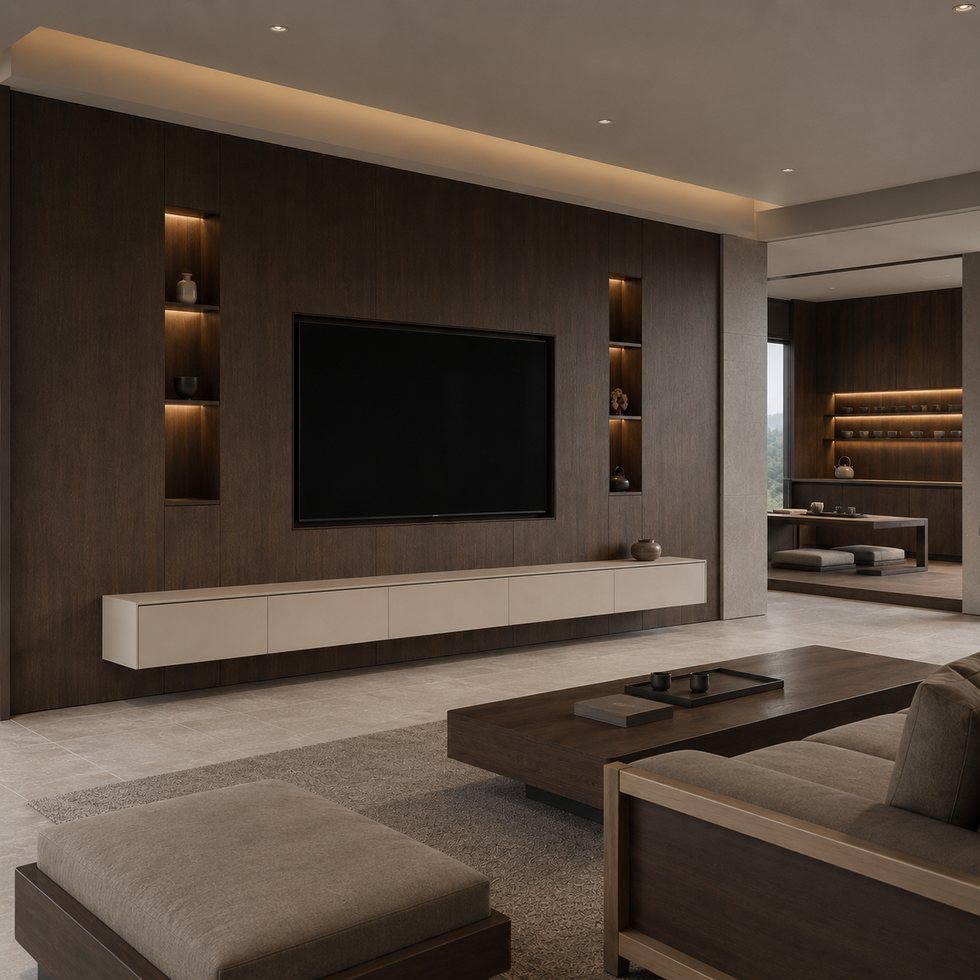
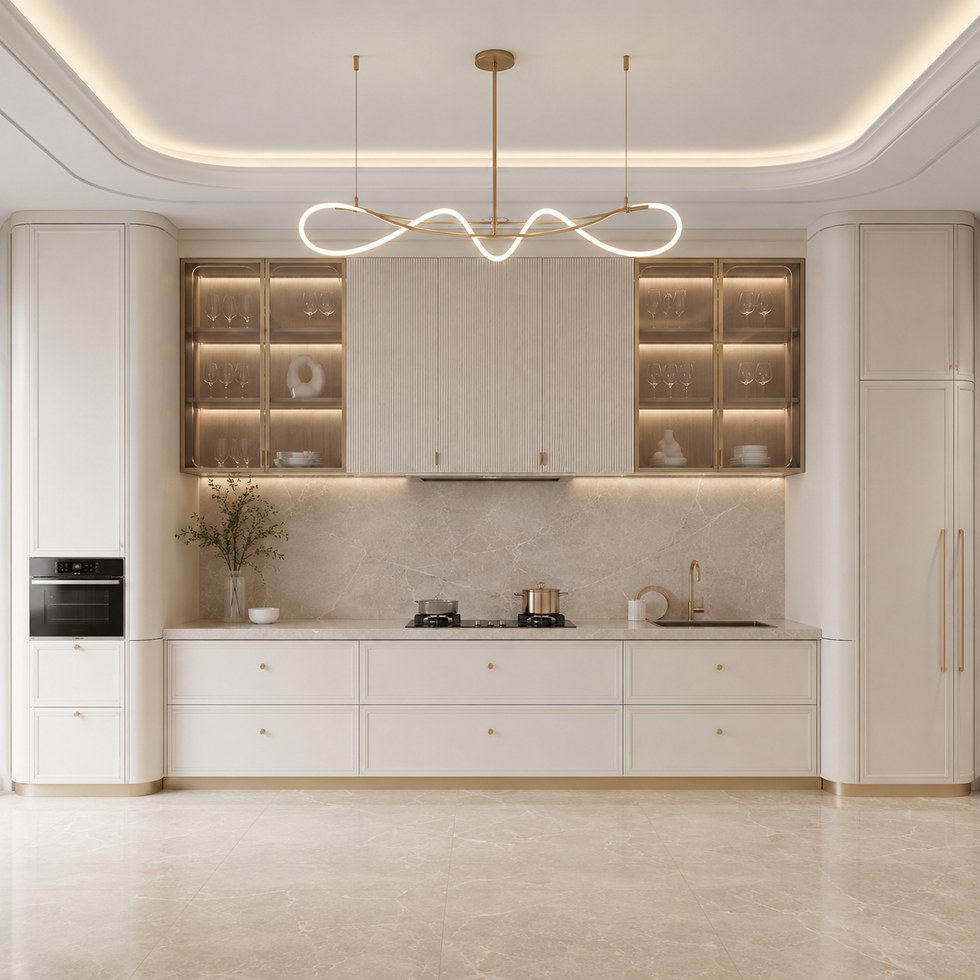
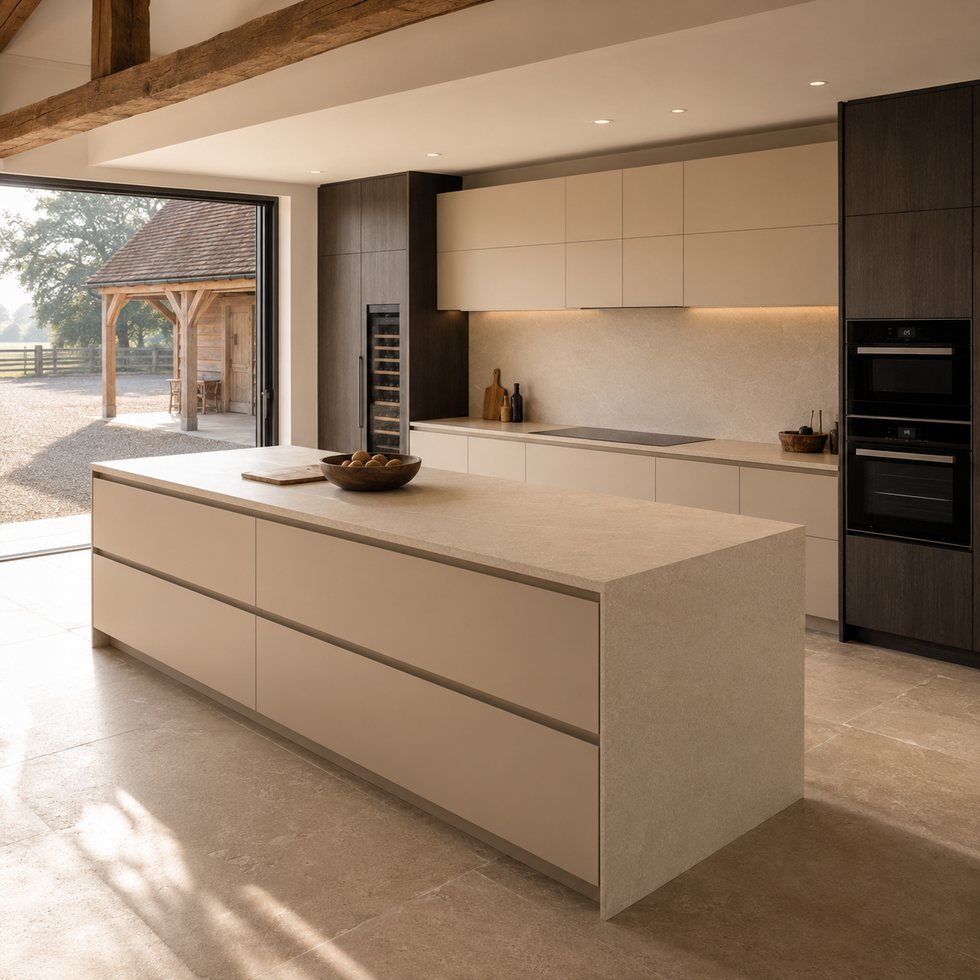
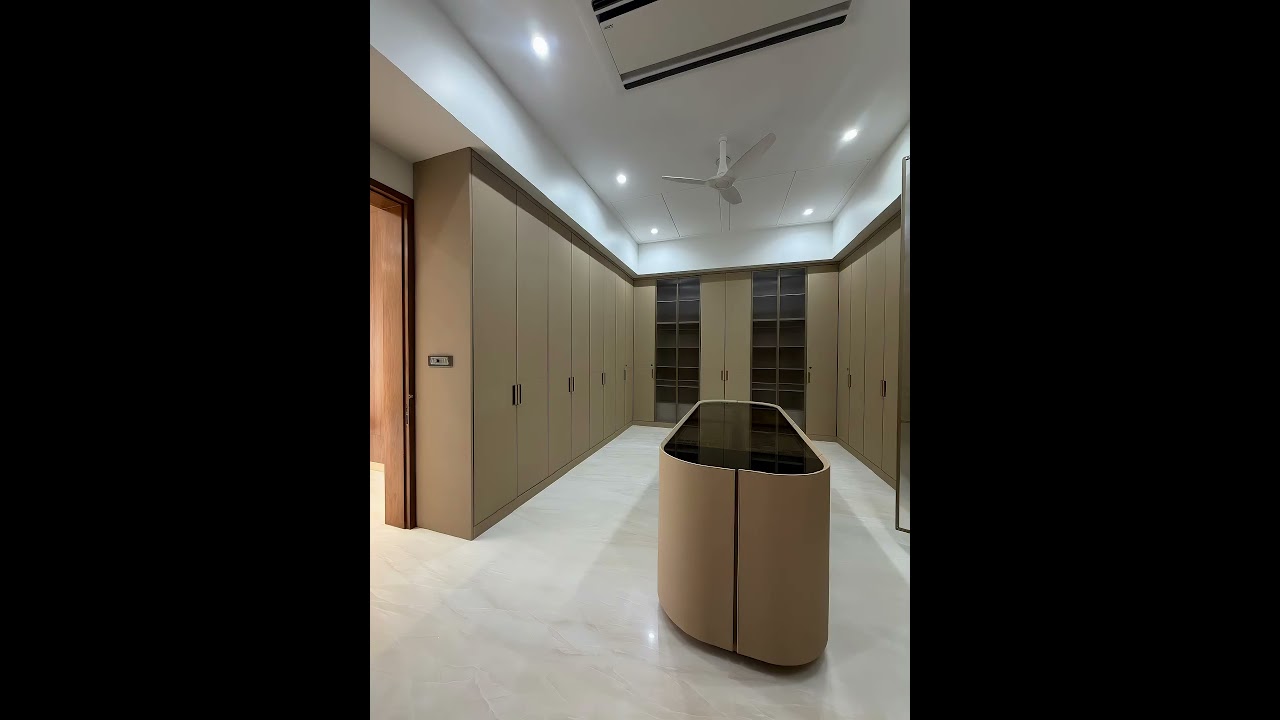
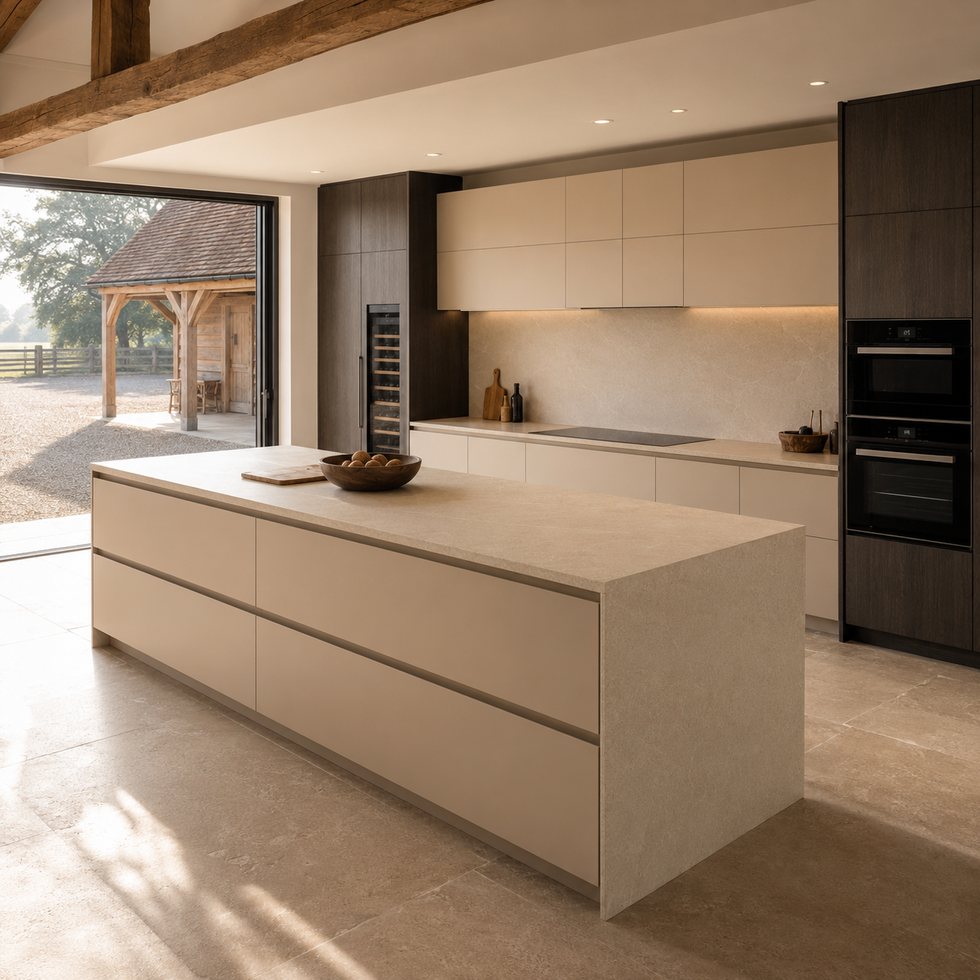
Framed and frameless cabinets are different construction systems, not simple quality grades. A face-frame cabinet adds rails and stiles across the front of the box; a frameless cabinet mounts doors and many hardware components directly to the cabinet sides. The decision affects openings, overlays, hinges, drawer runners, fillers, reveals and installation planning.
What Changes at the Cabinet Opening
A face frame partially defines the visible opening and gives hinges, doors and drawer fronts a different mounting relationship. Frameless construction uses the box sides as the main front structure and is often described as full access. Neither description alone proves strength or service life.
Specify door overlay or inset condition, reveal sizes and finished end treatment. A buyer who asks only for ‘Shaker doors’ has not selected the cabinet construction system or the geometry behind the look.
Hardware Must Match the System
Hinge plates, rear brackets, drawer runners and attachment methods can differ. Blum's own resources provide a face-frame hinge program and distinguish frameless from face-frame runner installation. This is why a hardware brand name is not enough; the model, mounting application and adjustment access must match the box.
Door dimensions, weight, overlay and opening angle also matter. For drawers, confirm inside clear width, runner type, rear fixing, extension and the cabinet member receiving the load.
Installation Is a Room-System Problem
Both systems need level reference lines, secure wall attachment, aligned boxes and planned fillers. The details differ at finished ends, corners, appliance panels, wall scribes and stacked units. A frameless run with tight reveals makes box alignment especially visible; a face frame changes how openings and adjacent fillers read.
Record the wall construction, blocking, floor high point, finished wall-to-wall dimension and responsibility for field scribing. Do not assume factory dimensions can absorb an unknown wall condition.
Do Not Use a Universal ‘Stronger’ Claim
Strength depends on panel construction, joinery, back and mounting design, shelf spans, hardware attachment and installation. One framed sample cannot represent every framed cabinet, and one frameless sample cannot represent every frameless cabinet.
If performance matters, define the load or test requirement and ask for product-specific evidence. Keep the construction-system choice separate from certification claims.
A Quote-Ready Framed/Frameless Brief
State system, overlay or inset, door and drawer-front dimensions, reveal targets, exposed ends, hinge and runner application, fillers and scribes, appliance interfaces, mounting conditions and installation responsibility. Add a section detail at representative openings.
For U.S. projects, also confirm local installer familiarity and the hardware or replacement-parts route. A correct factory-built system still needs a buildable local handoff.
Frequently Asked Questions
Are frameless cabinets the same as full-access cabinets?
The terms are commonly associated because the cabinet lacks a face frame, but confirm the actual box, overlay and hardware details.
Are framed cabinets always stronger?
No universal conclusion follows from the frame alone. Strength depends on the complete construction, mounting and tested product.
Can the same hinge be used for both systems?
Some hardware families have different mounting plates or applications. Select the exact model and installation method for the chosen system.
What should the installer receive?
Issued plans, elevations and sections; cabinet IDs; fillers and scribes; mounting details; hardware schedules; appliance interfaces; and approved adjustment tolerances.
We use cookies to offer you a better browsing experience, analyze site traffic and personalize content. By using this site, you agree to our use of cookies. Privacy Policy