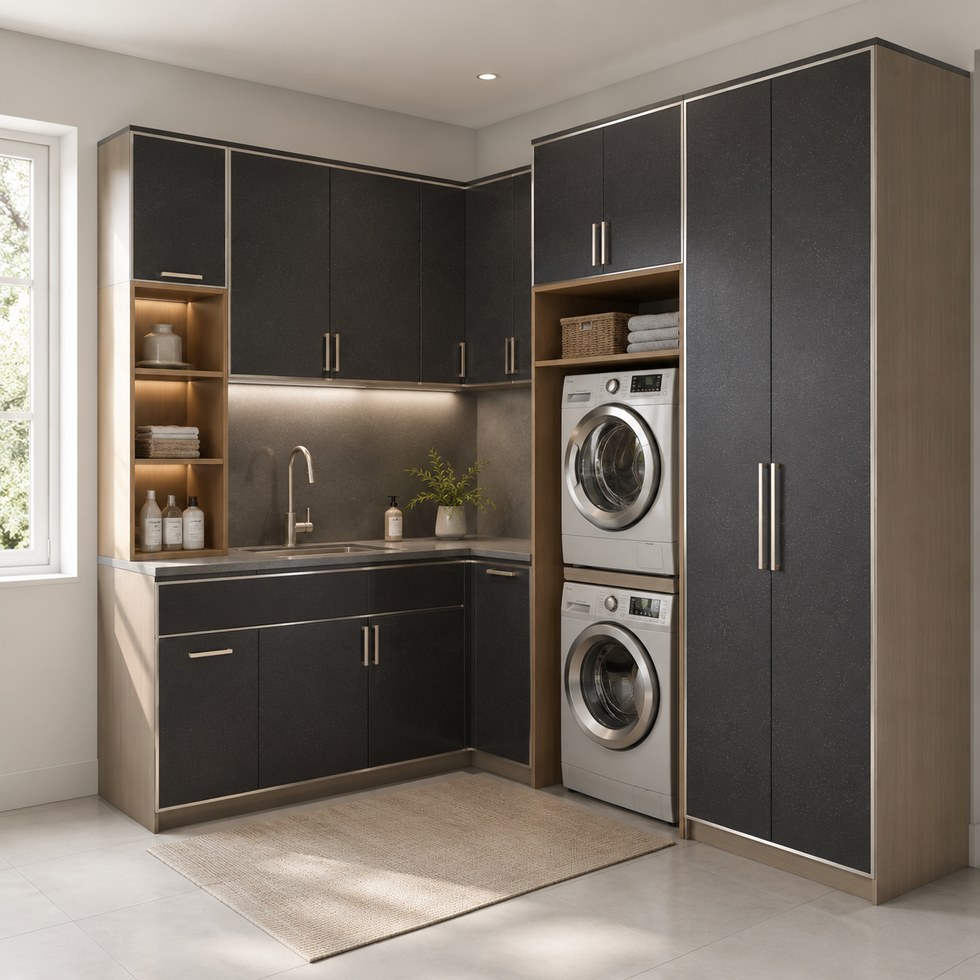
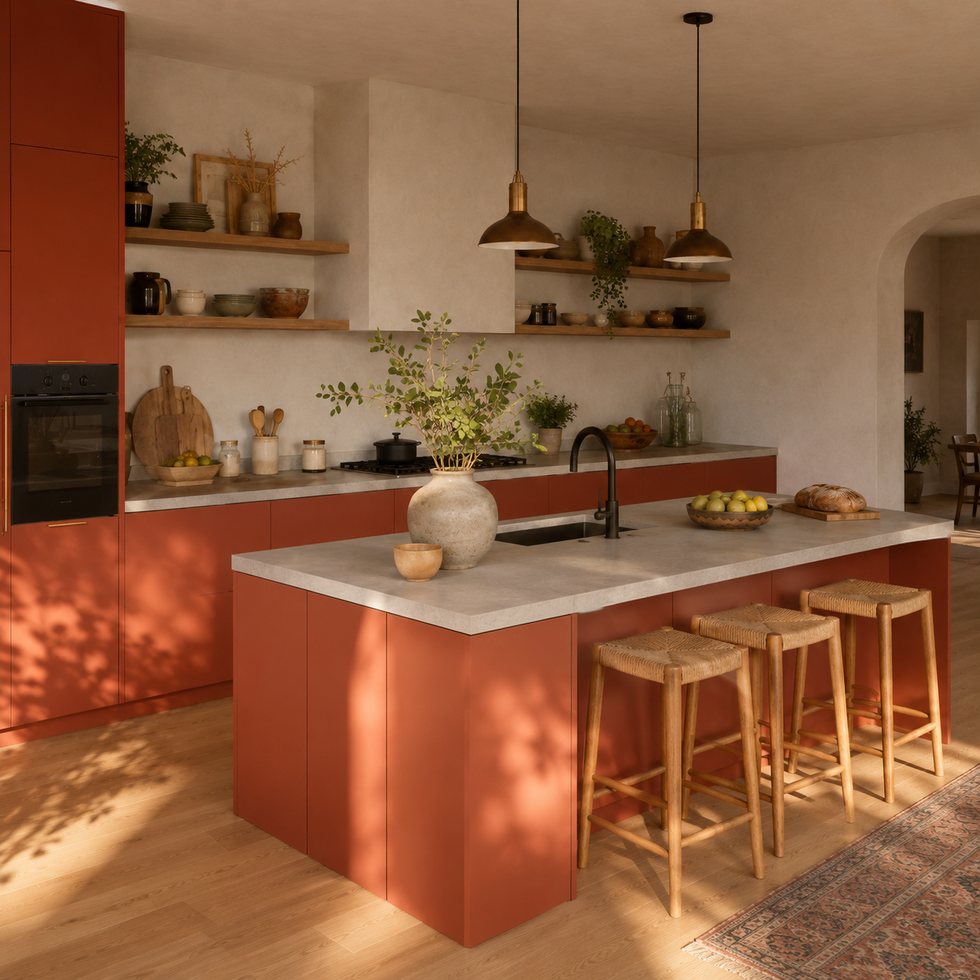
You have found a kitchen, wardrobes and bathroom cabinets you like, and the total appears to fit your budget. There is still one question to answer before you order: how much cash will you need before you can actually use them?
Two offers with similar finished prices can ask for money at very different times. A local cabinetmaker may include fitting in a contract with several payments. A Foshan manufacturer may require the goods balance before shipment, while freight, border charges and a local fitter are paid separately. Neither schedule is automatically better. The right one is the one your household can fund alongside the rest of the build.
A lower total can still mean a tighter month
Imagine a homeowner buying a kitchen, two wardrobes and two bathroom cabinets. The question is not only which total is lower, but when each payment falls due. Fill in the table below from your own offers instead of using assumed figures. Appliances, worktops, plumbing and electrical work sit outside both columns.
Payment point
Local package
Foshan factory plus local services
Deposit when ordering
From the local offer
From the factory offer (at VSME, orders are placed as Alibaba Trade Assurance orders; production starts once payments reach 50% of the order value, and the balance is paid before shipment)
Before dispatch or shipment
From the local offer
Factory balance before shipment
Freight, clearance and delivery before fitting
Usually included
Forwarder, customs broker and carrier invoices
At or after fitting
From the local offer
Local fitter’s invoice
Total
Sum of the lines above
Sum of the lines above
An imported option can cost less overall and still need more money before fitting, because the factory balance, freight and clearance are all paid before the cabinets reach the house. If you must also pay a builder, rent and a moving bill in the same weeks, the money needed early may matter more than the eventual saving.
Payment schedules differ by contract. Enter the amount and due date from each offer, including applicable tax. If a charge is not yet known, leave it open and obtain an estimate; do not treat it as zero.
Put the cabinet payments beside the rest of the house
A cabinet quote rarely arrives in isolation. Before the kitchen can be used, you may also need to pay for the benchtop, appliances, plumbing connections and electrical work. A wardrobe may be finished before you have paid for flooring or decorating. These bills can fall in the same few weeks as the cabinetry balance.
Make a simple month-by-month plan from deposit to move-in. Add the amounts already committed to your builder and other suppliers, then add each cabinet payment, delivery charge and fitting invoice. Use the earliest likely due date where a payment is tied to an event rather than a fixed date. For example, a balance due when goods are ready may arrive before your expected shipment date.
Check the largest amount due in any one month against the money you will actually have available then. Keep a reserve for the rest of the project. If the plan only works because every other trade finishes on time and every allowance stays untouched, the attractive cabinet price may leave too little room to manoeuvre.
Ask what triggers each payment
For a local offer, ask whether the deposit starts design, reserves a production slot or places the cabinets into manufacture. Find out when the next payment falls due and whether the final amount is linked to delivery, installation or completion of an agreed list of outstanding work. A local supplier may offer supply only, installation, or both; the contract should say which.
For a factory order, ask what must be paid before production and before shipment, and when freight and destination charges are payable. If the price is in another currency, calculate how a change in the exchange rate would affect any unpaid balance. Also check whether the quotation includes packing and insurance before adding separate allowances, so the same cost is not counted twice.
These questions matter with any supplier. DIY Kitchens, for example, offers a UK kitchen planning and supply route; its delivery page describes the areas and delivery services it offers. A buyer still needs a project-specific order and payment schedule, especially if wardrobes or bathroom cabinets are being bought elsewhere.
When several rooms share one order
Buying the kitchen and wardrobes together can make a factory proposal easier to coordinate, but it can also bring their payments forward together. Before accepting a combined order, ask for the price of each room and the payment schedule for the full package. If one room is still undecided, ask whether its design must be approved with the rest and how that affects the quoted schedule.
Do not add a room simply to make a shipment look more economical. A wardrobe bought six months earlier than necessary still ties up cash, and the family may need that money for essential building work. Conversely, splitting an order can create another round of delivery and handling charges. Compare both choices using actual quotes and the dates you need each room.
For the wider decision about whether to combine rooms, our room-by-room guide to whole-house package value looks at what belongs in the package. The cash-flow question here is narrower: can you pay for the chosen package when each bill comes due?
Compare suppliers without assuming identical payment terms
A useful shortlist can include a local cabinetmaker or kitchen retailer, an overseas whole-home supplier such as OPPEIN or PA Home, and our own company, Moyisi / VSME. VSME is a brand of Moyisi, the publisher of this article. OPPEIN and PA Home present whole-home cabinetry ranges on their websites; ask each company which purchasing and service arrangements are available for your home.
Send each candidate the same room list and request two pieces of information: an itemised scope and a dated payment schedule, including any amounts payable to third parties. Then ask a local installer and, for an import, a freight or customs professional to price the work outside the supplier's offer. If the destination, goods or tax treatment changes, update the comparison.
A local installed package may be worth a higher total if its payment dates and included services fit your build. A Foshan order may be attractive if its complete cost and earlier payments fit comfortably within your available funds. The decision becomes much clearer when you can see both the final cost and the busiest month for your bank account.
We use cookies to offer you a better browsing experience, analyze site traffic and personalize content. By using this site, you agree to our use of cookies. Privacy Policy