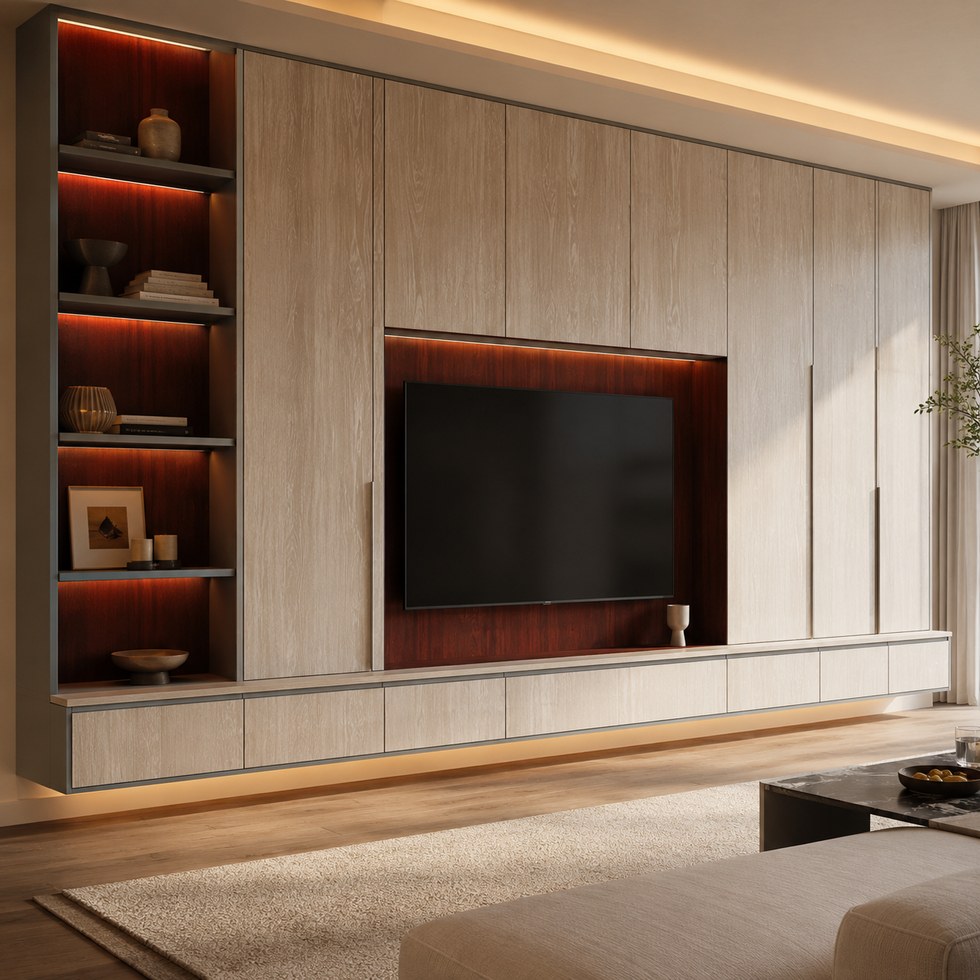
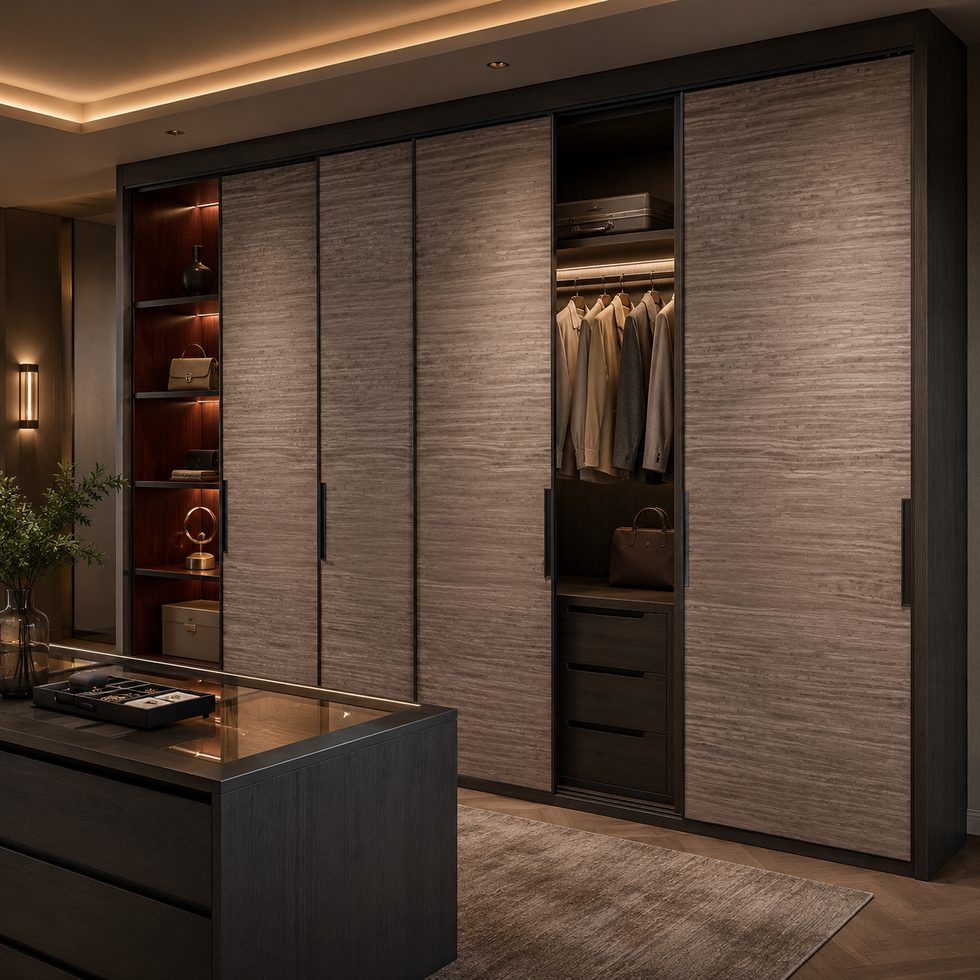
Short answer: yes, custom cabinets can be imported from China to Australia, and the duty is usually low. Wooden kitchen furniture can enter duty-free under the China–Australia Free Trade Agreement (ChAFTA) when the shipment has valid proof of origin; without it, the general rate applies (listed at 5% for wooden kitchen furniture). The real risks are elsewhere: biosecurity checks on timber and packaging, Australia's zero-tolerance rule on asbestos, and the ban on importing engineered stone benchtops since 1 January 2025. Settle those three points before you pay a deposit.
This page walks through the import in order and shows who usually handles each step. It is a practical checklist for homeowners, builders and designers. It is not legal or customs advice for a specific shipment, so confirm the details with a licensed customs broker.
Three things to check before the deposit
Benchtop material. Australia prohibits the import of engineered stone benchtops, panels and slabs (products containing more than 1% crystalline silica) unless a permit or exemption applies, and goods can be seized at the border. See the Australian Border Force notice. If your design shows a quartz-type top, decide early whether to change the material or buy the benchtop locally after the cabinets are installed. Our guide on buying the worktop locally explains how to plan cut-outs and templating when the top comes from a different supplier.
Asbestos evidence. Asbestos is a prohibited import in Australia with no "low level" allowance, and the ABF places the responsibility on the importer. For building-related goods from China, ask the supplier for written confirmation of what each component is made of, and keep the documents in case the ABF asks for evidence or testing.
Proof of origin for ChAFTA. Duty-free entry depends on the correct tariff classification and a valid certificate of origin or origin declaration. Ask for it at quotation stage, so it is issued with the export documents and matches the commercial invoice.
The import sequence at a glance
Step
What happens
Who usually does it
When
1. Freeze the order
Drawings, cabinet list, board and finish, hardware, benchtop decision
You and the factory
Before deposit
2. Agree the delivery term
Incoterm and named port (e.g. FOB Nansha), who books freight and insurance
You and the factory
In the contract
3. Production
Cutting, finishing, assembly, trial fit
Factory
35–45 days at VSME, from drawing approval
4. Pre-shipment inspection
Goods checked against the drawings before the balance is paid
Import declaration. A full import declaration is required when a consignment is worth more than AUD 1,000, and duty, GST and processing charges are paid on clearance. See the ABF import declaration page.
Customs duty. Wooden kitchen furniture is listed at 5% under the general tariff and free under ChAFTA with valid proof of origin. Wardrobes, vanities and metal-framed cabinets may fall under different tariff codes, so ask your broker to classify each item.
GST. 10% GST is charged on the value of the taxable importation, which includes the customs value, duty and the cost of international transport and insurance.
Other costs. Allow for broker fees, port and terminal charges, biosecurity inspection fees if the container is selected, and local delivery. These are often larger than the duty itself, so ask your forwarder for an itemised landed-cost quote.
Packing declaration. Sea containers need a packing declaration that states what packaging was used and confirms the container is clean.
Solid-wood packaging. Pallets, crates and dunnage made of solid timber must be treated and marked to ISPM 15, free of bark and free of pests. Non-compliant packaging may be treated on arrival, re-exported or destroyed at the importer's cost.
Timber in the cabinets. Processed panels such as plywood, MDF and particleboard are generally lower risk than solid timber, but wooden goods must arrive free of bark, insects and soil. Your broker will check the current conditions in BICON (Australia's import conditions database) for your exact goods.
Board emissions and product standards
Australia does not require a separate import certificate for formaldehyde in cabinets, but many builders and buyers specify E0 or E1 boards as classified under the AS/NZS standards for particleboard and MDF. Write the board grade into the order and ask for the board supplier's test report. Integrated lighting and other electrical parts must meet Australian electrical safety rules, so confirm the plug, driver and certification before production.
What we handle on the export side
For Australian orders, VSME (Foshan Moyisi Home Furnishings Co., Ltd.) prepares shop drawings for your approval, builds and trial-assembles the cabinets in our Foshan factory of over 10,000 m², packs the modules and fittings by room, prepares the export documents and loads at Nansha, Guangzhou. We can arrange the ChAFTA certificate of origin with the export documents. Tell us at quotation stage that you need it, together with any packaging specification, so the paperwork matches the goods. You are welcome to send an inspector before the balance payment. We can quote FOB, CIF or DDP; whichever term you choose, your broker should confirm the classification and landed cost. Our factory verification checklist explains what to check about any supplier before a deposit.
Frequently asked questions
Is there import duty on kitchen cabinets from China to Australia?
Wooden kitchen furniture is listed at 5% under the general tariff and can be duty-free under ChAFTA with valid proof of origin. GST of 10% still applies. Your broker should confirm the tariff code for each item.
Can I import a quartz or engineered stone benchtop with my cabinets?
Not without a permit or exemption. Since 1 January 2025, Australia has prohibited the import of engineered stone benchtops, panels and slabs. Many buyers order the cabinets from China and have the benchtop made locally after installation.
Do I need a customs broker?
Not by law, but the ABF encourages first-time importers to use a licensed customs broker, and most private buyers do. The broker lodges the import declaration, calculates duty and GST, and deals with biosecurity.
Do I need to fill a whole container?
No. VSME's minimum order is USD 5,000, and a single home's cabinets can ship in a shared (LCL) container or a 20 ft container. Your forwarder can compare the cost of each.
Rates and rules checked against Australian government sources in November 2026. Tariff and biosecurity conditions change; confirm them for your shipment before ordering.
We use cookies to offer you a better browsing experience, analyze site traffic and personalize content. By using this site, you agree to our use of cookies. Privacy Policy