You have room in the budget for a new kitchen, but not for the tall pantry and extra cabinets you would eventually like. The obvious plan is to buy the essentials now and add the rest in a few years. Before deciding, ask one question: what would you need to buy later for the addition to look and work the way you want?
The answer can affect whether you choose a Canadian modular kitchen, a custom kitchen made locally, or cabinetry ordered from Foshan. None can promise that every finish and component will remain available indefinitely. What you can do is make the future addition easier to price and less dependent on finding an exact match.
Decide what needs to match
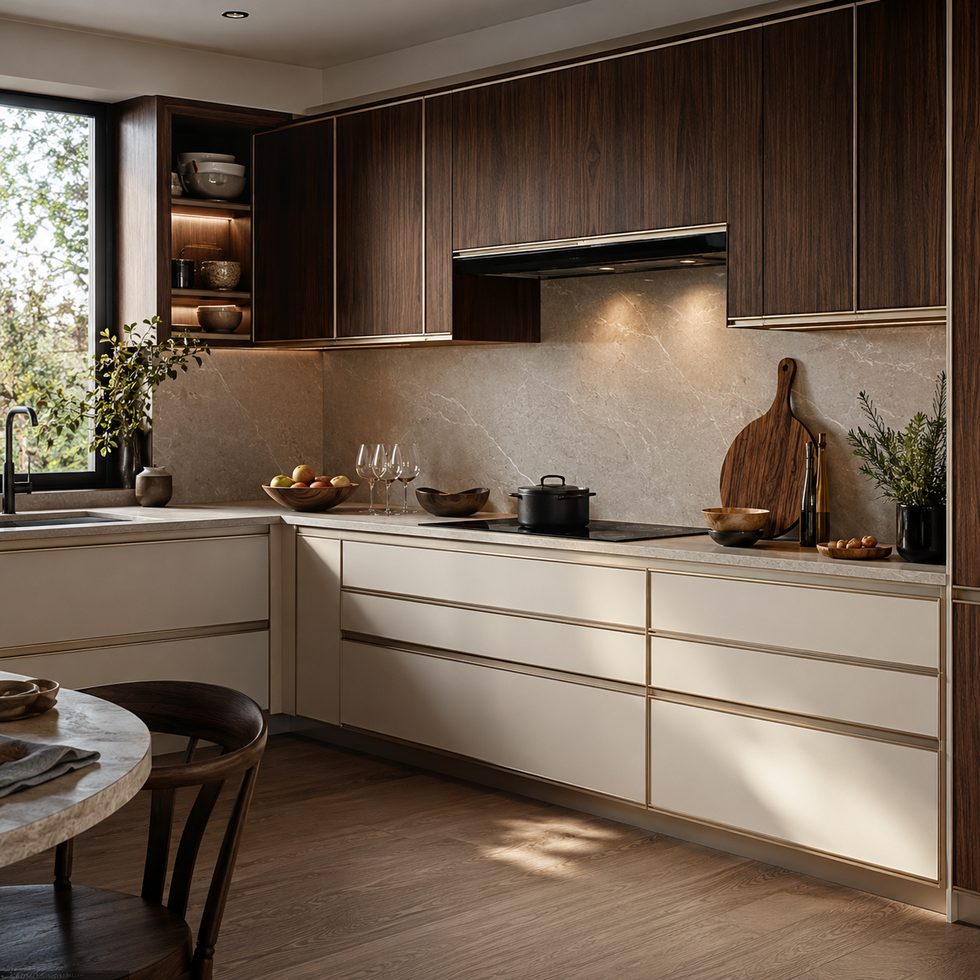
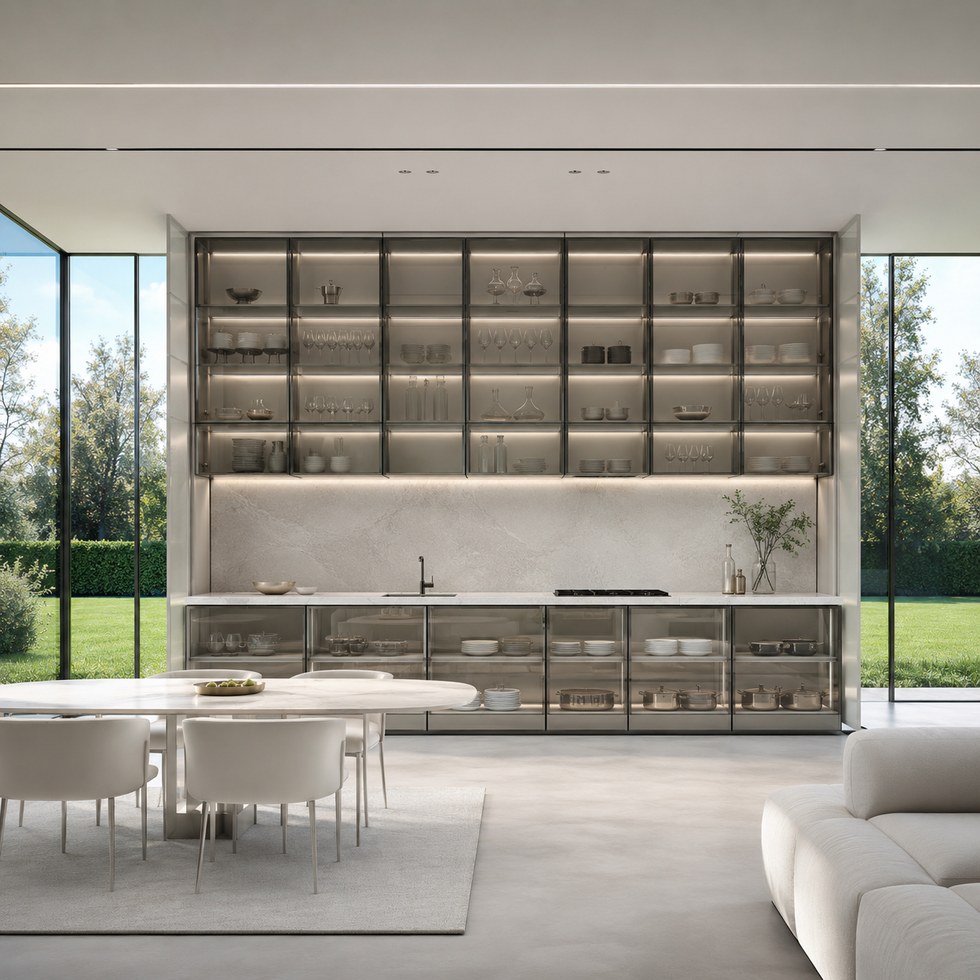
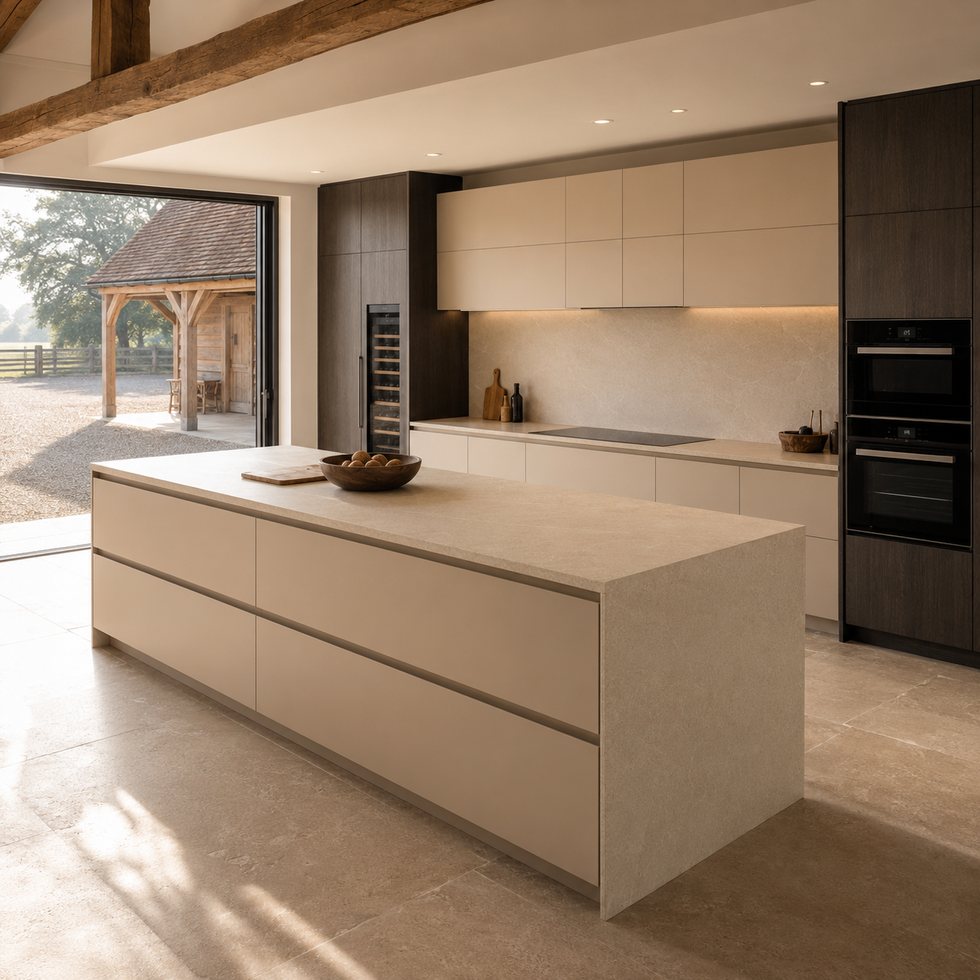
Imagine a kitchen with white lower cabinets and a planned pantry at the end of the run. If the pantry will sit directly beside the existing cabinets, a different shade of white or door profile may be noticeable. If it will stand on another wall, you might be happy with a contrasting wood tone instead.
That distinction is useful before you spend money. Exact matching can make the pantry feel like it was installed with the original kitchen. A deliberate contrast may give you more freedom if the original finish is no longer offered. You could, for example, use matching doors on the main cabinet run and plan the future pantry as a separate, darker feature.
Think about the worktop too. Adding a base cabinet later may require a longer countertop or a visible join. A tall pantry on a separate wall may avoid that expense. Ask a local countertop fabricator what would be involved in each layout before deciding which cabinets to postpone.
What a modular range makes easier to plan
A modular kitchen gives you published cabinet sizes and a defined range of components to work with. IKEA Canada describes its SEKTION system as offering cabinets in a variety of widths, heights and depths. Its kitchen buying guide also discusses updating or expanding an existing kitchen.
That makes a modular plan a useful starting point: you can see whether a future cabinet fits the space and ask the retailer which parts would be needed. It does not establish that a particular door colour, handle or interior fitting will still be sold when you are ready. Ask about current availability and keep the full product list, including the door and finish names.
When comparing designs, consider whether the first phase will look complete on its own. An exposed cabinet side may need a finished panel now, even if another cabinet is planned beside it later. Ask whether that panel can be reused or will have to be replaced when the kitchen grows.
What changes with a custom order?
A custom cabinetmaker can quote a pantry for the dimensions and appearance you want. You can discuss the complete kitchen now, then decide whether the future section should be made with the first order or quoted later. The same discussion applies whether the cabinetmaker is near your Canadian home or in Foshan.
For a later order, ask the supplier what information it would need to reproduce the design: the cabinet drawings, door profile, finish reference and hardware models are useful records. A reference code helps identify the original choice, but it does not guarantee an identical result from a later batch. Ask whether a new sample can be made and checked beside the cabinets already in your home.
Also ask whether a small follow-up order is accepted. A manufacturer may be willing to make one pantry, but its minimum order, packing and transport charges may make that single cabinet expensive. A local cabinetmaker may be able to build the addition on site or nearby; ask for a price based on matching the existing kitchen rather than assuming it will be an exact reproduction.
Buying an extra part now can be sensible—but only the right part
If you already know that a future cabinet will need a visible end panel or a special door front, ask for that item to be priced with the first order. It may be easier to obtain the same finish at that point. However, a spare panel is useful only if its dimensions and storage conditions suit the future plan. Do not order an expensive finished piece while the pantry layout is still uncertain.
Small items deserve a separate decision. An extra handle or a few matching hinges may be easier to store than a large door, but confirm the exact model and whether you will still want that hardware on the future cabinet. Keep the invoice and product details with the parts.
Ask where any spare panels should be stored and how they should be protected. If the eventual addition changes in height or width, a panel bought today may not fit.
Questions to put to suppliers
Give each supplier the same two-part brief: the kitchen you need now and the pantry or cabinet run you may want later. You do not have to commit to the second phase to ask how it would affect the first.
For the initial kitchen: Which exposed sides, fillers and finished panels are included, and which could be reused if a cabinet is added?
For a future order: Can you quote a single additional cabinet? Would a minimum order or special setup charge apply?
For appearance: What are the exact door style and finish references, and can a later sample be checked against the original?
For fitting: Would the addition disturb the countertop, floor trim or existing cabinets? Who would measure and install it?
For cost: What would it cost to include the addition now, and what charges would apply to a separate order and delivery later?
A future price cannot be fixed from today's estimate unless the supplier agrees to it. Still, the comparison shows which choices create extra work: a second delivery, another installer visit or a countertop alteration may matter more than the price of the cabinet box.
Compare the seller as well as the cabinet
For a Canadian modular benchmark, IKEA's kitchen planning service describes a plan, parts list, kitchen quote and estimates for available services. Ask how the proposed layout could be expanded and whether installation for a later addition would be arranged separately.
For a custom comparison, ask a local cabinetmaker to price both phases. You can also approach OPPEIN or PA Home / PA Kitchen, whose websites present kitchens and wardrobes. Confirm which sales route serves your home and how each handles a small subsequent order.
Our publisher, Foshan Moyisi Home Furnishings Co., Ltd., manufactures custom cabinetry in Foshan. VSME is a brand of Moyisi; the company counts as one supplier in your comparison. Our minimum-order guide explains the published USD 5,000 baseline; ask how a later addition would be quoted and delivered to your address.
If the pantry is essential and its finish must match exactly, including it in the first order may be worth pricing even if it means simplifying another feature. If you are comfortable with a contrasting cabinet, leaving the space open can preserve your budget and give you time to learn how the kitchen works. Either way, plan the first phase so it feels finished and functions well on its own.
We use cookies to offer you a better browsing experience, analyze site traffic and personalize content. By using this site, you agree to our use of cookies. Privacy Policy