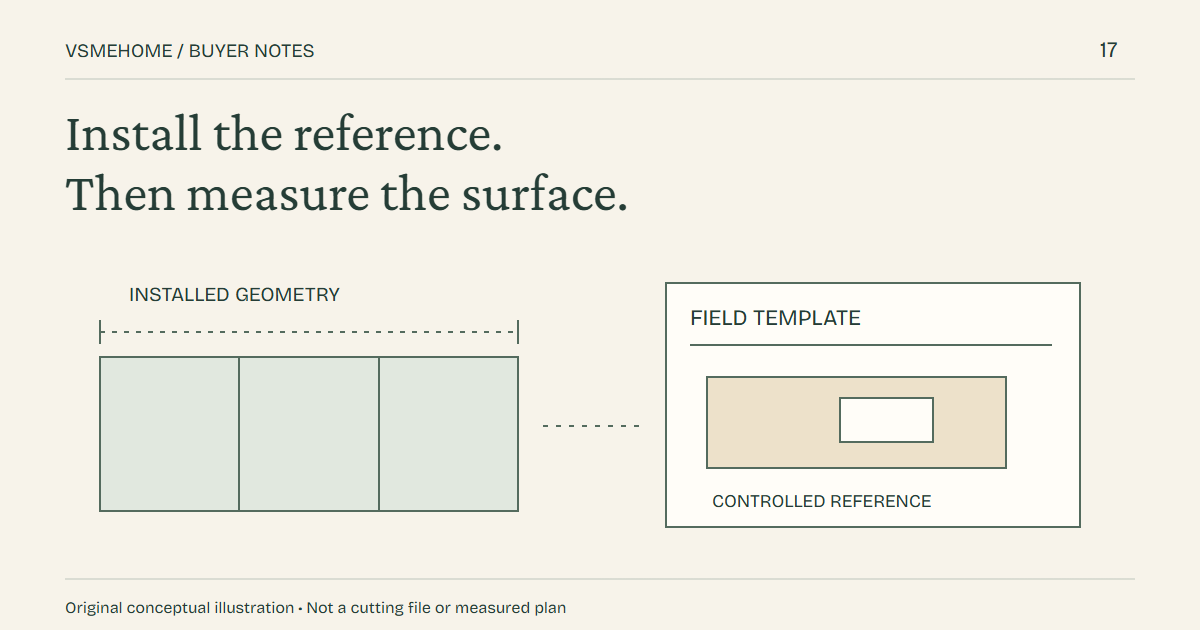
If two cabinet finishes match in the showroom but separate under your home's lighting, check the viewing conditions before ordering a replacement. Compare the same identified samples together, record which light is on, and separate a lighting-dependent color difference from a difference in gloss, texture or surface condition. A photograph or a shared color name cannot settle all of those questions.
This guide is for buyers coordinating cabinet fronts, interior doors and wall panels, especially when different workshops provide adjacent surfaces. It addresses an appearance discrepancy, not the general process of choosing a finish. The cited technical guidance was reviewed on 5 September 2026.
Is the problem between two samples or within one sample?
Keep both pieces in the comparison. Datacolor explains metamerism as a pair of samples matching under one lighting condition but not another. It distinguishes this from color inconstancy, where the appearance of one sample changes as lighting changes.
That distinction improves the question you send to the supplier. “This beige looks warmer at night” describes one observation. “The door and wall panel match together in daylight but no longer match together under the selected room light” identifies a relationship that needs investigation. Neither statement, by itself, establishes which workshop supplied the wrong material.
Check what changed before naming the cause
A useful first review separates the variables instead of moving the sample, changing the lamp and taking a new photograph at the same time. The following table is a proposed buyer's observation record, not a laboratory test or a pass/fail standard.
Observation
Next comparison to arrange
Do not conclude yet
Two samples match together under one light but not another.
Keep the same pair and repeat the comparison under the agreed viewing conditions.
That a color code alone identifies the cause or remedy.
The apparent difference changes when you move around the panels.
Record orientation and compare sheen, texture and surface direction.
That changing the pigment is necessarily the answer.
One photographed piece looks different from another photographed elsewhere.
Bring physical references into the same review rather than comparing separate screen images.
That the pictures prove a production defect.
The production panel differs from its approved physical reference.
Confirm the sample identity, finish version and condition before further review.
That the reference shown is the one used for that order.
Both workshops report a passing measurement but the pair looks wrong together.
Request the measurement conditions and a coordinated visual assessment.
That either number can be compared without its method.
Do not confuse color agreement with surface agreement
Datacolor's color fundamentals distinguish color from overall appearance, which also includes properties such as gloss, texture and opacity. Its guidance notes that the same pigments can appear different on matte and glossy surfaces.
For a cabinetry review, therefore, identify the face and edge separately. A painted front, a decorative film and a textured panel should not be treated as identical surfaces merely because the quotation gives them the same descriptive name. Ask which physical features are intended to coordinate and which are deliberately different. Retain that distinction when discussing a correction.
Use the existing VSME finish-sample approval guide to identify the reference, substrate and finish. This page adds a method for investigating an apparent mismatch after those references exist; it does not replace their approval record.
Make the comparison reproducible between locations
Create a small review set with the approved reference and the actual neighboring materials. Label each piece so a designer, workshop and inspector can identify the same pair later. State where the surfaces meet in the room and whether they will normally be viewed side by side.
Then agree which lighting situations matter to the project. Record the selected fixture or viewing-light reference and the condition used for each observation. Avoid a record that says only “factory light” or “customer light.” If the project lighting has not been selected, keep that part of the review unresolved instead of claiming a final match.
X-Rite's Judge QC documentation describes viewing under multiple light sources as a way to detect color defects and metamerism. This is an example of a controlled assessment approach, not a claim that VSME or a particular workshop owns that equipment. Ask what comparison facilities are actually available; involve a color specialist when the discrepancy cannot be resolved reliably.
Ask what a reported color-difference number means
If a supplier provides a Delta E result, request the reference sample, formula and measurement setup with it. Datacolor's tolerance guidance explains that suitable limits depend on the material, application and measurement conditions. It also recommends interpreting instrumental results alongside controlled visual assessment.
Do not introduce a universal numerical threshold into the order after seeing an isolated reading. Ask the responsible specialist to explain whether the reported method addresses this particular appearance problem. Any agreed acceptance limit belongs in the project record, together with the surfaces and conditions to which it applies.
Send a discrepancy request that can be acted on
A concise request might read: “Please review finish F01 on the cabinet front beside panel W02. The attached sample register identifies both physical pieces. We observed a difference under viewing condition B that was less apparent under condition A. Please confirm the supplied finish references and propose a coordinated comparison before we agree a correction.” These identifiers are illustrative, not a real VSME project.
Attach the relevant order line, location, approved sample reference and dated observation notes. Use photographs to show which pieces and positions you mean, while retaining the physical pieces for assessment. Keep the observation separate from the requested remedy: a replacement, refinishing proposal or design change still needs its own scope and approval.
VSME's white PET kitchen example shows a particular finish and lighting arrangement; it does not establish how another material combination will match. Send VSME the finish references and adjacent-surface brief for the actual order. A useful outcome is a documented comparison and an agreed next action, not an unsupported promise that every surface will look identical under every light.
We use cookies to offer you a better browsing experience, analyze site traffic and personalize content. By using this site, you agree to our use of cookies. Privacy Policy