
News

Wall-Hung TV Cabinet Fixing: Specify the Wall Before the Bracket

2026-07-29 0 Leave me a message

A floating TV cabinet brings a clean, uncluttered look to your living room—keeping the floor open and tucking media equipment out of sight. But before finalizing door finishes and elevations, there is one practical rule to keep in mind: a wall-hung cabinet can only be as secure as the structure behind your wall finish.
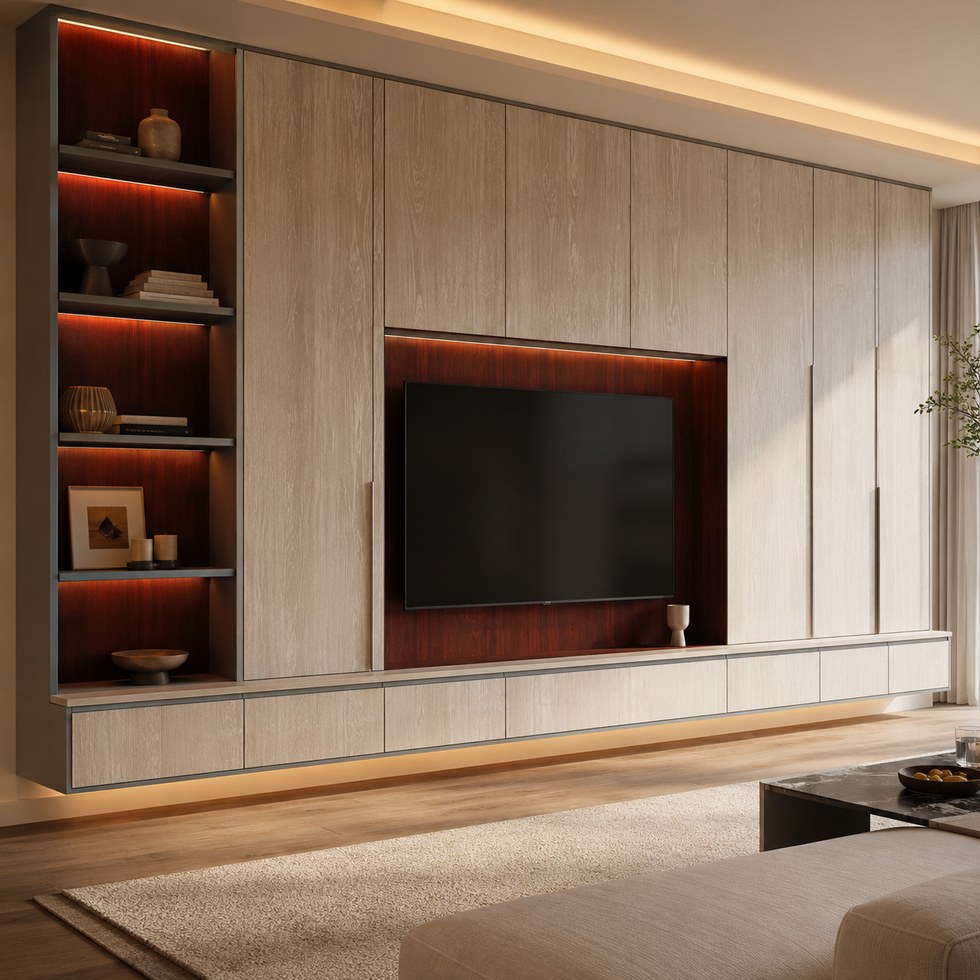
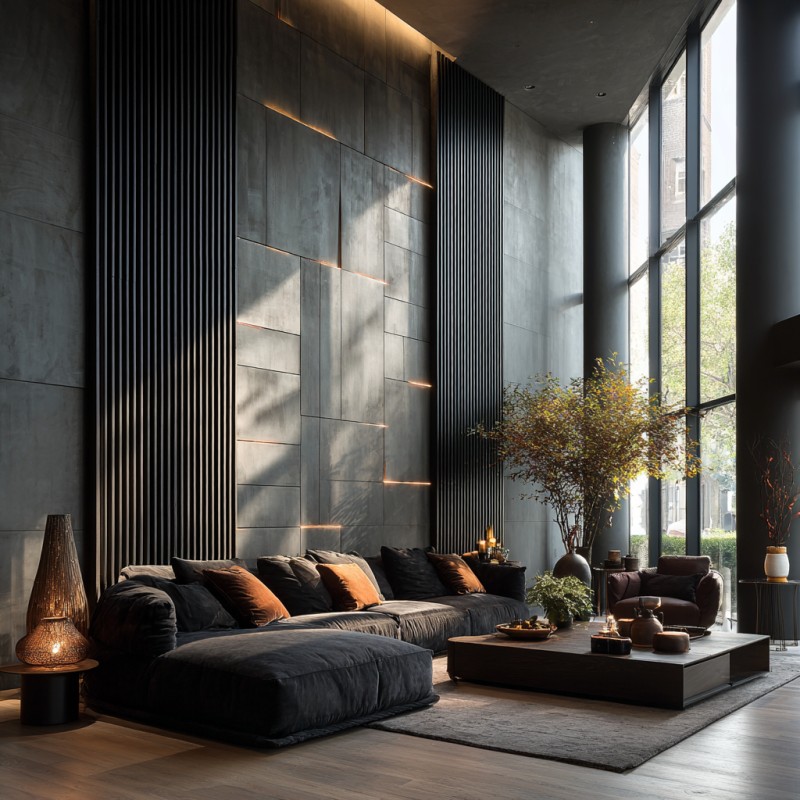
Sleek floating TV cabinet and wall paneling unit in modern living room
A floating media console offers clean lines and concealed storage, but reliable everyday use requires coordinating the cabinet design with your wall structure and local installer.

Whether you are remodeling your home or specifying joinery for a new build, ordering a custom wall-hung entertainment unit involves more than picking lacquer sheens or wood veneers. You need to know what kind of wall you are mounting to, how cables and equipment will sit inside, and what your local installer needs to verify on site before hanging the piece.

1. Start with Your Wall: What Is Behind the Surface?

Hanging hardware can only do its job if it anchors into solid structural material. Plasterboard or drywall panels on their own cannot carry the cantilevered load of a loaded media unit. What is behind your wall surface dictates how the installation must be handled:

  • Masonry or concrete walls: These generally offer firm backing, but solid brick, hollow block, aerated concrete, or rendered masonry each behave differently under load. Your installer needs to inspect the substrate and select appropriate masonry fixings rather than assuming any raw plug will hold.
  • Stud partitions (timber or light-gauge steel): The hanging points must secure directly into vertical studs or horizontal structural backing (nogging/blocking). If your project is still in the framing stage, have your builder add solid timber backing across the intended mounting height before wall linings are closed.
  • Accent stone, porcelain slabs, or feature slats: When consoles mount against decorative wall features, fixings must pass through the cladding and anchor directly into the structural wall behind, not merely clamp against the decorative face.

2. What Will the Console Actually Hold?

Daily use involves more than just the dead weight of empty joinery. When planning your layout, consider:
  • Cabinet materials: Carcasses, drawer fronts, and optional stone or ceramic top surfaces add baseline weight.
  • Equipment and contents: Amplifiers, game consoles, power strips, and storage items add concentrated weight.
  • Drawer leverage: Fully opening deep drawers shifts the center of gravity forward, placing tension on the top wall anchors.
  • Television placement: Mounting the screen to its own wall bracket isolates its weight from the floating cabinet, while sitting a heavy screen directly on the benchtop adds continuous load to the console anchors.
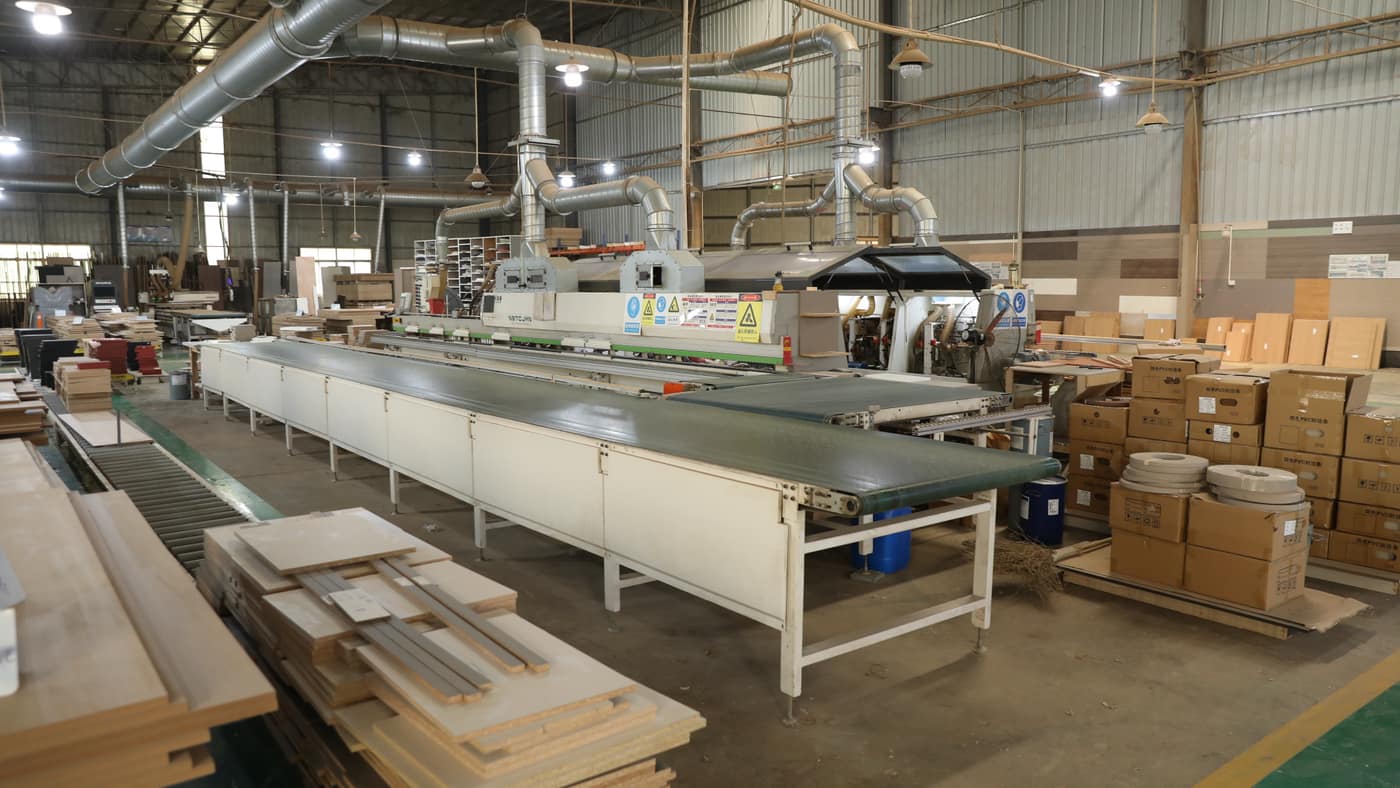
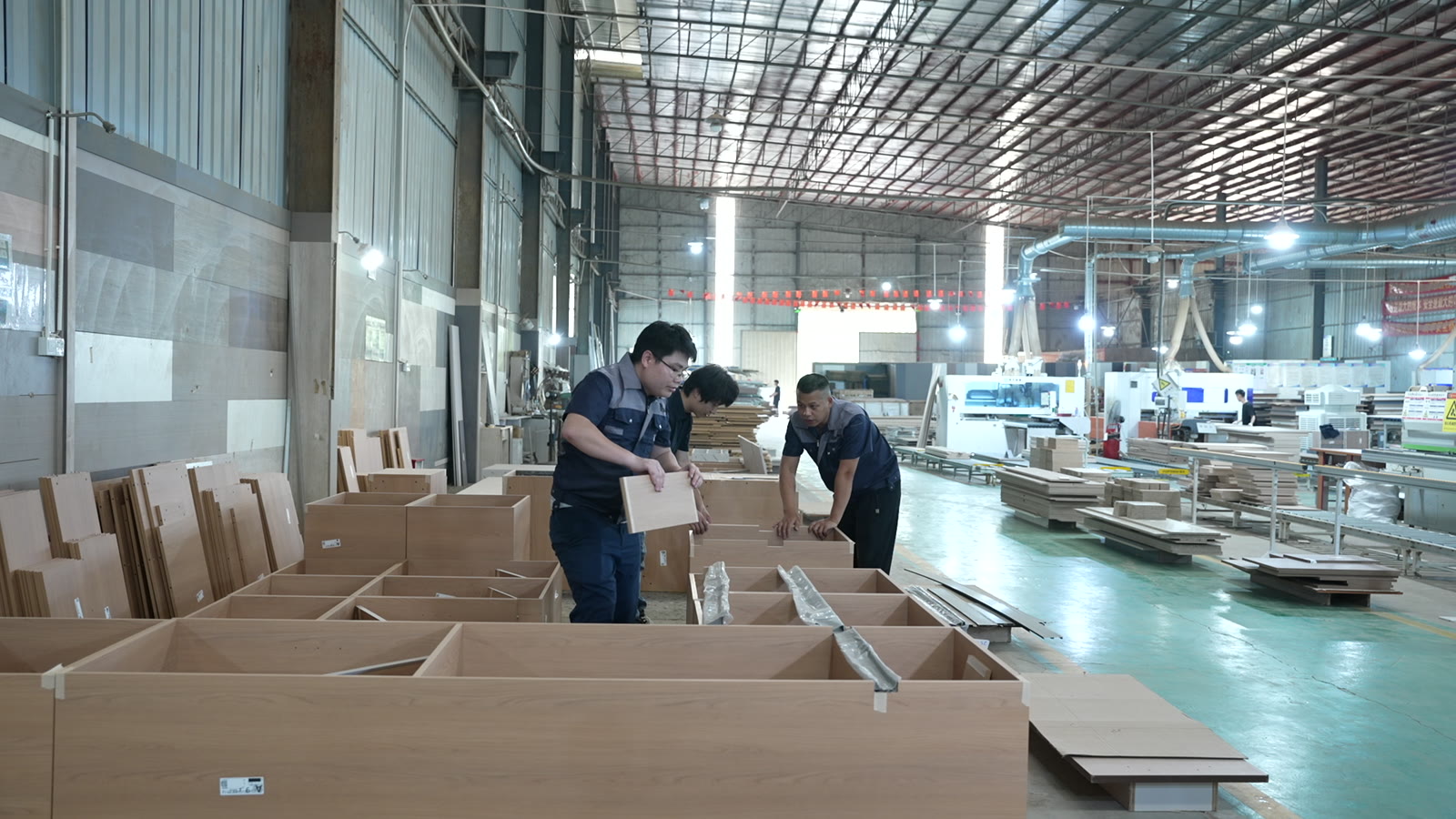
Factory precision inspection of custom cabinet modules prior to packaging
Pre-assembly inspection: checking joint fit, hardware positions, and carcass squareness before custom modules are packed for export.

3. Cabling and Airflow: Plan Openings in the Shop Drawings

Few things disrupt the look of a clean TV wall faster than exposed extension cords or an outlet hidden inaccessible behind a drawer divider. When ordering custom joinery from our TV cabinet line, cable routing should be mapped on the production drawings before cutting panels:

Power Point & Outlet Clearances

Share your rough-in outlet heights so open backs or internal cutouts land directly over power points, rather than colliding with internal cabinet partitions.

Inter-Compartment Wire Runs

Grommets between adjacent cabinet sections allow AV connections, HDMI leads, and power cables to pass through neatly without visible loops on the outside.

Ventilation for Heat-Producing Gear

Receivers and gaming units run warm. Integrating discreet bottom ventilation slots or finger-pull gaps helps airflow move through closed compartments during use.

4. Aligning with Your Local Trades: Who Supplies What?

When importing custom millwork from China, installation is local work carried out on site. Understanding how roles divide avoids surprises when the shipment arrives:

  • What the factory provides: The custom carcass modules manufactured to your approved shop drawings, internal structural mounting rails or brackets specified for the order, and standard joinery hardware.
  • What your local trades provide: Inspecting the actual wall structure, supplying wall-specific screws and anchors suited to that substrate (concrete, masonry, timber studs, or steel framing), leveling and securing the unit, and final alignment of doors and drawer fronts.

5. What to Confirm Before You Approve Drawings

Before signing off on shop drawings for production, run through this practical checklist:

  1. Mounting height: Determine your console's finished floor clearance based on comfortable viewing height from your seating, your equipment dimensions, and any cleaning equipment clearances you prefer.
  2. Coordination with adjacent finishes: If the unit integrates with feature wall slats, stone claddings, or paneling, coordinate thicknesses and joint lines in the shop drawings so everything fits smoothly on site.
  3. Consolidated room joinery: If you are planning custom kitchen cabinets, wardrobes, or bathroom vanities, ordering them together allows you to match finishes across rooms and coordinate freight under one shipment.

Planning Living Room Cabinetry or Whole-Home Joinery?

Send us your living room layout, equipment list, or elevation drawings. Our team prepares detailed production drawings showing cutouts, wire routing, and carcass structures so your local installer has clear information for a straightforward installation.

Contact the VSME Team

Related guide: Who we are, our minimum order and lead time: VSME company facts.

Related News
Leave me a message
X
We use cookies to offer you a better browsing experience, analyze site traffic and personalize content. By using this site, you agree to our use of cookies. Privacy Policy
RejectAccept