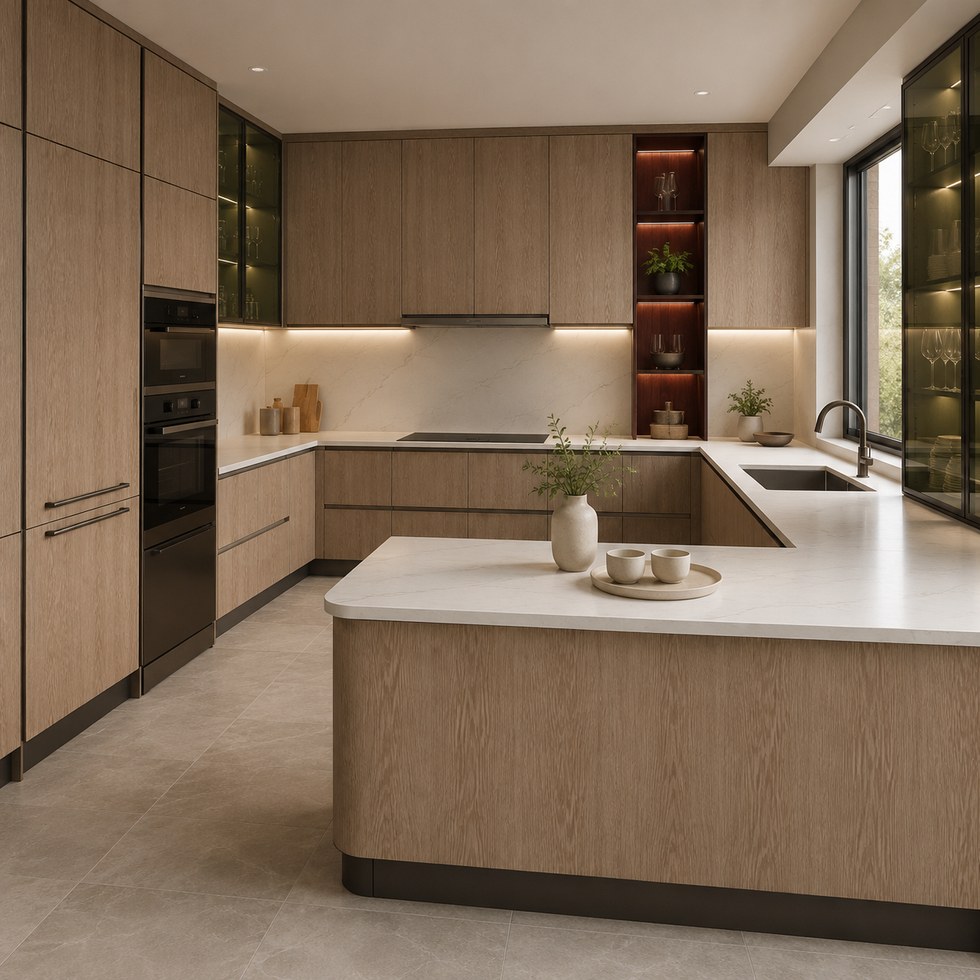
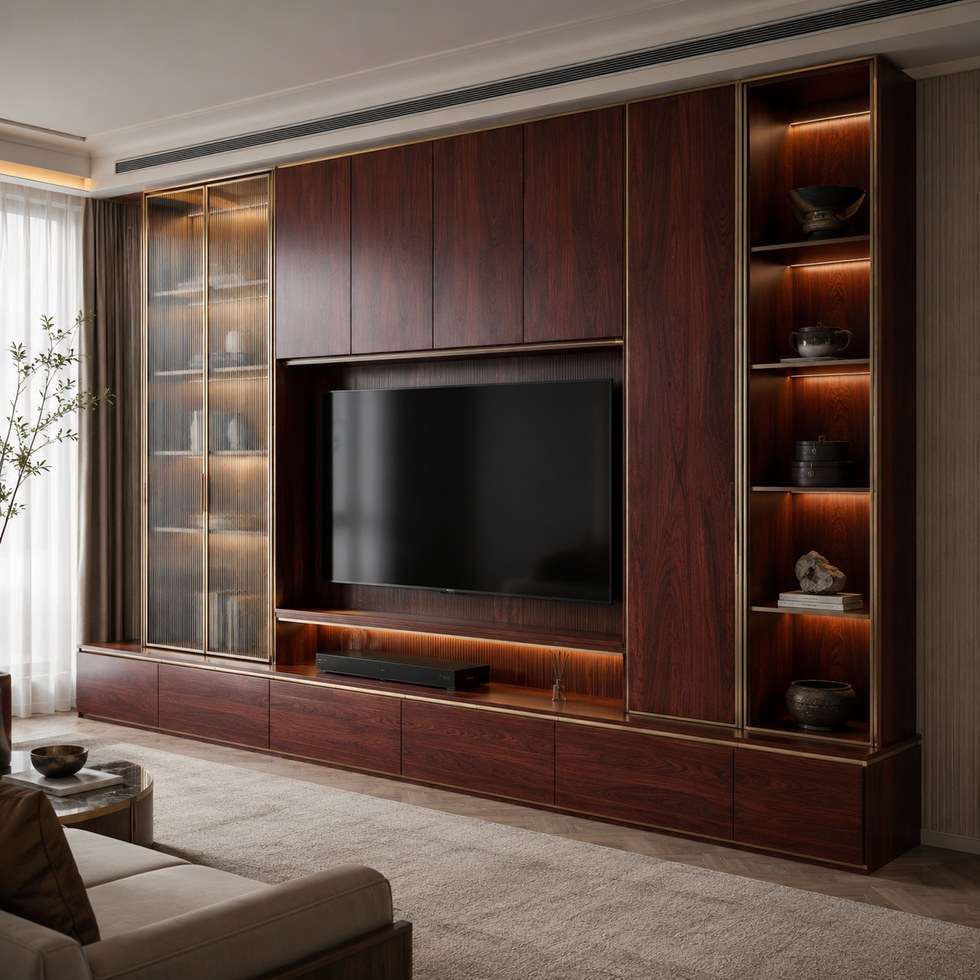
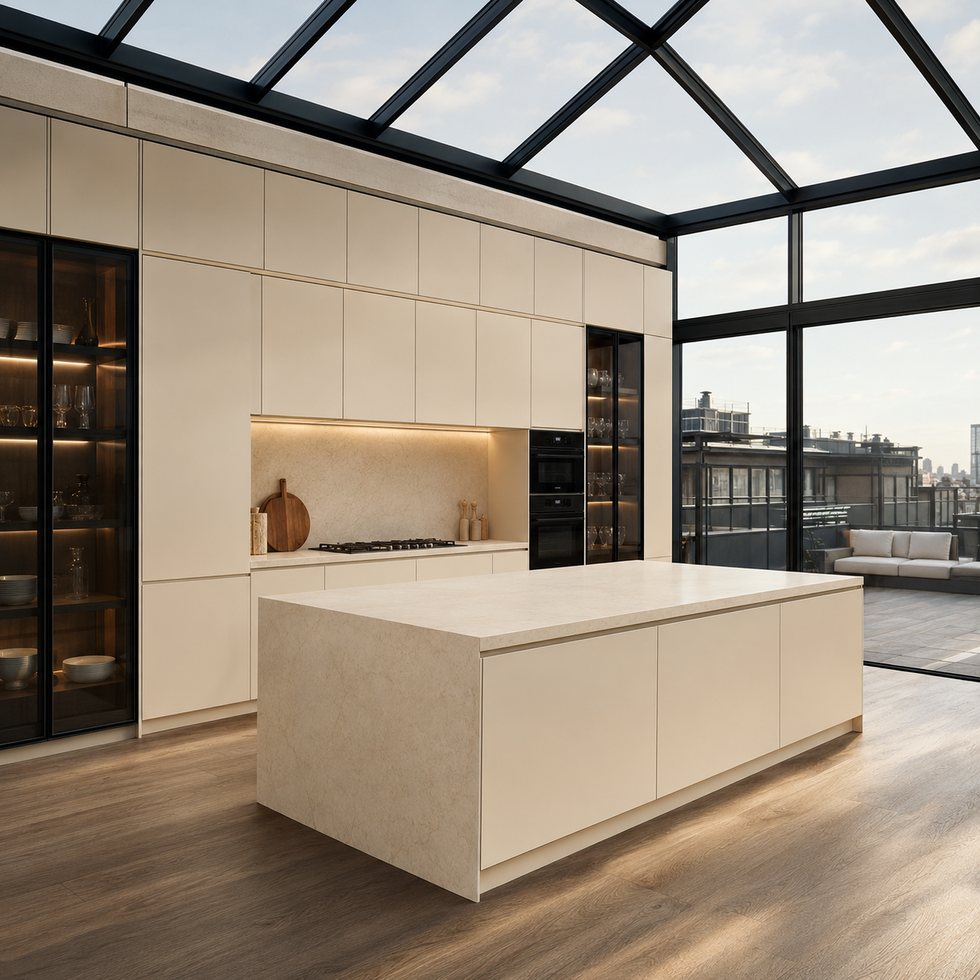
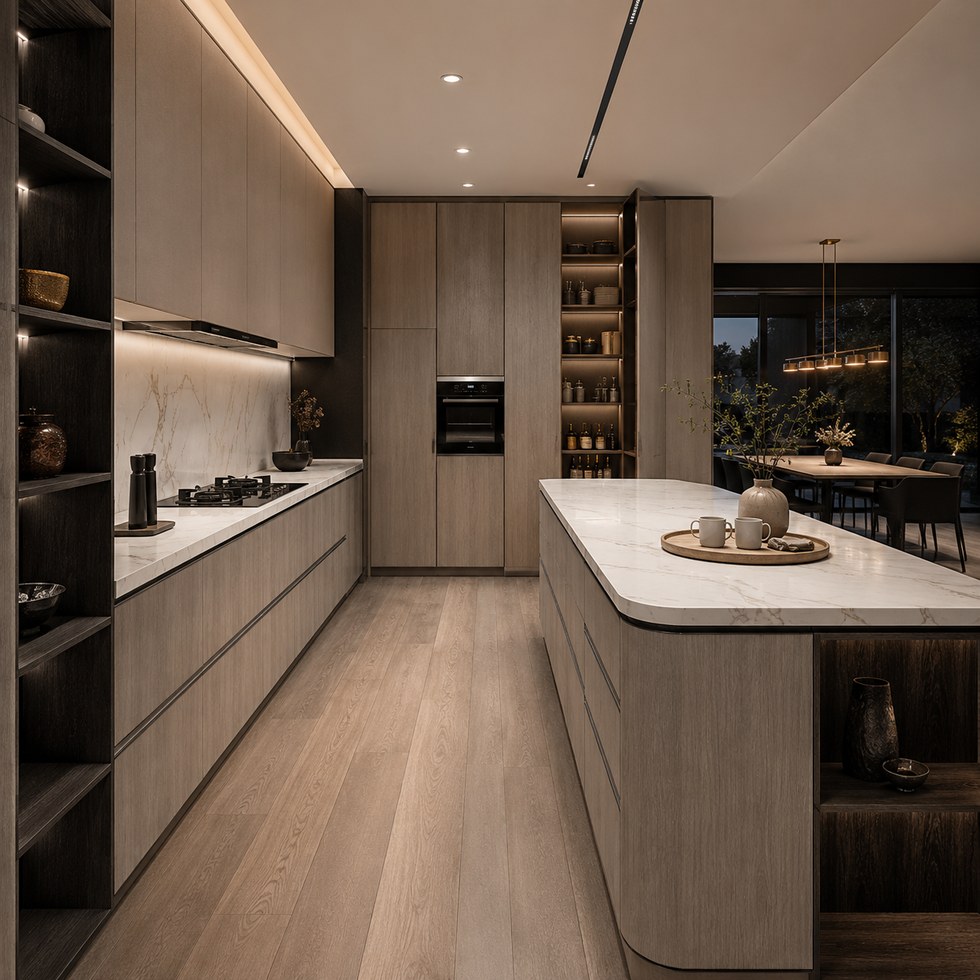
A builder pricing four or five townhouses may find that a Foshan factory’s cabinet price looks attractive, but the order is still small enough for freight, site delivery and project coordination to make a noticeable difference. At the same time, repeating a kitchen and wardrobe design across several homes can spread some of those costs.
There is no universal number of townhouses at which importing becomes cheaper. The useful question is: how many homes will share the same order, and how much does the complete installed price change when that number changes?
Ask for a price at two quantities
Suppose a builder is confident about two townhouses but may proceed with five. Ask a Foshan supplier and an Australian supplier to price both quantities using the same kitchen and wardrobe layouts, materials, hardware and delivery location. Make it clear whether the extra three homes are an option or a confirmed order.
Request separate figures for the cabinetry, design, delivery and installation, and ask whether the unit price or minimum order changes. A local supplier may also offer better pricing for repeated work. The comparison should capture that, rather than assuming repetition benefits only the factory order.
The following example shows how the arithmetic can work. All figures are invented, in Australian dollars, and include equivalent cabinetry, delivery, installation and an allowance for site issues. They are not market quotations. Both options use the same tax basis.
Cost
Foshan order
Australian supplier
Project costs shared across the order
A$8,000
A$2,000
Cabinetry and other costs per townhouse
A$10,000
A$12,000
Two townhouses: total
A$28,000
A$26,000
Five townhouses: total
A$58,000
A$62,000
At two homes, the local offer costs A$2,000 less. At five, the Foshan offer costs A$4,000 less, or A$800 per home. Under these particular assumptions, the two routes are equal at three homes. That result is only a way to test quotes: real freight, design and installation costs may change in steps rather than staying fixed as the project grows.
If only two homes are certain, do not base the decision on the five-home price unless the supplier agrees to those terms. Ask what happens if the remaining homes are delayed, cancelled or ordered separately.
Repetition helps only when the homes are actually similar
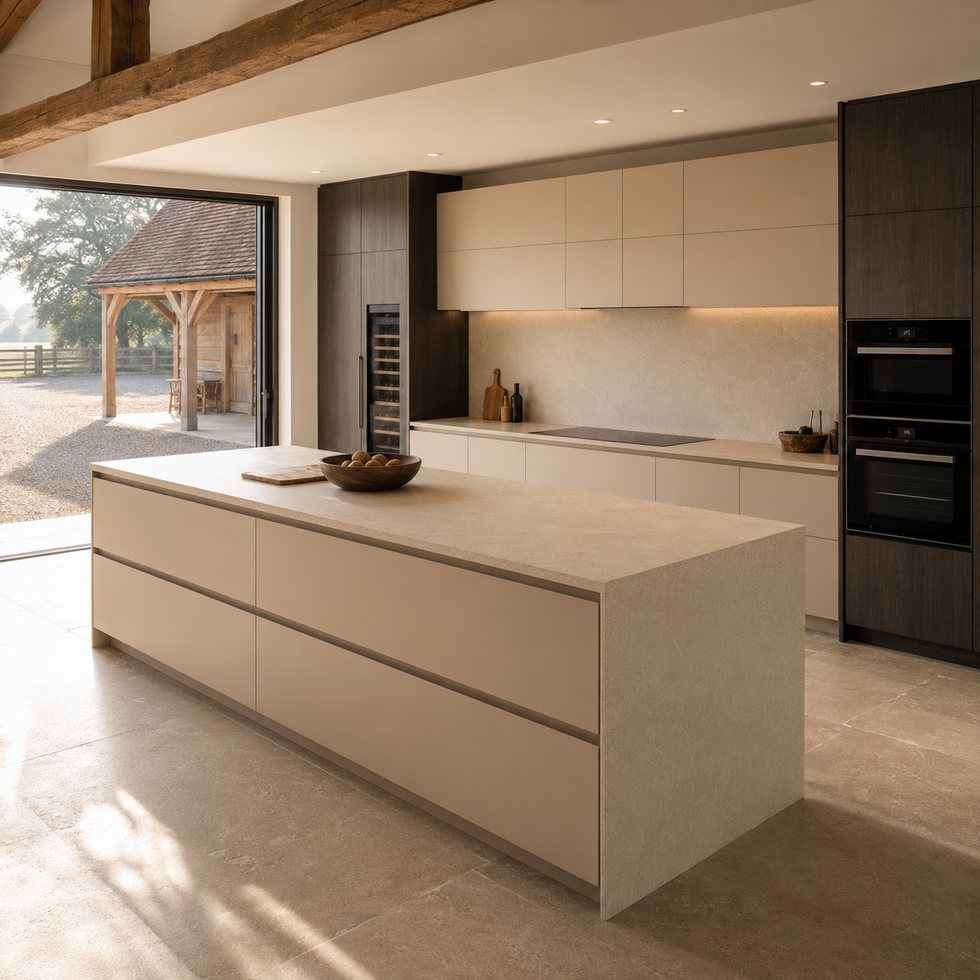
Five kitchens can look alike on a sales plan and still need different cabinet widths, appliance openings or finishing panels. A mirrored layout may also need its own drawings and parts. Give suppliers the number of each layout type, not just the total number of homes.
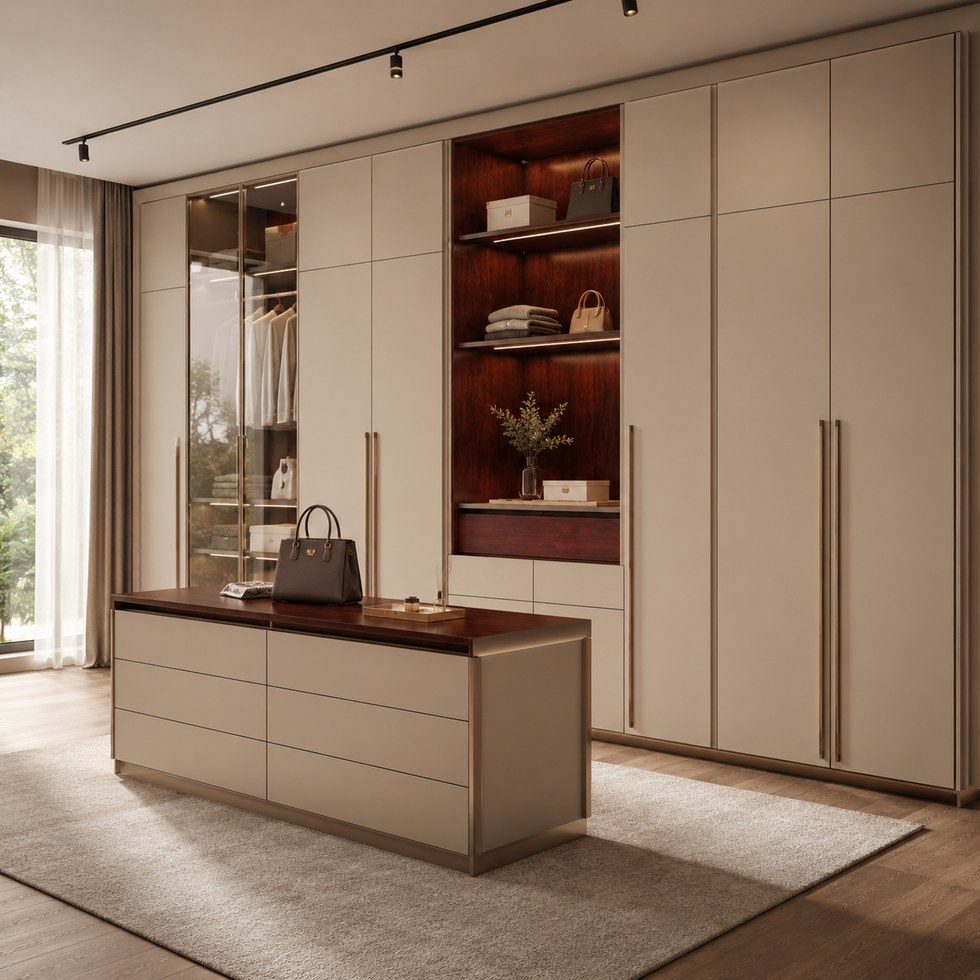
For wardrobes, compare the internal fit-out as well as the outside dimensions. A robe with two drawers, shelves and hanging space is a different purchase from an empty shell with a single rail. If buyers can select upgrades, ask for a base package and separately priced options so the builder can see how each choice affects the budget.
There is value in ordering kitchens and wardrobes together when the finishes and schedule work across the homes. But check the price of the combined package against separate kitchen and wardrobe prices. If wardrobes are likely to change after purchasers make their selections, a local wardrobe supplier may be easier to accommodate. Ask the factory how removing wardrobes would affect its minimum order, discount and freight before assuming that a split order saves money.
Where the factory price stops
A Foshan quotation may cover manufactured cabinets and packing, while an Australian quote may include delivery or installation. To compare them, bring both prices to the same finish line: cabinets installed in each townhouse, with the same benchtop and trade scope.
For an import, identify the cost of freight and insurance, customs clearance and applicable import charges, delivery and unloading, storage if needed, assembly and fitting. Check the supplier’s delivery terms and the freight quote together so a charge is neither missed nor counted twice. Show GST consistently and discuss its treatment with your accountant; cash-flow timing and recoverability depend on the business and transaction.
Local pricing needs the same care. Confirm whether the supplier is quoting flat-pack supply, assembled cabinets or a fitted installation. If benchtops, appliances, plumbing or electrical work are outside both quotes, keep them outside both totals or add the same realistic allowances.
The Australian Border Force guide to importing explains the importer’s responsibilities. Ask a customs broker to check the classification and applicable charges for the actual goods before treating a landed-cost estimate as final.
Build a shortlist around the work you need
A practical comparison can include a large Chinese manufacturer, a Foshan custom-cabinet supplier and an Australian trade supplier. Their websites are useful starting points; a project-specific quotation will show whether they accept the order and which services they will actually provide.
OPPEIN presents kitchens, wardrobes and other whole-house products and publishes Australian project examples. Ask whether it can quote your particular townhouse quantity and who would support the project locally.
VSME and Moyisi are brands of our company, Foshan Moyisi Home Furnishings Co., Ltd., so they should be treated as one supplier in the comparison. Our published small-batch ordering information gives a US$5,000 minimum order value; confirm whether your proposed kitchen and wardrobe mix qualifies and obtain a project-specific quote.
Anertex Cabinetry presents locally crafted flat-pack joinery for trade customers. Ask for the same kitchen and wardrobe scope, including the delivery and assembly arrangements your installer needs.
These examples are starting points, not a ranking. A local cabinetmaker who can measure the site and return for adjustments may be especially useful when dimensions or completion dates remain uncertain. A factory order may be more attractive when several layouts are settled and a local installer is ready to work with the supplied cabinets. Both routes can involve separate contractors.
Check the cost of one mistake across several homes
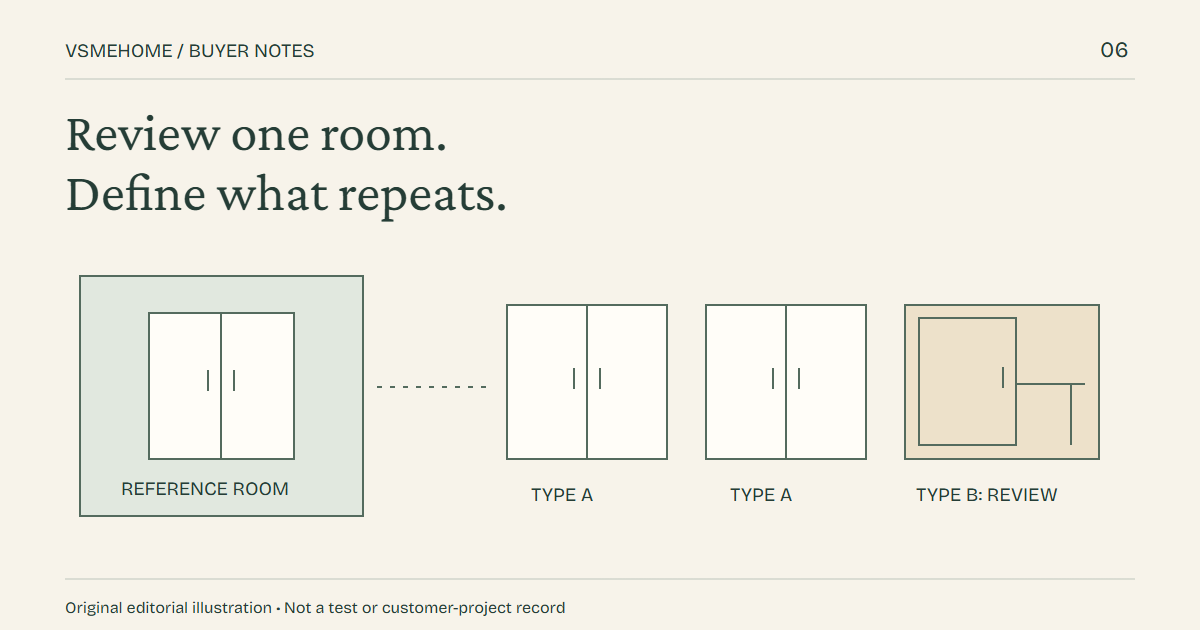
Repetition can spread savings, but it can also repeat an error. Before releasing all units for production, have the designer, builder and installer review a representative kitchen and wardrobe against the actual site measurements and appliance information. Ask the supplier what a sample or first-unit review would cost and whether it changes the schedule.
Also ask how cabinets and hardware will be identified by townhouse. A missing hinge is easier to resolve when the installer can identify the correct unit and part. Agree who pays for a replacement, its freight and any return visit if a component is damaged or made incorrectly.
For a small development, the best decision may be a single factory order, a local package, or a combination. Compare the two-home commitment and the full project separately, then choose the option whose complete cost and delivery responsibilities still work if the project does not expand exactly as planned. For a closer look at costs that can fall between Chinese and Australian quotations, see China vs Australian Cabinet Quotes: Find the Unpriced Gap.
We use cookies to offer you a better browsing experience, analyze site traffic and personalize content. By using this site, you agree to our use of cookies. Privacy Policy