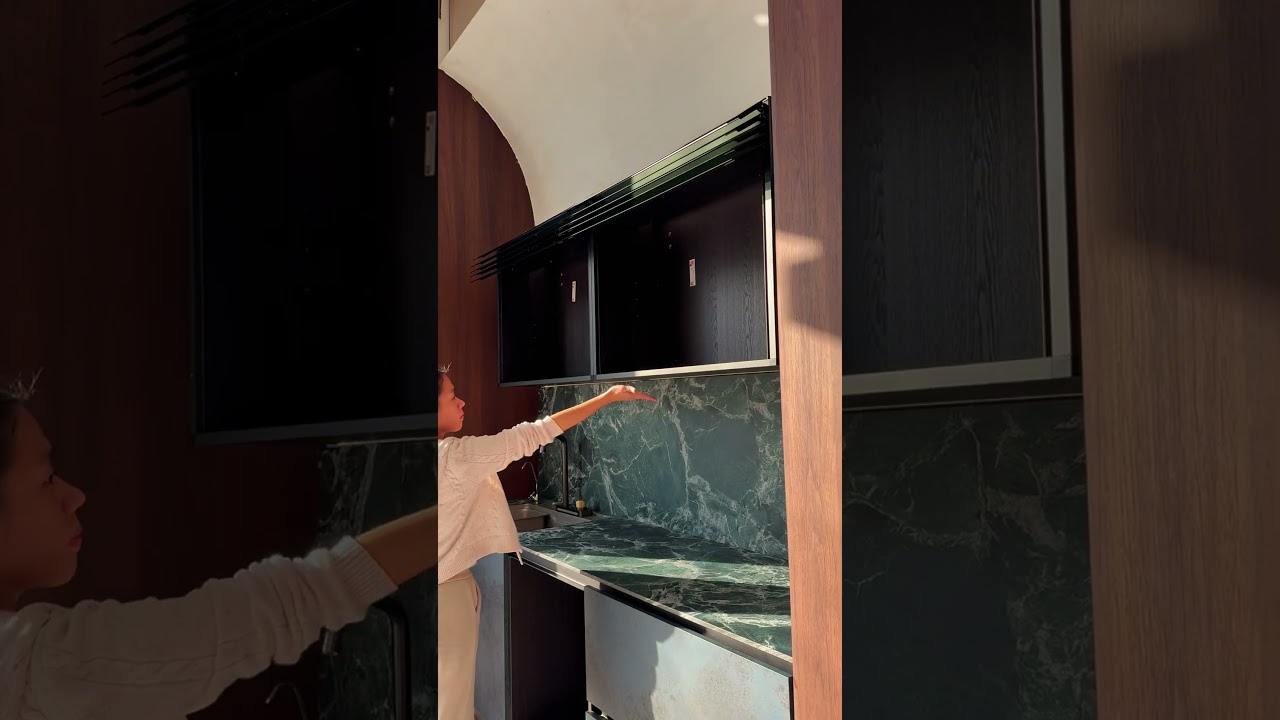

Article Summary: Aluminum Kitchen Cabinets have become an increasingly practical choice for homeowners, developers, interior designers, and commercial projects that need a balance of durability, moisture resistance, clean aesthetics, and long-term usability. Unlike conventional wood-based cabinetry, aluminum construction is well suited to kitchens where water, steam, heat, spills, frequent cleaning, and heavy daily use can place continuous stress on cabinet materials. This article explains how aluminum cabinetry works, what advantages it provides, how to select the right configuration, and which details should be considered before placing a custom order. It also examines design, structure, installation, maintenance, transportation, and customization considerations to help buyers make a more informed decision.
A kitchen cabinet is exposed to considerably more environmental stress than many other pieces of household furniture. Water from sinks, steam from cooking, food residues, cleaning chemicals, temperature fluctuations, heavy cookware, and repeated opening and closing can gradually affect cabinet materials.
Aluminum Kitchen Cabinets approach these challenges from a different structural perspective. Instead of relying primarily on wood-based panels, an aluminum cabinet system uses aluminum components to create a lightweight but rigid cabinet structure. Depending on the design, the system can include aluminum frames, aluminum panels, glass elements, decorative finishes, internal reinforcement, hardware, and customized storage configurations.
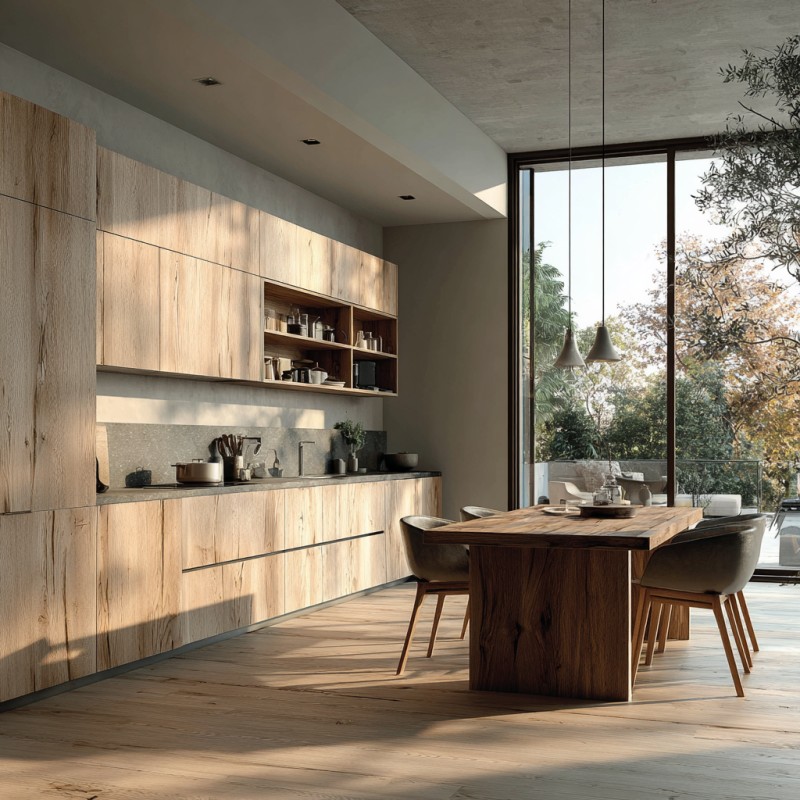
This construction makes aluminum particularly attractive for kitchens where long-term resistance to moisture and everyday wear is a priority. It also provides designers with considerable freedom to create contemporary, minimalist, industrial, wood-look, or premium residential interiors.
VSME develops aluminum kitchen cabinet solutions with attention to room dimensions, cabinet layout, storage requirements, finishes, hardware positioning, and installation requirements. This project-oriented approach is important because a high-quality cabinet is not simply a collection of panels; it is a coordinated system that must fit the actual kitchen environment.
The most important advantage of aluminum cabinetry is its ability to address several common kitchen problems at the material level.
These characteristics are especially valuable in humid regions, rental properties, busy family kitchens, vacation homes, apartments, restaurants, and other applications where cabinet replacement can be inconvenient or expensive.
However, material selection alone does not guarantee performance. Cabinet thickness, joint design, hardware quality, surface treatment, machining accuracy, installation, and packaging all influence the final result.
Moisture is one of the most persistent problems in kitchen cabinetry. Water may come from sink splashes, leaking plumbing, wet cookware, steam, condensation, or accidental spills. Over time, repeated exposure can cause swelling, delamination, discoloration, or deterioration in some conventional cabinet materials.
Aluminum provides a useful alternative because the metal itself does not absorb water like wood-based boards. This makes aluminum particularly appropriate for cabinet areas close to sinks, dishwashers, water lines, and other moisture-prone locations.
Nevertheless, buyers should avoid assuming that an aluminum cabinet is automatically waterproof in every respect. The overall system also contains joints, hinges, seals, countertops, plumbing connections, and hardware. Poor installation can allow water to enter areas where it should not.
For this reason, a practical moisture-resistant cabinet design should consider:
The objective is not merely to select a water-resistant material, but to create a cabinet system in which the entire installation is designed around the actual kitchen environment.
Kitchen cabinets experience mechanical loads every day. Drawers may carry cookware, doors are opened thousands of times, countertops transfer weight to the supporting cabinet structure, and large appliances create additional demands around specific cabinet sections.
A properly engineered aluminum framework can provide a stable foundation for these loads. VSME's product approach emphasizes reinforced structural connections and precision manufacturing rather than relying only on conventional screw connections.
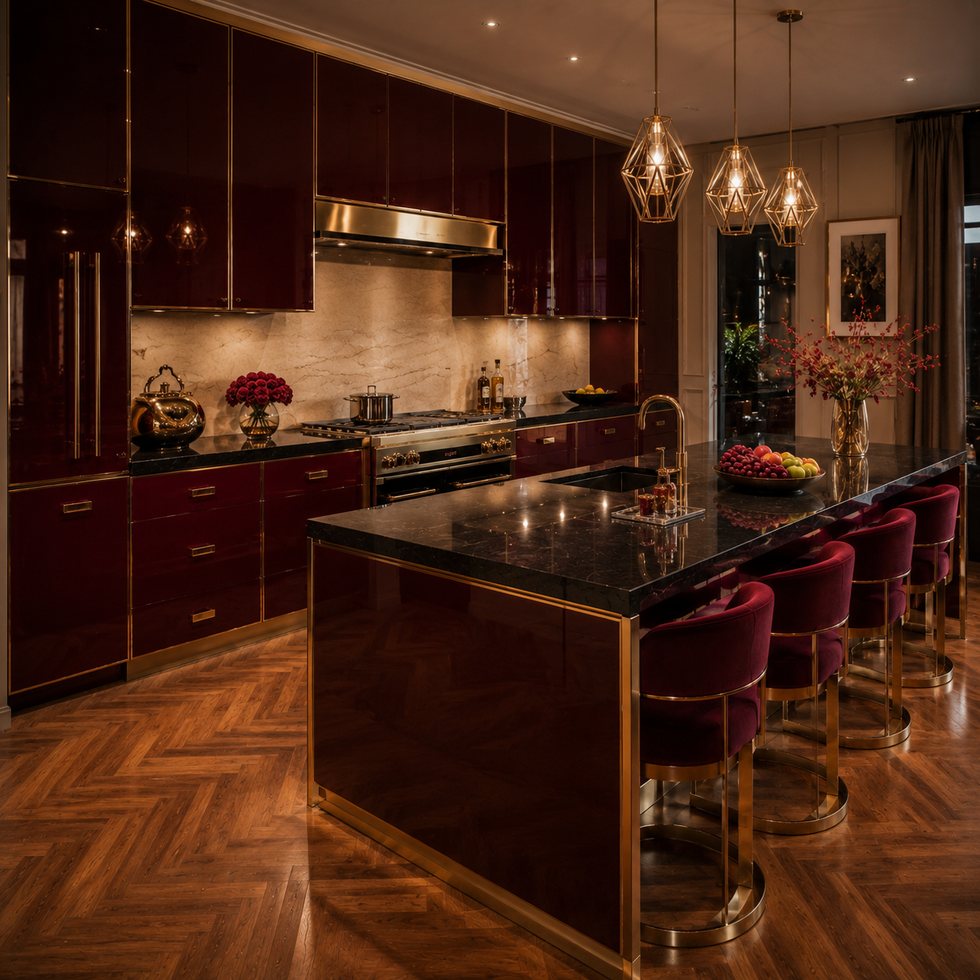
This is particularly important for large kitchen islands and cabinets supporting heavy countertop materials such as quartz or stone. The cabinet structure needs sufficient rigidity to minimize movement, settlement, and alignment problems.
Several technical details deserve attention when evaluating durability:
| Component | What to Evaluate | Why It Matters |
|---|---|---|
| Cabinet frame | Profile strength and dimensional accuracy | Supports the overall cabinet structure |
| Corner connections | Reinforcement and joint precision | Helps maintain cabinet geometry |
| Doors | Panel construction and hinge compatibility | Affects daily operation and alignment |
| Drawers | Load capacity and slide quality | Determines storage reliability |
| Surface finish | Coating quality and scratch resistance | Protects appearance during everyday use |
| Installation hardware | Compatibility and positioning accuracy | Influences long-term stability |
Durability should therefore be evaluated as a complete system rather than based solely on the word "aluminum."
Some buyers associate metal cabinets with a cold industrial appearance. Modern manufacturing, however, allows aluminum cabinetry to achieve a much broader design vocabulary.
Aluminum Kitchen Cabinets can incorporate different surface treatments and visual styles, including:
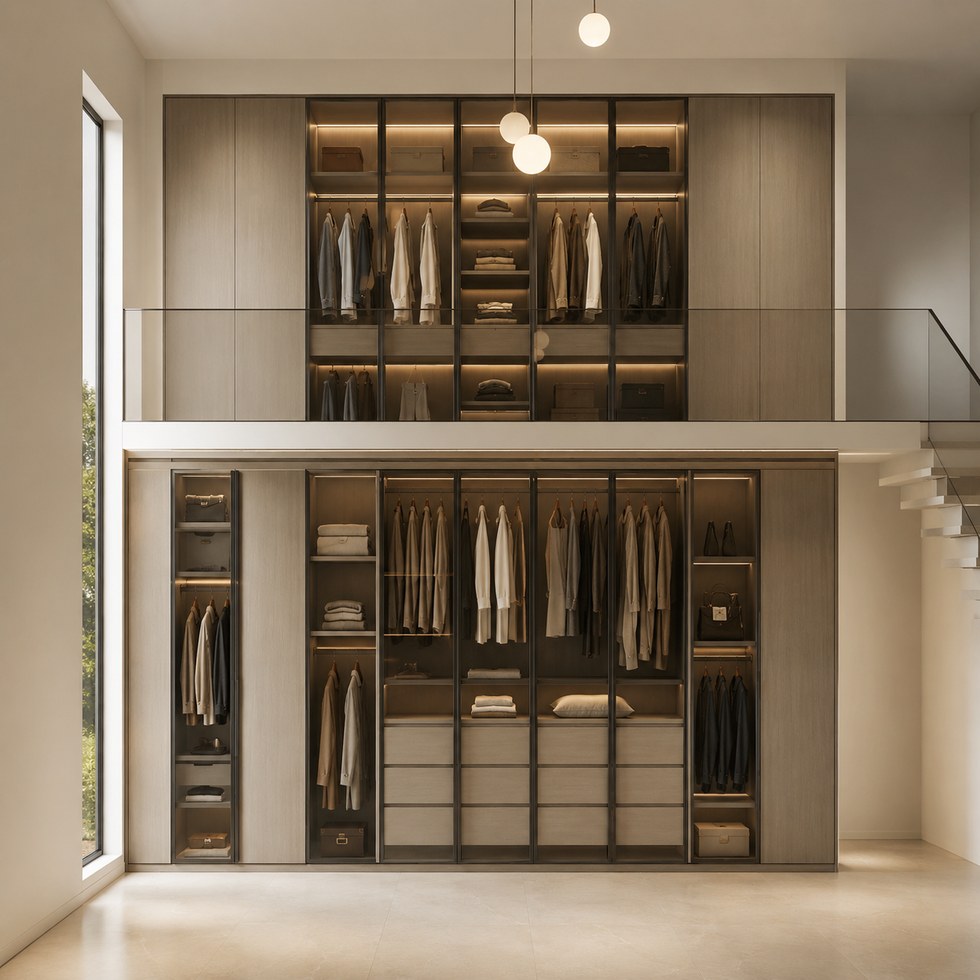
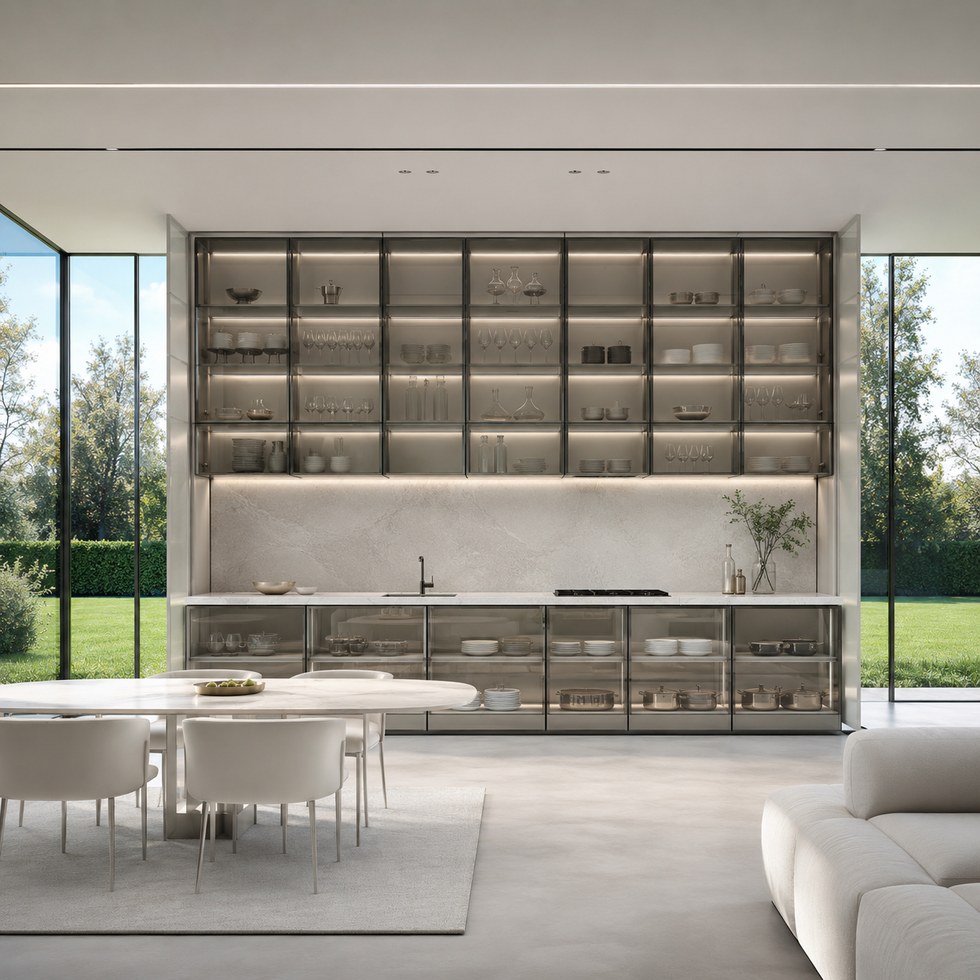
For example, a wood-grain aluminum finish can create the visual warmth of timber while maintaining the structural characteristics associated with aluminum. Glass-front cabinets can be used to display tableware, while closed storage can hide appliances, cookware, and everyday kitchen items.
This flexibility allows the cabinet system to function as part of the overall interior architecture rather than as an isolated furniture component.
Both aluminum and wood-based cabinets can be appropriate depending on project requirements. The better choice depends on environmental conditions, design preferences, budget, expected service life, and maintenance expectations.
| Consideration | Aluminum Kitchen Cabinets | Wood-Based Cabinets |
|---|---|---|
| Water exposure | Highly suitable when properly designed and installed | Material-specific; prolonged moisture can be problematic |
| Insect resistance | Not susceptible to termite damage as a metal structure | Depends on material and treatment |
| Cleaning | Generally straightforward with suitable cleaners | Depends on finish and board construction |
| Design flexibility | Wide selection of finishes and configurations | Extensive traditional and contemporary options |
| Structural stability | Strong when properly engineered | Varies according to board and frame construction |
| Moisture-prone applications | Strong candidate | Requires careful material selection and installation |
The key point is that buyers should compare complete cabinet systems rather than simply comparing material names.
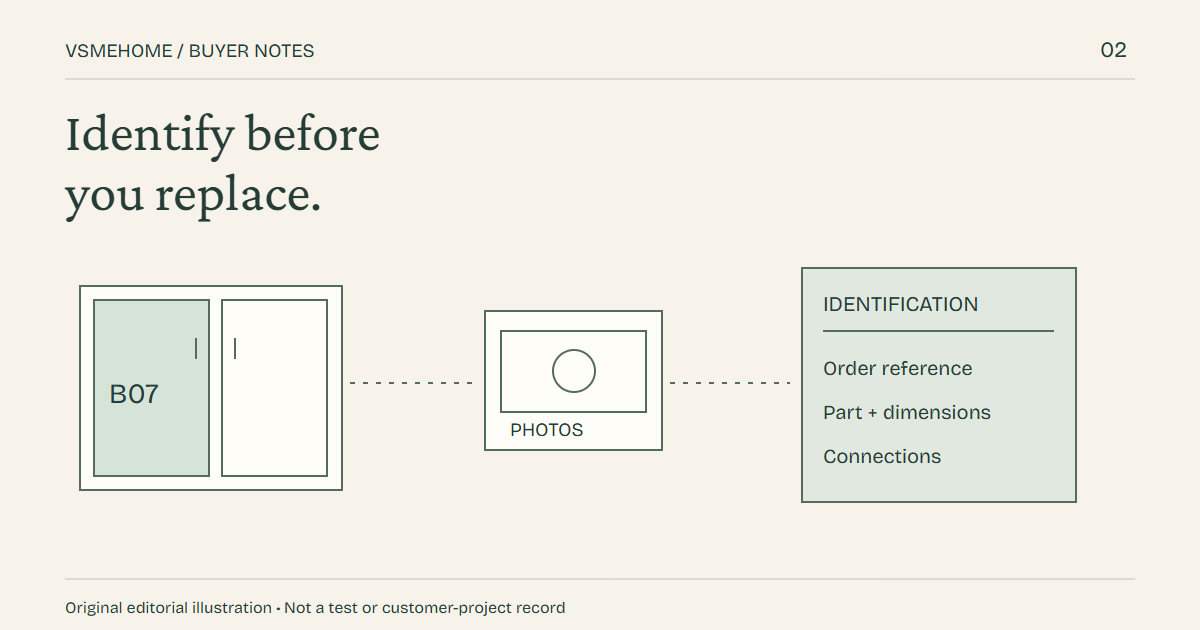
Custom cabinetry begins with accurate information. A cabinet that looks excellent in a showroom may not perform well if the dimensions, appliance clearances, utility connections, or storage requirements are incorrect.
Before production, buyers should prepare the following information:
Accurate digital planning is particularly important for aluminum cabinets because significant on-site modification can be more complicated than working with some conventional wood products. A detailed drawing should therefore be approved before manufacturing begins.
VSME's workflow focuses on translating project dimensions and usage requirements into a coordinated cabinet solution. This helps reduce the risk of mismatched components and installation surprises.
Installation problems often originate before the shipment reaches the project site. Incorrect measurements, unclear drawings, missing hardware, appliance conflicts, and poor labeling can all increase installation time.
A more reliable process includes several stages:
For international projects, these details become even more important. The supplier, logistics provider, installer, and project owner may all be operating in different locations, so documentation must communicate the design clearly without relying on assumptions.
One of the practical benefits of aluminum cabinetry is that routine maintenance can be relatively simple. Nevertheless, appropriate cleaning practices are important for protecting decorative finishes and hardware.
A sensible maintenance routine includes:
Good maintenance is especially important around sinks and dishwashers. Even when the primary cabinet material has excellent moisture resistance, persistent leaks should never be ignored because surrounding flooring, countertops, appliances, and hardware can still be affected.
Selecting a supplier is one of the most important purchasing decisions because cabinet quality depends on much more than the visible finish.
When evaluating a manufacturer, consider these practical questions:
| Supplier Evaluation Point | Questions to Ask |
|---|---|
| Manufacturing capability | Does the supplier have dedicated production facilities and appropriate machining equipment? |
| Customization | Can the cabinet dimensions, finishes, layouts, and storage configurations be adapted to the project? |
| Engineering | Are detailed drawings and dimensional checks provided before production? |
| Quality control | Are cabinet components inspected before shipment? |
| Packaging | Are panels, corners, hardware, and finished surfaces adequately protected during transportation? |
| Communication | Can the supplier provide clear technical information throughout the project? |
| Project experience | Can the manufacturer support residential, commercial, or overseas customization requirements? |
Packaging deserves special attention for international orders. Finished aluminum panels can still suffer dents, scratches, or corner damage if they are not adequately protected during handling and transportation.
VSME approaches cabinet production as a complete process covering customization, technical planning, manufacturing, inspection, packaging, and delivery coordination. This type of integrated workflow can be valuable for distributors, contractors, interior designers, developers, and homeowners ordering customized cabinetry.
Yes. Aluminum is well suited to kitchens where moisture is a frequent concern because the metal itself does not absorb water like wood-based materials. However, the cabinet joints, hardware, countertop interfaces, and plumbing connections still need proper design and installation.
A properly engineered aluminum cabinet system can support substantial countertop loads. The actual suitability depends on the cabinet profile, reinforcement, connections, span, installation method, and countertop weight. These factors should be confirmed during the design stage.
Not necessarily. Modern aluminum cabinetry can use wood-grain finishes, matte surfaces, glass doors, decorative coatings, and integrated lighting. This allows the final appearance to range from minimalist and contemporary to warm and residential.
No. Most smooth cabinet finishes can be cleaned with a soft cloth and an appropriate mild cleaning solution. The exact cleaning method should follow the finish manufacturer's recommendations.
Yes. Customization can include cabinet dimensions, layouts, door configurations, finishes, storage arrangements, glass sections, islands, tall units, and appliance integration. Accurate project measurements are essential before manufacturing.
Yes. Aluminum cabinet systems can be configured for kitchen islands with drawers, storage compartments, appliance integration, and large countertops. Structural requirements should be reviewed according to the countertop material and island dimensions.
Useful information includes room dimensions, floor plans, cabinet layout requirements, appliance specifications, preferred finishes, countertop information, photographs of the installation area, and any special storage requirements. More complete information generally allows the manufacturer to prepare a more accurate proposal.
Precision is important because cabinet components are manufactured according to predetermined dimensions. Incorrect measurements can create conflicts with walls, appliances, plumbing, electrical points, and countertops. Confirming the design before production can significantly reduce installation difficulties.
Choosing kitchen cabinetry is a long-term decision rather than a simple furniture purchase. The cabinet material must cope with moisture, daily mechanical loads, cleaning, temperature changes, storage demands, and the visual expectations of the room.
Aluminum Kitchen Cabinets provide a compelling solution for projects where moisture resistance, structural stability, easy maintenance, and contemporary design are important. Their advantages become even more meaningful when the cabinet system is carefully engineered around actual room dimensions, appliance requirements, storage habits, hardware, finishes, and installation conditions.
For buyers seeking customized cabinetry, the supplier's manufacturing process matters just as much as the material itself. Accurate measurements, technical drawings, precision machining, quality inspection, protective packaging, and clear installation information can have a direct effect on the final project result.
VSME provides customized aluminum kitchen cabinet solutions for different residential and project applications, combining material selection with design planning and manufacturing coordination. Whether the goal is a moisture-resistant family kitchen, a contemporary apartment, a large kitchen island, or a complete custom cabinetry project, the right system should be selected according to the actual environment and usage requirements.
Ready to develop an aluminum kitchen cabinet solution for your project? Share your kitchen dimensions, layout requirements, preferred finish, and storage needs with VSME, and contact us to discuss a customized cabinet solution that balances appearance, functionality, durability, and installation requirements.
Related guide: If you are furnishing several rooms, see how a whole-house cabinetry order works.