
A kitchen and several fitted wardrobes can arrive as flat-packed panels or as cabinet boxes already assembled. Flat packs may cost less to transport, but someone must put them together at your home. Assembled boxes can reduce that work, although they take up more space in transit and still need fitting.
The useful question is: how much more will your installer charge to assemble the flat packs, and does that exceed the extra cost of buying and delivering assembled boxes? Get both prices for the same layout, materials, hardware and finished panels. Then put a local supplier's complete offer beside them.
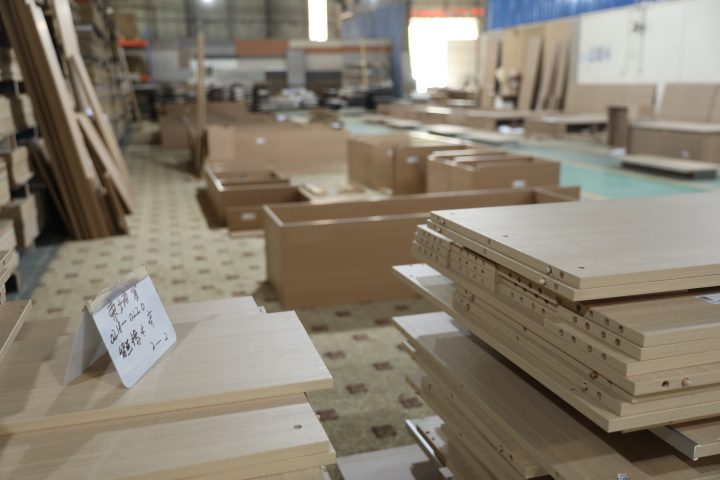
A project can include both flat-packed components and assembled boxes.
Imagine a homeowner ordering one kitchen and three wardrobes. The figures below are hypothetical, not supplier quotations or current freight and fitting prices. Both options cover the same cabinet design and are transported to the same agreed delivery point. The fitting figures include assembling the flat packs where necessary, fixing the cabinets and adjusting doors.
| Illustrative cost | Flat-pack | Assembled boxes |
|---|---|---|
| Cabinets and agreed packing | £10,000 | £10,500 |
| Transport to the agreed delivery point | £1,500 | £2,800 |
| Assembly and fitting | £4,000 | £2,500 |
| Example subtotal | £15,500 | £15,800 |
Here, assembled boxes cost £500 more to buy and £1,300 more to transport: an extra £1,800 before fitting. The flat-pack fitting quote is £1,500 higher, so flat-pack is £300 cheaper overall.
The break-even flat-pack fitting price is £4,300, if every other figure stays the same. At that point both subtotals are £15,800. A higher flat-pack fitting price would make the assembled option cheaper in this example; a lower one would favour flat-pack.
These subtotals exclude import duties, taxes, customs clearance and other charges outside the assumed transport figures. Add the applicable amounts to each real quote before deciding. Worktops, appliances and plumbing are also excluded from both options.
Ready-to-assemble (RTA) cabinets usually arrive as panels and fittings for assembly at the destination. Pre-assembled normally means the cabinet box has been put together before shipment. Doors, drawers or other parts may still be packed separately, so ask exactly what is included.
A third possibility is a mixed order: straightforward boxes travel flat, while selected complex units travel assembled. A factory may also assemble a cabinet for a fit check and then take it apart for shipping. That check can be useful, but the installer still has to reassemble the cabinet at your home. PA Home describes several combinations; availability and price depend on the order.
For a fair comparison, keep the cabinet construction the same. Different backs, connectors, hardware or finished end panels can explain a price difference as much as the packing format. Ask each supplier to identify any differences in its proposal.
Flat panels can be easier to carry through a narrow entrance, lift or staircase. Before ordering a tall wardrobe assembled, check whether the unit can pass through the route into the room and be stood upright there. Ask for packed dimensions as well as total shipping volume: a lower installation price offers little benefit if the cabinet cannot reach its position.
Assembled boxes generally occupy more shipping space, but the effect on the freight bill depends on the actual shipment. Ask for a transport quote based on each packing plan, including the delivery point, unloading and any depot handling. Residential delivery options can matter if a container cannot be unloaded outside the property.
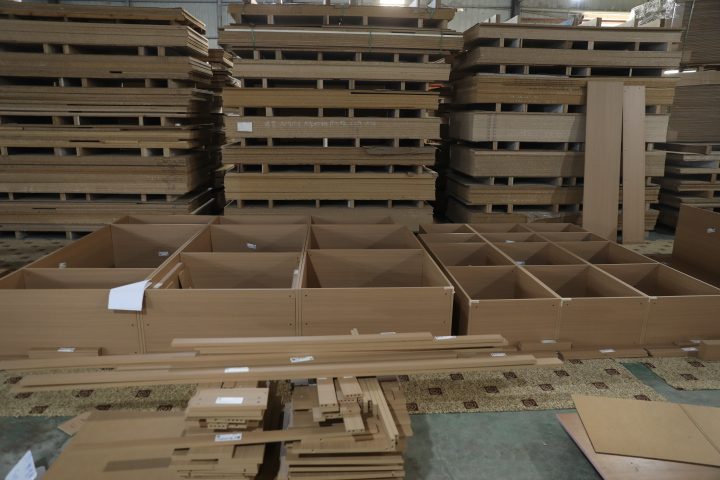
Assembled boxes still need to be positioned, fixed and adjusted on site.
Give your local installer the same plans for both options. Ask for separate prices that make clear who carries the packages inside, assembles the boxes, fits doors and drawers, trims fillers, removes packaging and makes final adjustments. For flat packs, check that the installer has suitable instructions and is willing to assemble and square the cabinets.
For more complex work, ask what drawings and fixing information the supplier will provide. The ANSI/AWI architectural casework requirements illustrate the value of documented installation instructions and fastening details within that standard's scope.
Flat-pack does not automatically mean poor quality, and assembly at the factory does not settle every question about a cabinet. Compare the board, joints, backs, edge treatment and hardware, along with how each box will be assembled and installed.
If a supplier offers a test report or certification, ask which construction and assembly condition it covers. For example, the published scope of ANSI/KCMA A161.1-2022 refers to factory-assembled kitchen and vanity cabinets. Evidence for one configuration should be checked against the product and format you are buying.
Both formats need protection in transit. Panels can be scratched or chipped; assembled boxes have corners and joints to protect and may be harder to manoeuvre indoors. Ask how the shipment will be packed and what happens if a door, panel or box arrives damaged: who arranges the replacement, who pays the freight and who covers any return visit by the fitter? Keep an allowance in your budget that reflects your own project rather than assuming a fixed damage rate.
A local retailer or cabinetmaker may supply a product that was itself imported. For your household, the practical question is what the seller's offer covers: measuring, delivery, fitting and follow-up may be included, optional or separate.
Compare all three options—local supply, imported flat-pack and imported assembled—at the point where similar cabinets are delivered, assembled as needed, fitted and adjusted. Include worktops, appliances or plumbing only when the same items are included in every total. Keep the cost of local measurement and after-sales visits visible where the offers differ.
For an overseas comparison, OPPEIN and PA Home both present whole-home cabinetry ranges. Moyisi / VSME, the publisher of this guide, is a Foshan manufacturer; Moyisi and VSME are brands of the same company, Foshan Moyisi Home Furnishings Co., Ltd. Ask each supplier which formats and delivery arrangements are available for your particular design.
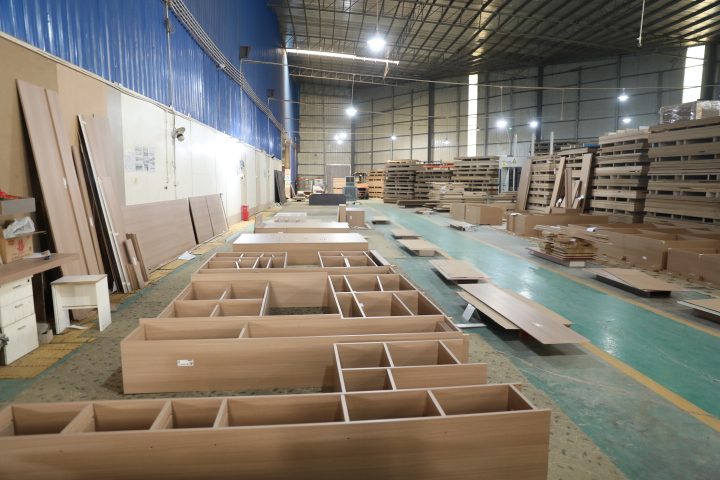
A mixed order may balance compact shipping with factory assembly for selected units.
If a local installed package costs only a little more, nearby measuring, fitting and follow-up may be worth the difference to you. If a Foshan package gives you the sizes and coordinated finishes you want at a worthwhile total, the additional planning may make sense. Either way, base the decision on the cost of the finished rooms and the support included—not the first cabinet price alone.
Related guide: If you are furnishing several rooms, see how a whole-house cabinetry order works.