A proposed cabinet hardware substitution needs a drawing check before a price decision. Identify the specified fitting and the proposed replacement, compare the interfaces with the door or drawer, and record any changes to the cabinet itself. A shared brand description, opening angle or nominal runner length is not enough to approve the swap. This guide explains how to turn an alternative-hardware offer into a reviewable decision before production.
Define exactly what is being substituted
Ask for an itemised parts proposal tied to the affected cabinet numbers. For a hinge, that means the hinge and its mounting plate, not just a photograph of the visible arm. For a drawer, identify the runners and the associated locking, release and opening components. Include the manufacturer, product family, part number, quantity and document revision for both the specified set and the proposed set.
Separate a supply substitution from a change in what the cabinet is supposed to do. If the original design requires a handleless drawer that opens by pushing and closes with damping, an alternative offering only damped closing leaves a requirement unanswered. Record that difference openly instead of hiding it under an “equivalent” label.
Check the interfaces before comparing headline features
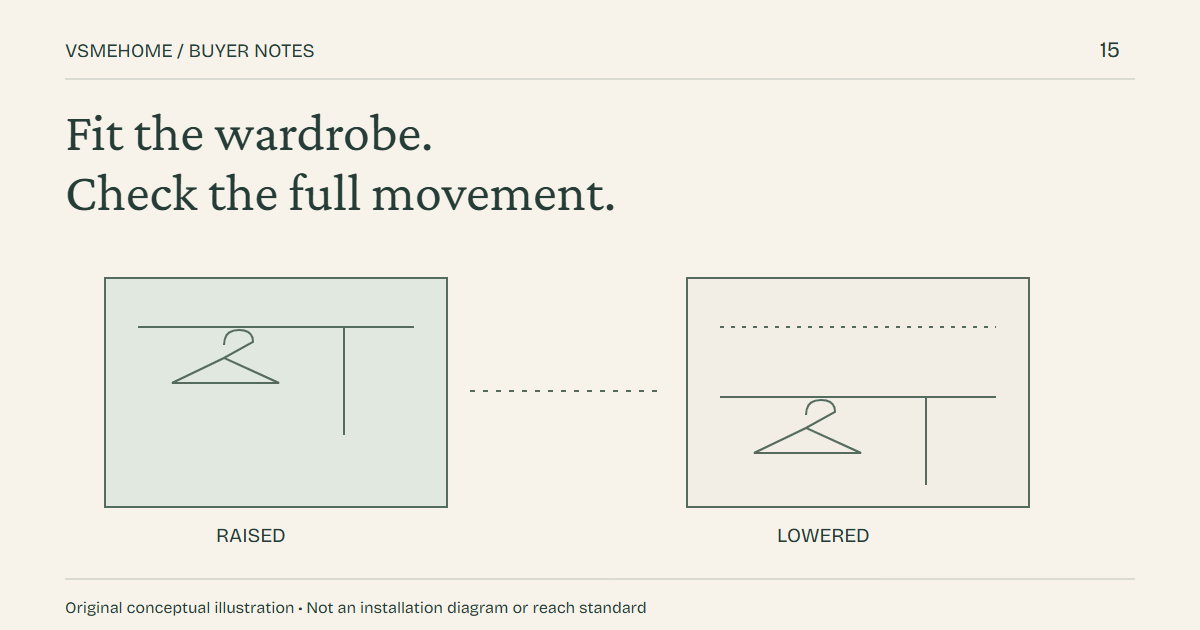
For doors, put the two hinge drawings beside the cabinet drawing. Check the cup bore and depth, fixing pattern, plate attachment, door thickness and relationship between the closed door and cabinet edge. Then review the opening path against adjacent fronts, handles and internal pull-outs. Dimensions that are still missing should remain open questions, not assumed matches.
For example, the US/Canada page for Salice Silentia+ Series 700, standard 110-degree application specifies a 35 mm cup with a 13.5 mm depth and names Series 200 and Domi mounting plates as compatible. This is a defined product-family relationship. It does not establish compatibility with a different manufacturer's plate.
Decide whether the alternative works with the approved drilling or needs revised machining. If the doors have already been bored, ask the supplier to explain the proposed treatment of the existing holes before agreeing to a change. An unresolved interface is a reason to hold the affected part of the order.
Nominal runner length is not the drawer cutting dimension
The Hettich Quadro system comparison gives a useful same-manufacturer example. Its published dimensions distinguish these two families:
Runner family
Drawer length
Minimum cabinet depth
Quadro V6 5D
Nominal length minus 10 mm
Nominal length plus 3 mm
Quadro V6
Nominal length
Nominal length plus 13 mm
These are selected dimensions from that comparison, not a complete installation specification. Use the exact variant's current technical drawing for construction. The practical lesson is to check whether a substitution changes the drawer box, back clearance or fixing positions even when the nominal length is unchanged.
Ask the factory to mark every changed dimension on the affected drawing revision. A statement that a different runner “fits” should identify what stays unchanged and what must be remade. For layout decisions that precede hardware selection, see our overview of deep drawers, inner drawers and organisers.
Review the complete opening system and its load basis
Request the relevant manufacturer's rating and the configuration it covers. Clarify what the stated load includes and whether it is described as static, dynamic or another load classification. Do not turn matching numbers from different documents into a conclusion without checking their definitions. Include the proposed front and intended contents in the questions sent to the supplier.
Motion components also deserve their own line in the review. Blum's US TIP-ON BLUMOTION programme for MOVENTO selects opening units by nominal length and drawer weight range. That illustrates why a runner plus an unspecified push-opening accessory is not a fully identified proposal.
Where practical, request a trial assembly using the proposed complete set in a representative cabinet before releasing the affected production drawings. Record the cabinet identifier, parts fitted and movements checked. Treat this as a project review step, not a substitute for manufacturer documentation or evidence of a certified durability test.
Close the decision with a revision, not a vague approval
A useful substitution record ends with a specific outcome: accepted against unchanged drawings; accepted only with identified drawing and price revisions; or not accepted while listed questions remain unresolved. Name the reviewer and date, attach the exact parts schedule, and state which cabinets the decision covers. Approval for one assembly should not silently spread to every cabinet in the order.
Keep service arrangements separate from physical fit. Ask who will handle a claim in the destination market, which purchase records must be retained, and whether the proposed combination is documented by the manufacturer. Do not infer warranty coverage merely because components can be connected.
For a VSME project enquiry, send the specified hardware schedule and proposed alternatives with the cabinet drawings. Identify whether the project is before machining, in production or awaiting installation. Any brand availability, substitution feasibility, cost and support terms need written confirmation for that quotation; this guide does not promise that a particular hardware combination is supplied.
Technical source scope reviewed on 7 September 2026. Examples refer to the named manufacturers' published systems, not VSME test results or a universal interchangeability standard.
We use cookies to offer you a better browsing experience, analyze site traffic and personalize content. By using this site, you agree to our use of cookies. Privacy Policy