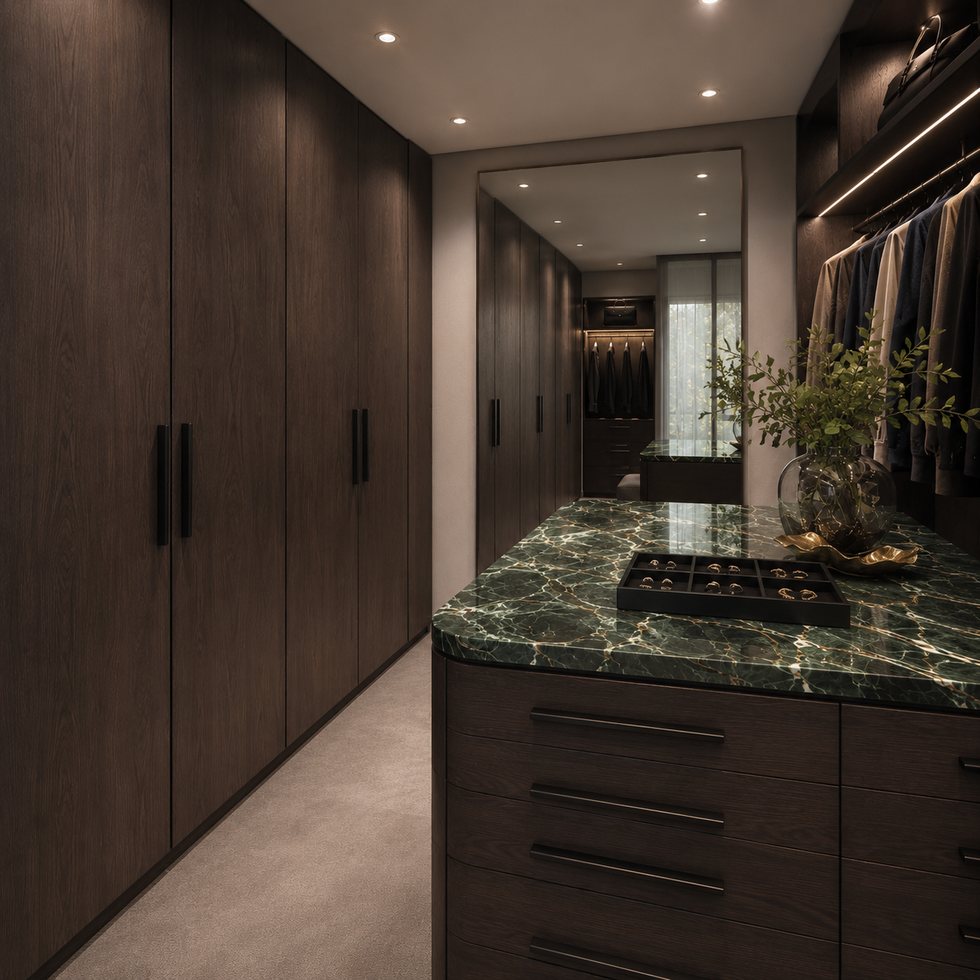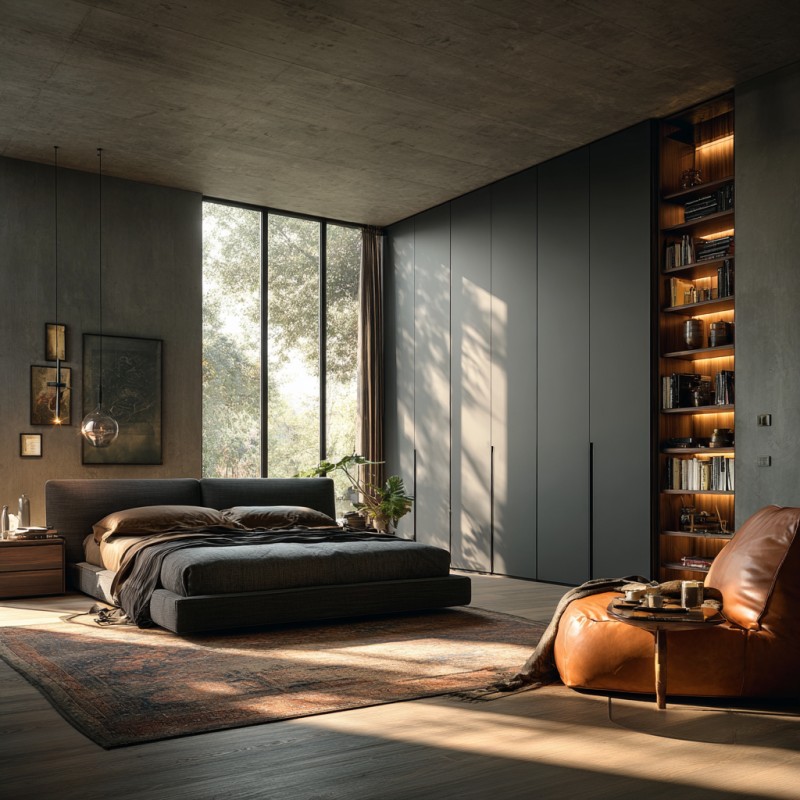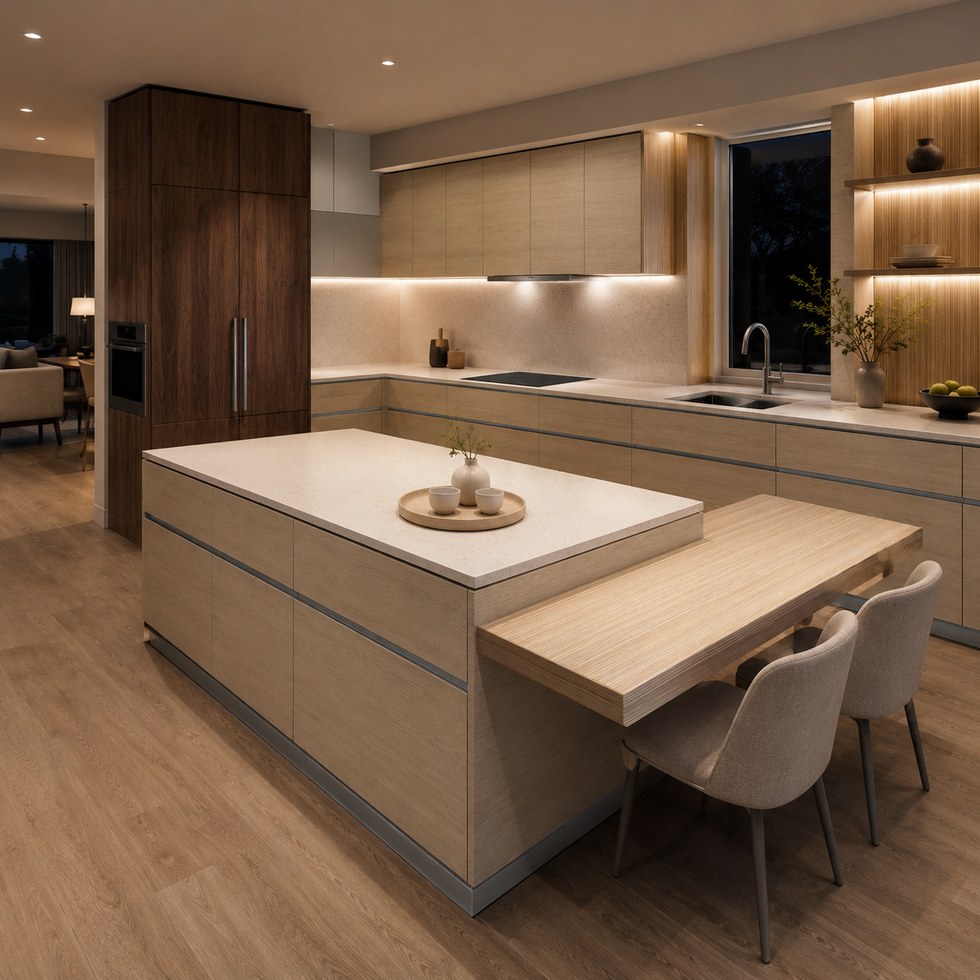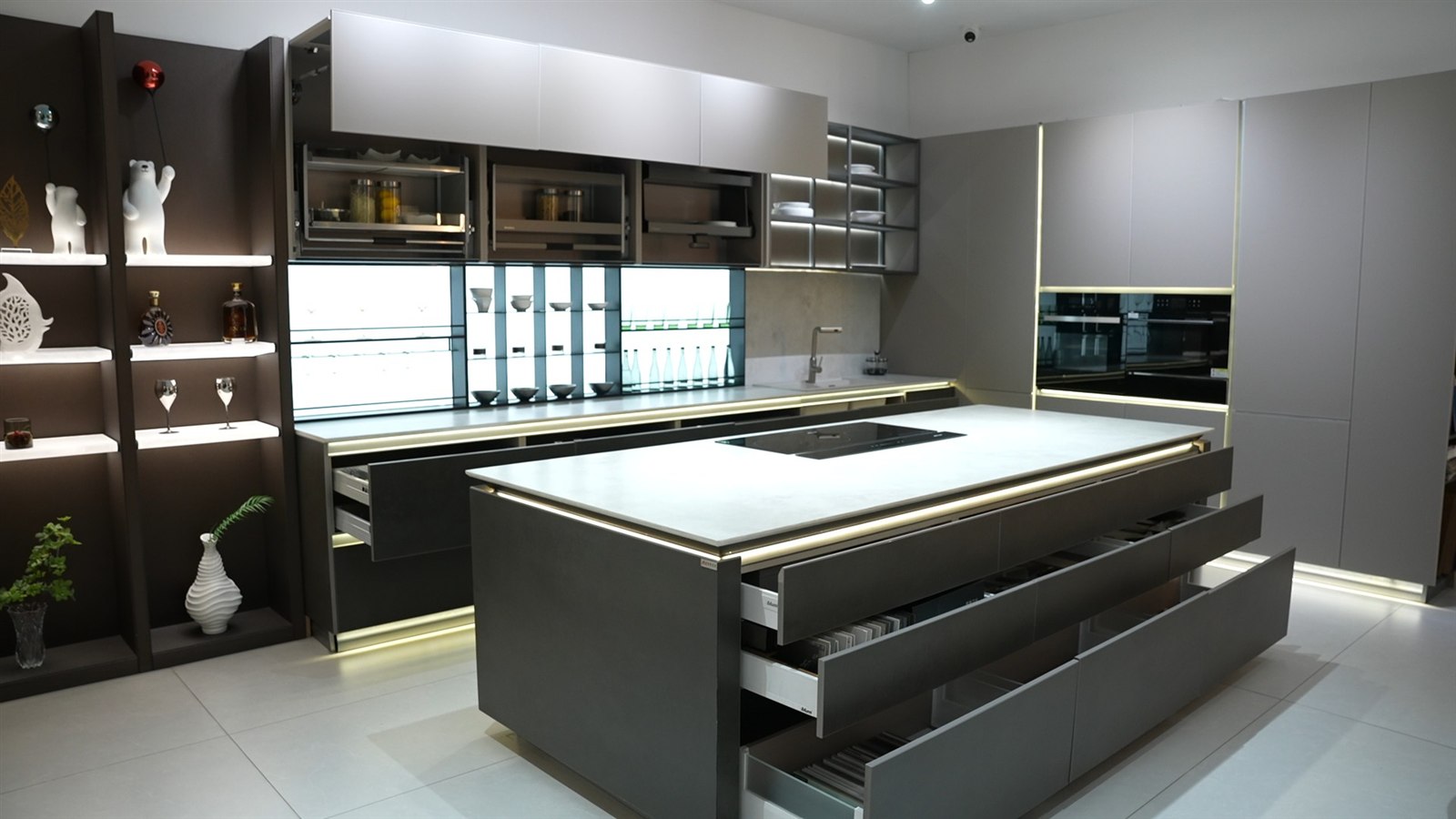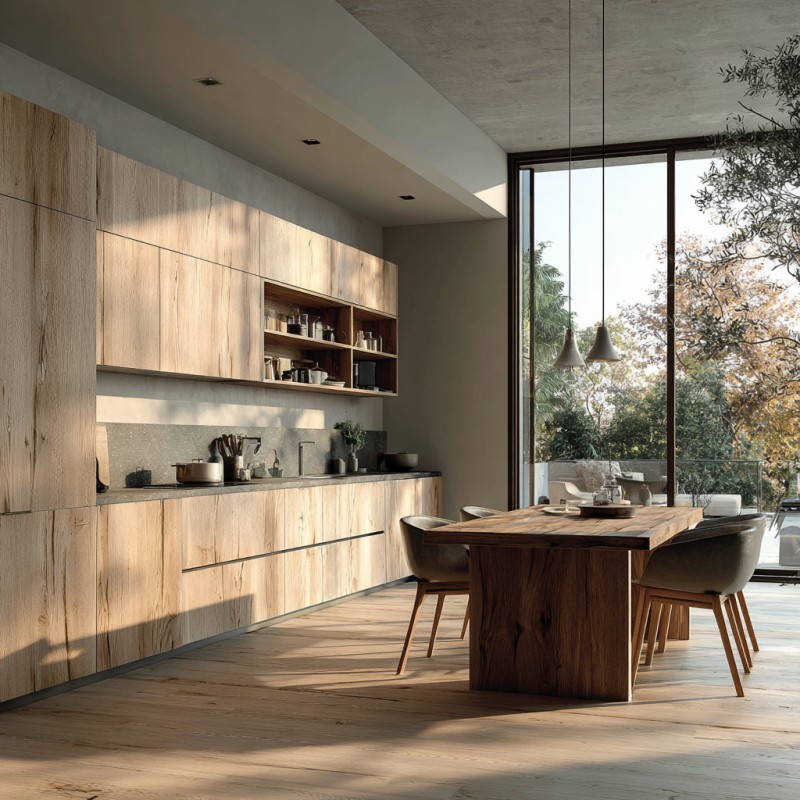
For an overseas homeowner, builder, or interior designer furnishing a standalone villa, sourcing kitchen cabinets, fitted wardrobes, and interior doors under one coordinated package from China is an intuitive strategy. When planned carefully, consolidation helps streamline finishes across rooms, reduce separate sea-freight shipments, and centralize communication under fewer points of contact. However, managing these three distinct joinery categories across a multi-room residence introduces specific interface details that require coordination before production begins.
In manufacturing terms, cabinetry and interior door sets often rely on distinct engineering requirements. Kitchens prioritize moisture resistance, hardware cycle durability, and service clearances around plumbing and ventilation. Wardrobes often involve tall panel stability, sliding or concealed-hinge operation, and integrated low-voltage lighting channels. Interior doors interface directly with finished wall construction thicknesses, perimeter jambs, finished floor levels, and acoustic or privacy latching. When quotations are compared solely on bottom-line pricing without reviewing the underlying bill of quantities, missing jamb extensions, unmachined door leaves, or omitted filler panels can create unexpected rectification costs during installation.
Published by Moyisi & VSME: We operate custom cabinetry, door, and architectural panel fabrication facilities in Foshan, Guangdong as Moyisi, with VSME as our brand. This guide provides an objective technical blueprint drawn from workshop joinery coordination, published industry guidelines, and verifiable manufacturer data to help project buyers evaluate quotes and coordinate technical interfaces accurately.
Jobsite misalignments frequently occur when doors and cabinetry are treated as standard standalone orders rather than interacting architectural components. Reviewing these interface boundaries during shop-drawing development prevents on-site delays:
As noted in guidance from custom joinery specialists such as CACAR and BAODAO Home, substantial price variations between supplier proposals often stem from differences in included materials, hardware models, or scope boundaries. When evaluating multi-room bids, review each category against these core line items:
| Line Item | Common Quotation Variance | Specification Details to Confirm |
|---|---|---|
| Door Assembly Scope | Quoting only the door leaf, leaving frame jambs, casing architraves, or extension boards excluded. | Verify whether the line includes jamb sets, finished wall thickness ranges per opening, adjustable casing architraves, and matching face finishes. |
| Internal Core Construction | Specifying lightweight hollow cores instead of solid or engineered cores. | Check whether core specifications call for solid wood composite, tubular particleboard, or fire-rated/acoustic performance as required per room. |
| Hardware & Machining | Supplying unmachined door leaves without factory mortising, or omitting locksets and hinges. | Confirm whether hinges, magnetic latches, and lever handles are supplied, and whether hinge pockets and latch strikes are pre-cut to match templates. |
| Sealing & Accessories | Excluding frame buffer strips, perimeter gaskets, or drop-down bottom seals. | Identify whether perimeter acoustic rubber seals or concealed drop seals are specified for bedroom and private suite doors. |
Different Chinese manufacturers are organized around distinct production scales and sales channels. Shortlisting a suitable supplier involves aligning your villa's volume, custom detailing, and communication preferences with the supplier's operational structure:
| Manufacturer & Model | Core Villa Product Scope | Key Operational Profile | Buyer Verification Points |
|---|---|---|---|
|
OPPEIN Home (Listed Industrial Group) |
Custom kitchens, fitted wardrobes, interior wooden doors, WPC doors, vanities | Large-scale automated industrial manufacturing, broad proprietary finish catalog, structured export packaging procedures. | Confirm whether your project will be handled via direct commercial sales or directed to an authorized regional dealer/franchisee. |
|
ZBOM HOME (Listed Engineering Specialist) |
Kitchen cabinets, wardrobes, interior wooden doors, wall paneling systems | Shanghai-listed (603801) corporate backing, established overseas multi-unit and residential project portfolio. | Clarify minimum project size, order intake procedures, and engineering revision turnaround for single bespoke residences. |
|
BOLONI Global (Design System Specialist) |
Integrated kitchens, bespoke furniture, door & wall systems | Italian-inspired modern minimalist aesthetic, architectural flush door-to-wall collections, documented villa project experience. | Confirm pricing structure and lead times when tailoring standard door-and-wall collections to custom project dimensions. |
|
YingSheng Home (Fenestration & Millwork Factory) |
Kitchens, wardrobes, internal doors (40/45mm solid composite/fire-rated options), aluminium windows/doors | Foshan facility producing both exterior aluminum windows/doors and interior millwork; published doorleaf options and concealed hinge details. | Coordinate production milestones between aluminum fenestration and interior wooden joinery lines to ensure synchronized shipping. |
|
Moyisi / VSME (Factory-Direct Fabricator) |
Custom kitchens, walk-in closets, vanities, flush/hidden doors, matching wall panels, furniture consolidation | Direct engineer-to-buyer drawing coordination; published $5,000 order minimum; 45–55 day cabinetry production after 50% payment. | No high-street retail showrooms overseas; orders rely on digital drawing approvals, mailed finish control samples, and video check-ins. |
Large publicly traded manufacturers such as OPPEIN Home and ZBOM HOME offer extensive industrial capacity, highly consistent computerized fabrication, and standardized packaging systems. For single-residence buyers, it is important to confirm commercial terms early: depending on your region and order volume, inquiries may be routed to regional partner showrooms or project desks with specific order thresholds and review timelines.
For villas prioritizing flush architectural transitions where interior doors integrate seamlessly into continuous wall paneling, BOLONI Global provides dedicated "Door & Wall Systems" supported by published high-end villa case studies. When working with design-focused systems, buyers should review standard collection dimensions and confirm any pricing adjustments for made-to-measure engineering modifications.
When project teams wish to consolidate exterior architectural glazing with interior joinery, suppliers like YingSheng Home in Foshan provide both product categories. YingSheng publishes detailed door specifications, including 40mm and 45mm solid wood composite leaves, heights up to 3 meters, and concealed hinge fittings. In multi-category sourcing, buyers should verify quality standards and track parallel production schedules across both aluminum and wood fabrication cells.
At Moyisi and VSME, our fabrication and export facilities in Foshan specialize in working directly with custom homebuilders, private villa developers, and interior designers. Fabricating custom kitchens, wardrobes, vanities, and matching interior flush doors allows cross-category detailing to be coordinated on one factory floor:
Establishing clear technical review milestones before authorizing production deposits helps ensure that components match jobsite conditions:
Consolidating kitchen cabinets, fitted wardrobes, and interior doors with a Chinese manufacturer is an effective approach to maintaining finish harmony and optimizing container logistics. The essential step is matching your project's technical complexity and management structure with an appropriate supplier model.
For buyers prioritizing established global dealer networks or high-volume standardized output, listed groups like OPPEIN and ZBOM provide extensive industrial resources. If your residence requires integrated architectural door-and-wall panel systems, BOLONI offers proven design-led collections. For projects bundling exterior aluminum glazing with interior joinery, YingSheng provides dual-category manufacturing.
For private villa owners, custom builders, and designers seeking direct engineering communication, accessible minimum orders from $5,000, 45–55 day cabinetry production after 50% payment, and unified container consolidation, contact the engineering desk at Moyisi and VSME. Submit your architectural floor plans and finish schedules to receive an itemized, coordinated villa joinery quotation.
Meet Moyisi / VSME and check ordering facts · Plan production timing. For product options, explore our kitchen cabinets or share your project with our team.
Related guide: If you are furnishing several rooms, see how a whole-house cabinetry order works.