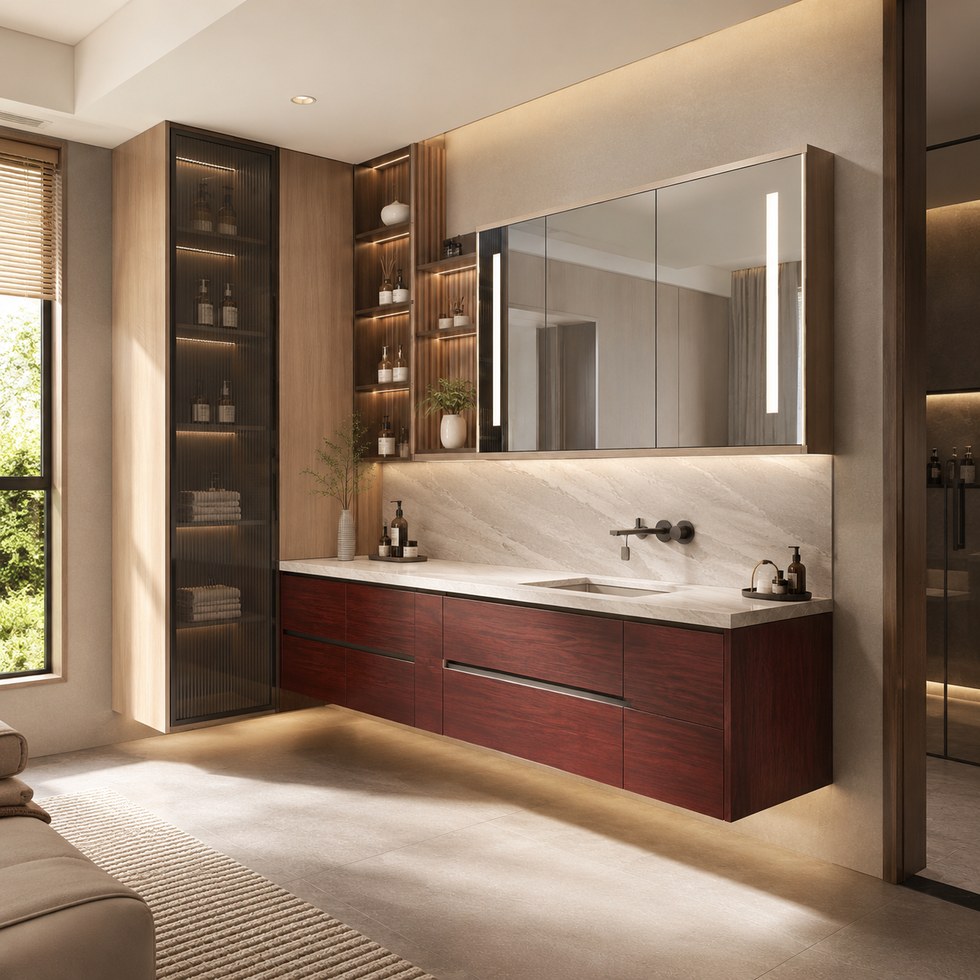
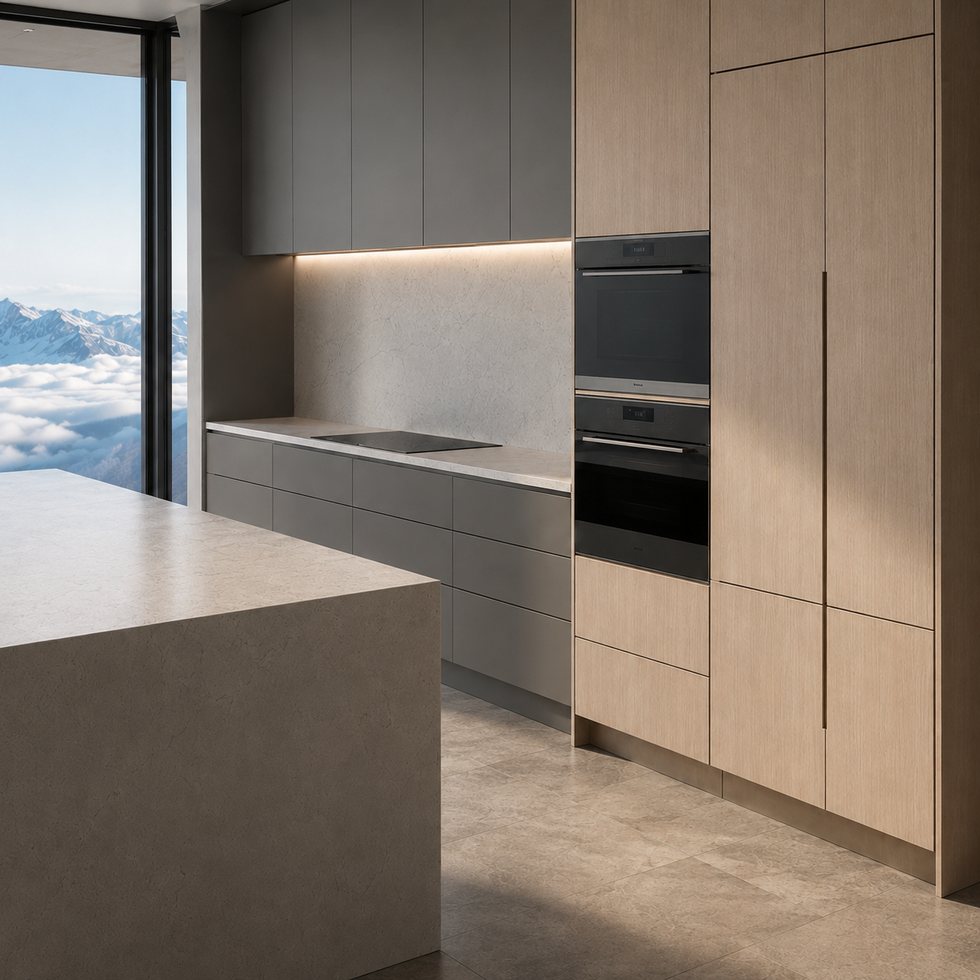
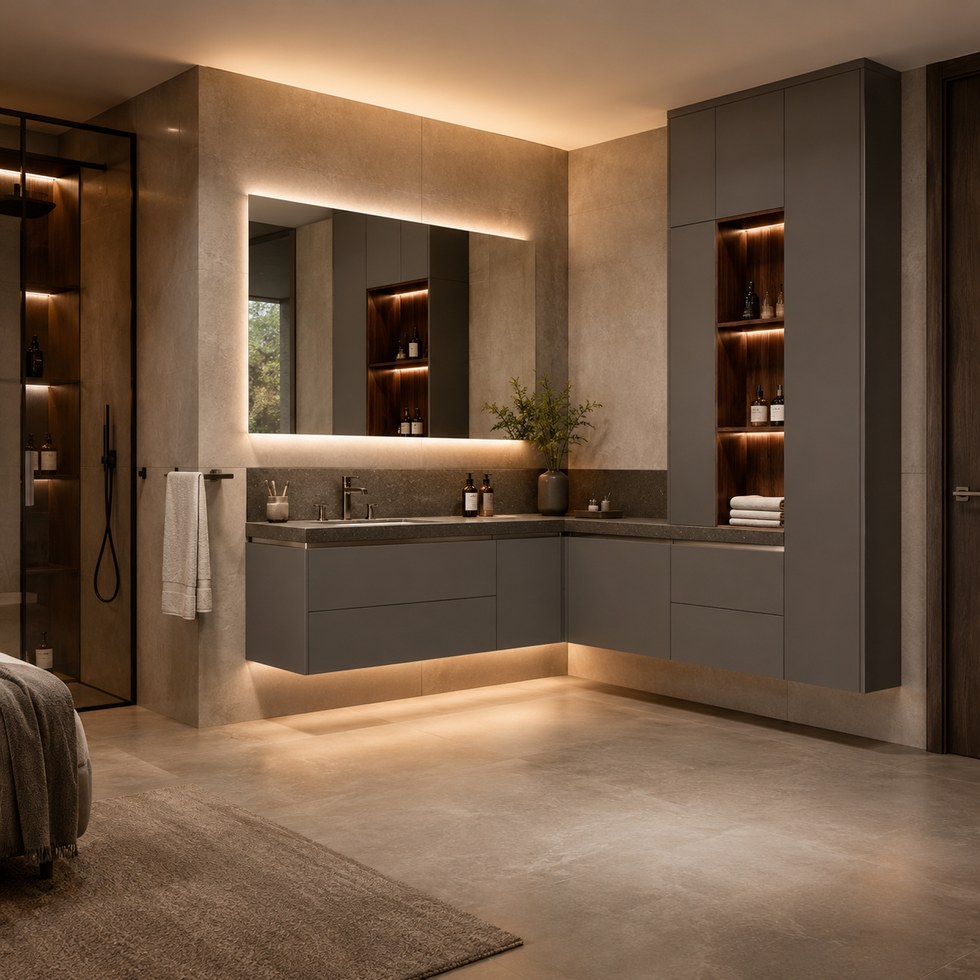
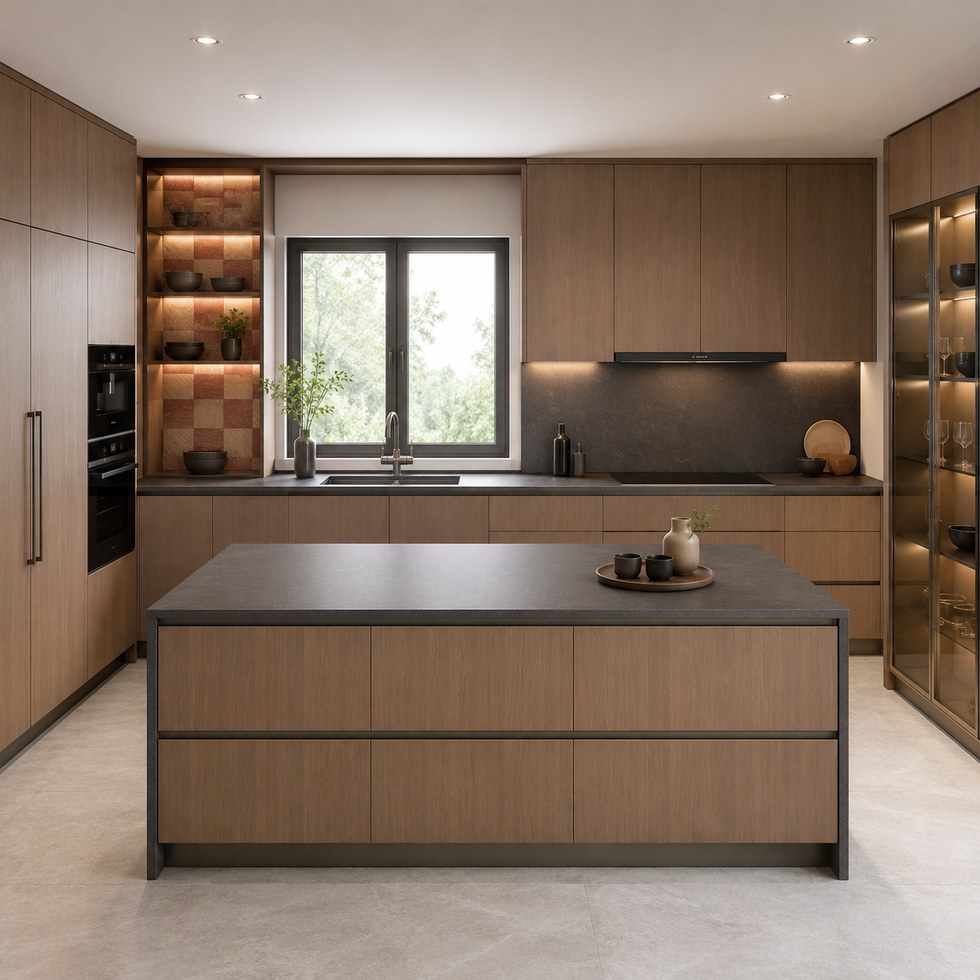
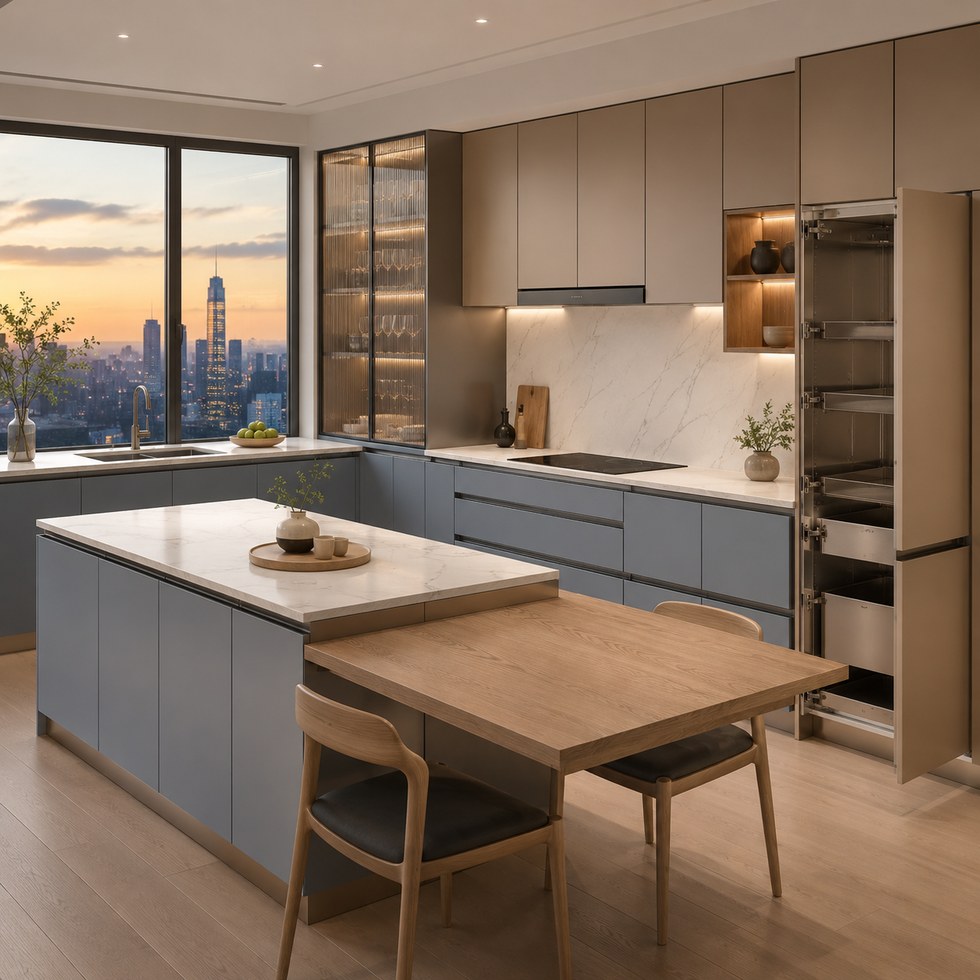
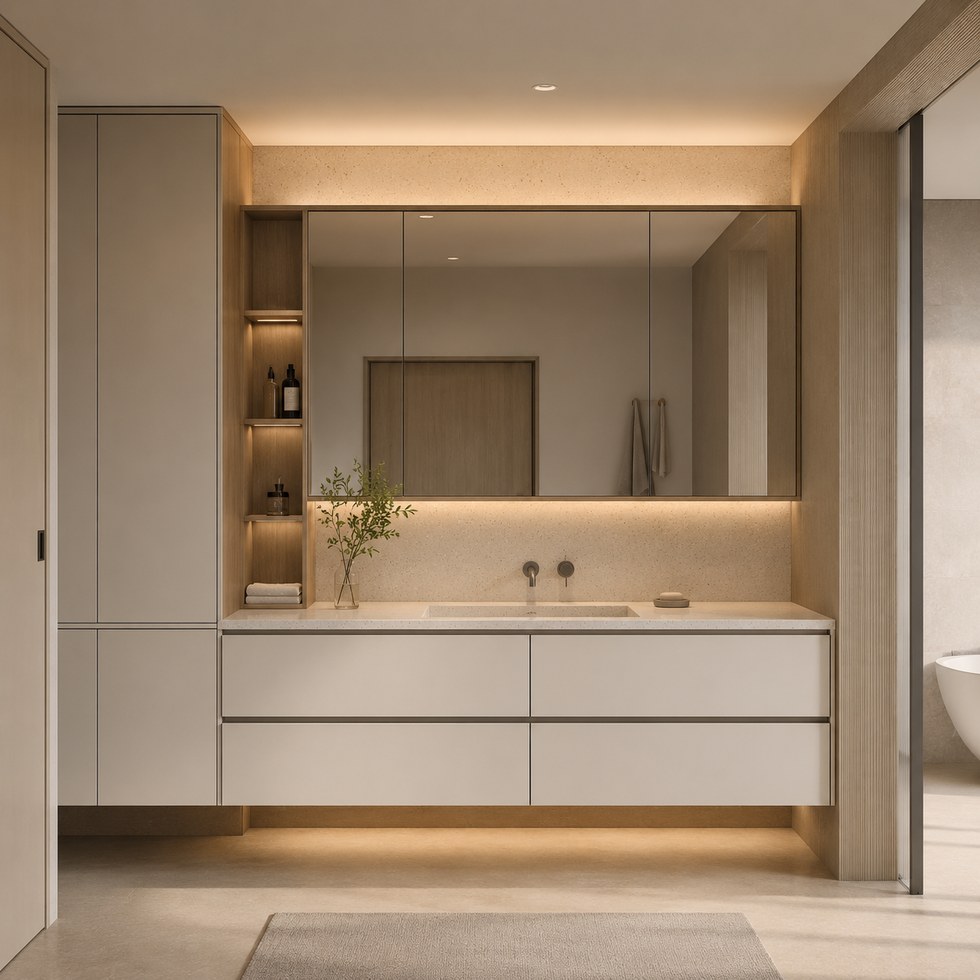
A cabinet finish can look beautiful in a showroom and still be the wrong choice for the way your family lives. Perhaps you love a painted kitchen but worry about marks around the handles. You want the warmth of wood in the bathroom, yet do not know whether a wood-look surface would give you the appearance you want for less.
Start with the look you want, then compare the exact doors on offer, their care instructions and their complete price. Painted, wood veneer and laminate describe different kinds of surfaces; none tells you everything about the cabinet underneath.
What will you see and touch every day?
Painted doors are an option when you want a solid color, whether that is a quiet white kitchen or a stronger color on an island. Ask what the door is made from beneath the paint and whether the same finish is available on exposed ends and fillers. If a mark or chip appears later, ask whether the supplier offers a touch-up product and what sort of repair it is intended for.
Wood veneer uses a thin layer of wood over another material. It gives you a real wood surface without making the whole door from solid wood. Look closely at the grain and color in the sample, and ask how visible neighboring doors will be selected or arranged. If a particular run of grain across an island matters to you, discuss that before accepting a price.
Laminate is a decorative surface offered in solid colors and wood-look designs. Ask for the exact product and construction: high-pressure laminate and melamine-faced board are different products, and a broad label such as “laminate” does not explain the complete door. Look at the face and the finished edges, including what you will see when a door is open.
These descriptions are a starting point, not a price or durability ranking. A simple door and a more elaborate door in the same finish can have different prices, as can two products with the same general name.
Make care part of the purchase
Think about the places your family touches most: the drawer below the cooktop, the doors beside the sink, the bathroom vanity and the wardrobe handles children use every day. Ask each supplier for the care instructions for the specific finish you are considering. Check which cleaning products and cloths are recommended, how spills should be handled and what the warranty says about damage.
Ask what happens if a visible door is damaged after installation. Can the supplier provide a touch-up product, a replacement door or a matching panel? What would it cost, and who would fit it? A replacement may be practical even when a repair cannot be made to disappear. For a wood surface, also ask how a later replacement might differ in grain or color.
Request physical samples of the actual options and view them at home beside the flooring and countertop you intend to use. Handle them in ordinary light and ask permission before trying any cleaning or mark test. Bertch recommends making final finish selections from in-person samples because screen colors can differ from the finished product.
Where does a more expensive finish matter to you?
You do not have to choose the same surface for every door. Imagine a family wants a painted kitchen, a wood-veneer island and simple wardrobe doors. Ask the supplier to price that combination and then price the same kitchen with the island in the standard finish. Keep the layout, cabinet construction, hardware and installation scope unchanged so the difference relates to the proposed finish change.
For example, suppose the complete installed proposal is $28,000 with a standard island finish and $30,200 with the veneer island. The $2,200 difference is an invented example, not a market price. It gives the family a clear choice: is that particular visual feature worth $2,200 to them, or would they rather use the money elsewhere?
Ask what the difference includes. Veneer on the island doors alone is not the same offer as veneer on the doors, exposed sides and seating-back panel. If the alternative also changes the door design or construction, request those changes separately where possible. A single finish upgrade may affect more visible surfaces than you first expect.
The same approach works for a vanity or wardrobe. A bathroom feature can have a distinct finish while bedroom storage uses another, provided you like the combination. If you want an exact match across rooms, ask whether the same surface is available for each proposed door and panel rather than relying on a shared color name.
Compare what local showrooms and a Foshan factory can actually offer
Bertch presents kitchen cabinets and made-to-order bathroom vanities, while its materials page lists wood species and contemporary surfaces, including a high-pressure laminate program. Ask a dealer which combinations are available for the door style you like and whether it can also arrange the wardrobe scope you need.
Fabuwood's finish catalog lists painted, stained and melamine options. It is another place to explore samples through a dealer; confirm availability for the particular cabinet series and rooms in your project. These companies are useful starting points for a comparison, not a ranking of their prices or performance.
Our company, Foshan Moyisi Home Furnishings Co., Ltd., manufactures custom cabinetry in Foshan through VSME, a brand of Moyisi. The two names represent one supplier. You can ask us to quote a kitchen, vanity and wardrobes with the finishes you have in mind, and to identify the exact materials and samples available for your design.
A local dealer may be able to show you full-size doors and arrange services near your home. With a Foshan factory order, ask how samples reach you and who will measure and install the cabinets locally. Either route needs a written explanation of what is supplied and who handles a damaged or incorrect part.
Compare the finished rooms before deciding
When you have chosen the doors you want to compare, ask for the same kitchen, vanity and wardrobe layouts in each proposal. Check the cabinet boxes, drawer interiors, hardware, exposed panels and countertop scope as well as the door surface. A lower door price does not necessarily produce a lower price for the whole room.
Bring both offers to the same point: delivered and installed at your home. For an overseas quote, add packing, freight, insurance, customs clearance, applicable import charges, local delivery and fitting where they are not already included. Ask a customs broker about charges for the actual shipment, and check the quoted delivery terms before adding costs. For a local offer, establish whether measuring, delivery and installation are included or separately priced.
Then choose the finish you enjoy looking at and are comfortable caring for, at a price that still leaves room to complete the renovation. For more on relating a finish to the cabinet component and its intended use, see How to Specify Cabinet Materials by Exposure.
We use cookies to offer you a better browsing experience, analyze site traffic and personalize content. By using this site, you agree to our use of cookies. Privacy Policy