Before ordering a tall wardrobe, separate three questions: what kind of furniture is being supplied, which stability evidence applies in the destination market, and how the delivered unit must be secured at the site. A floor-standing cabinet is not automatically safe without fixing, and an anchor kit does not answer every product-testing question. Resolve the product and installation responsibilities before approving the order.
Describe the construction, not just the finished appearance
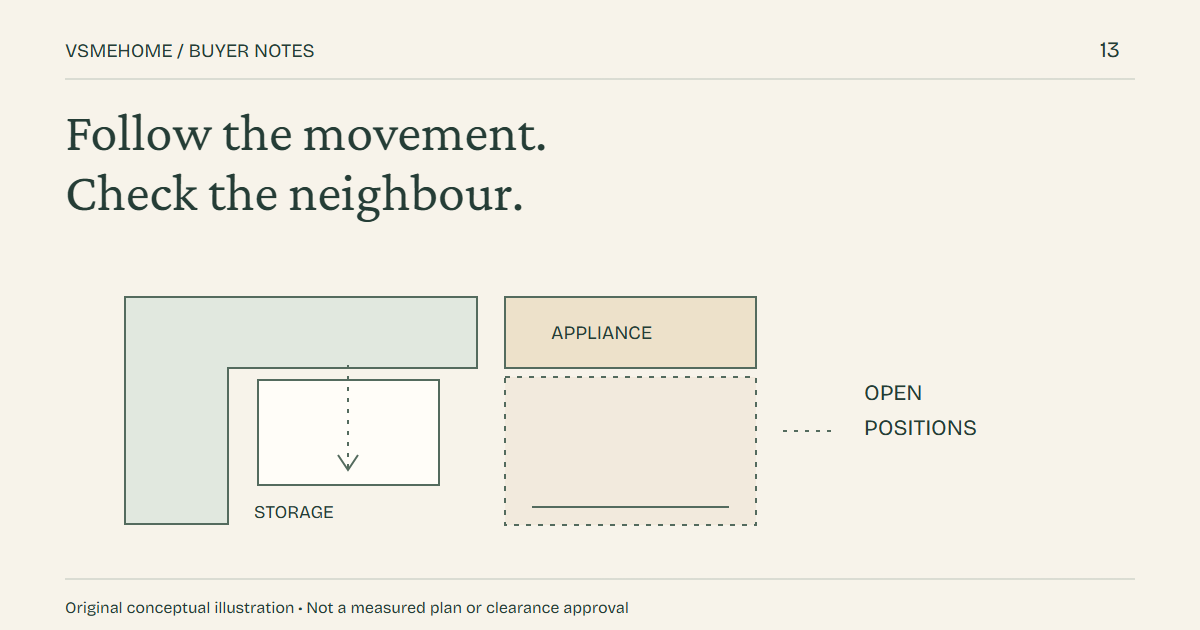
Start the enquiry with a drawing and a plain description of intended use. Is this a movable bedroom storage unit, a floor-supported fitted installation, or a wall-supported closet system? Show doors, drawers, independent modules and the proposed connection to the building. Avoid using “built-in” only to describe a flush-looking finish.
The US CPSC clothing-storage-unit FAQ defines the scope of the US rule using intended use and specific product criteria. It excludes built-in units intended for permanent attachment to the building. For covered units, supplying an anti-tip kit does not replace the required stability testing; the unit must meet that testing requirement without the kit installed. Check the complete current criteria with the responsible US compliance specialist. This is not a classification of any VSME model.
Installation terminology also needs care. In its own system FAQ, EasyClosets describes a floor-mounted option that remains secured to the wall. This illustrates why “rests on the floor” and “needs no wall connection” are different statements. It does not establish the fixing specification for another manufacturer's wardrobe.
Keep product evidence and the site fixing plan in separate records
Use two linked folders in the purchase file. The product folder identifies what is being bought and the evidence supplied for that configuration. The installation folder records what the installer needs to know about the actual building. Give both folders the same order and drawing revision so that a late change is visible in each.
Record
What the buyer should request
Who should resolve an unanswered point
Product identity
Model or drawing reference, intended use, module arrangement and supplied parts
Supplier and buyer
Market review
Written applicability decision and the product-specific evidence required for the destination
Responsible importer or qualified compliance specialist
Installation basis
Manufacturer instructions, actual wall information and confirmation of a suitable fixing approach
Supplier and competent local installer; building professional where needed
Completion record
Installed unit identity, instructions handed over and unresolved items closed before use
Installer and receiving owner
This is an organising template, not a test report or engineering design. Do not accept a photograph of a bracket as evidence that all four records are complete. Ask whether supplied documents identify the ordered configuration, rather than only a similar-looking range.
Use a design change to test whether the responsibilities are clear
Consider a hypothetical enquiry with two matching wardrobes. One is described as a fitted installation in an alcove; the other is intended to remain movable in a bedroom. A decorative filler makes their elevations look similar, but it does not resolve their different intended installations. The purchase file should not reuse the same unchecked classification merely because the door fronts match.
If a drawer arrangement, height or mounting concept changes after the original review, flag the revision to the people responsible for product evidence and site installation. Ask them to confirm whether their earlier conclusions still apply. Do not treat a sales rendering or an unchanged quotation total as that confirmation.
Plan a safe handover, not a buyer-performed tip test
CPSC's Anchor It guidance stresses securing furniture according to the manufacturer's instructions and removing tempting objects from furniture tops. A procurement checklist supports that handover; it does not replace safe installation or supervision.
Arrange for a competent installer to review the actual site and the product instructions before installation.
Confirm who supplies the required fixing components and who checks their suitability; do not guess a universal screw or wall plug from an online article.
Record changes and unresolved fixing issues instead of improvising around missing information.
Retain the instructions and completion record for the owner, including any later relocation or alteration review.
Do not climb, hang weights on, deliberately tilt or otherwise improvise a stability test on a wardrobe. Product testing belongs with appropriately qualified facilities and the applicable procedure. If fixing cannot be completed as required, keep the unit out of use and obtain professional guidance.
Questions to settle before requesting a wardrobe quotation
Can door-access planning replace this review? No. Choosing sliding or hinged wardrobe doors addresses access; product evidence and securing the installation are separate decisions.
Does a US source settle requirements elsewhere? No. Name the destination market and ask the responsible specialist to identify its applicable requirements. Do not combine different countries' rules into one generic certificate request.
For a VSME enquiry, send the destination, intended use, proposed installation type, drawings and known site constraints through the contact page. Request written clarification of the product evidence and installation responsibilities before ordering. This guide does not claim a particular VSME product is certified or provide a site-specific fixing design.
We use cookies to offer you a better browsing experience, analyze site traffic and personalize content. By using this site, you agree to our use of cookies. Privacy Policy