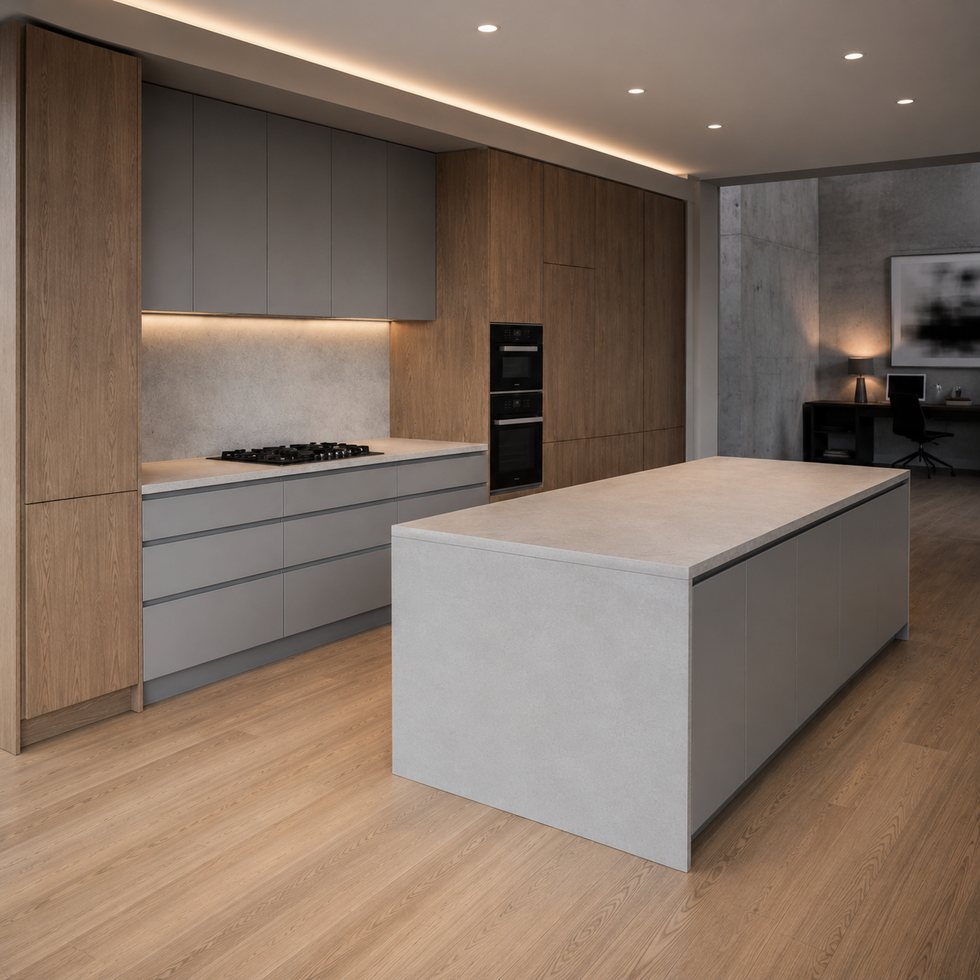
For a U.S.-bound cabinet order, prepare wood-origin information by component before asking the importer to complete a Lacey Act declaration. A cabinet finish name, the factory address and the number of shipping cartons do not identify the trees used in the product. Connect the material schedule to supplier evidence, then let the importer or its authorized agent determine the filing requirements.
This is a document-preparation guide, not a customs determination or legal advice for a particular shipment. Official sources were checked on 7 September 2026. Confirm current requirements with your importer, customs professional or APHIS before relying on a filing decision.
Start with applicability, not a prefilled form
APHIS describes declaration requirements by reference to plant content, listed tariff codes, formal entry and applicable entry type codes, with exceptions. Do not decide from the word “cabinet” alone. Give the reviewer the actual construction, shipment description and proposed classification. The APHIS declaration requirements are the starting point, not a substitute for reviewing your goods.
The filing decision should sit beside the order record, with the review date and the person responsible. If the shipment changes from complete units to loose components, or the material changes, ask whether the earlier decision remains applicable. Do not silently reuse a conclusion made for a different product.
APHIS states that paper PPQ 505 and 505B submissions stopped being accepted on 1 January 2026; its current guidance directs filers to ACE or LAWGS. Preparing a spreadsheet for your broker is not itself a declaration. See the official filing guidance.
Separate the cabinet into traceable material lines
A useful working sheet starts from the approved cabinet schedule. Split a unit only as far as needed to distinguish its plant materials and evidence sources. Keep the relationship back to the cabinet ID, rather than collecting a disconnected folder of timber descriptions.
Component record
Question to resolve
Evidence connection to request
Carcass or shelf
What is the panel construction, including any different layers?
Panel supplier record tied to the specified material and production lot
Decorative face
Is the wood appearance a printed surface, real veneer or another construction?
Finish specification linked to the underlying material description
Door frame or trim
Does this use the same wood source as the panel, or a separate one?
Its own supplier statement where the source differs
Drawer and back components
Have less-visible plant materials been left out of the review?
Component list cross-checked against the order rather than the showroom sample
This is a suggested internal review sheet, not an official form or an additional universal certification requirement. APHIS's declaration FAQ explains that the amendments do not add paperwork requirements beyond the declaration, while emphasizing supply-chain knowledge and due care.
Keep the supplier, manufacturing location and harvest country distinct
Consider a hypothetical door described as “walnut finish, manufactured in China.” That sentence leaves two different questions open: whether the visible finish contains walnut wood at all, and where any plant material was harvested. The example is not a description of a VSME product or its supply chain.
Ask for clarification against the precise material line. Keep the supplier's answer and its supporting reference together. Do not replace an unanswered harvest question with the cabinet factory's country merely to fill a blank.
APHIS's special-use guidance states that there is no special-use designation for the harvest-country field. Where the actual country is uncertain, its guidance requires the possible harvest countries. Let the responsible filer review the evidence and required treatment; do not select a country from a generic website description.
Do not turn “composite” into a shortcut for missing information
For declaration purposes, APHIS places conditions on using SPECIAL COMPOSITE when due care cannot establish the plant identity. Its requirements distinguish reconstituted materials from thin layers of solid wood. A plywood specification should therefore not be treated as interchangeable with an MDF specification for this review.
Keep any proposed designation at component level. APHIS also explains that a product combining eligible composite materials with other plant components still needs the scientific identities of those other components. A designation for one part does not answer every material question in the cabinet.
In the working sheet, use a status such as “supplier clarification pending,” with a named owner and the unanswered question. That is an internal hold point, not text to copy into a customs declaration. A blank field should trigger investigation, not an invented species name.
Reconcile the material sheet with the shipment
APHIS identifies information such as plant scientific names, harvest country, quantity in valid metric units, shipment details and manufacturer identification among the required data. Have the filer confirm the specific fields and measurement basis. A packing list saying “12 cartons” does not by itself supply a plant-material quantity.
Before handing over the file, work through three comparisons:
Order to materials: Does every relevant component on the released cabinet schedule point to the material information actually obtained?
Materials to evidence: Can the reviewer locate the supplier response behind each entry, and see unresolved or conflicting answers?
Order to shipment: Does the final packing list contain the same goods, with substitutions, remakes or split deliveries identified?
If a revised order introduces a different panel supplier, keep the earlier record and issue a clearly identified update. Ask the filer which declaration data need review. Do not assume that an unchanged finish colour means an unchanged material source.
Keep this check separate from the rest of the import review
This worksheet addresses wood-origin data preparation. It does not establish a tariff rate, approve a cabinet for entry, prove emissions compliance or certify VSME's products. Use the broader U.S. cabinet import checklist to coordinate responsibilities, and the separate TSCA Title VI briefing for the composite-wood emissions topic.
For a VSME enquiry, send the destination, cabinet schedule and your importer's material-information questions through the contact page. Ask what evidence is available for the proposed specification; this guide does not promise a particular species, harvest origin, certification or customs outcome.
We use cookies to offer you a better browsing experience, analyze site traffic and personalize content. By using this site, you agree to our use of cookies. Privacy Policy