For cabinetry intended for the EU market, check whether the evidence supplied actually addresses the formaldehyde restriction applicable to the finished product. A material grade, a report marked “pass,” or an attractive certificate cover is not enough information to make that comparison. Identify the article, applicable rule, test basis and connection to the proposed order before accepting a compliance statement.
This guide supports procurement discussions, not a legal determination or certification of a particular cabinet. Sources were reviewed on 7 September 2026. The importer or other responsible EU operator should confirm applicability and evidence requirements with a competent compliance professional and testing laboratory.
What changed for EU-market furniture?
Commission Regulation (EU) 2023/1464 introduced REACH Annex XVII Entry 77. For furniture and wood-based articles, it prohibits placing articles on the market after 6 August 2026 if formaldehyde released under the specified Appendix 14 test conditions exceeds 0.062 mg/m³. Conditional exclusions apply. Its rationale addresses the whole complex product, not merely an isolated material label.
Germany's Federal Environment Agency briefing corroborates the EU furniture threshold and application date. Its wider discussion covers several indoor-air and national regulatory values. Do not select a different number from that page without checking what it measures and which rule it describes.
For a quotation review, write down the destination and intended use of the actual article. Do not assume that a hotel or commercial-project order is exempt simply because the purchaser is a business: Entry 77's professional-use exclusion has a condition concerning exposure of the general public.
Ask for the connection between the report and the cabinet
Put the proposed specification beside the evidence file. The task is to identify what has been demonstrated, what remains unclear and who can resolve the gap. The following is an editorial review aid, not a mandatory government form.
Review point
Useful question for the supplier or reviewer
Product identity
Which article, component or material does this document actually describe?
Construction
How does the tested build relate to the proposed substrate, surfaces, bonding and assembly?
Evidence scope
Does the conclusion cover the cabinet configuration being ordered, or a narrower sample?
Test basis
Where are the method, conditions and basis of comparison stated?
Result
Which result, unit and criterion support the stated conclusion?
Order connection
What identifies the specification revision to which the supplier's response applies?
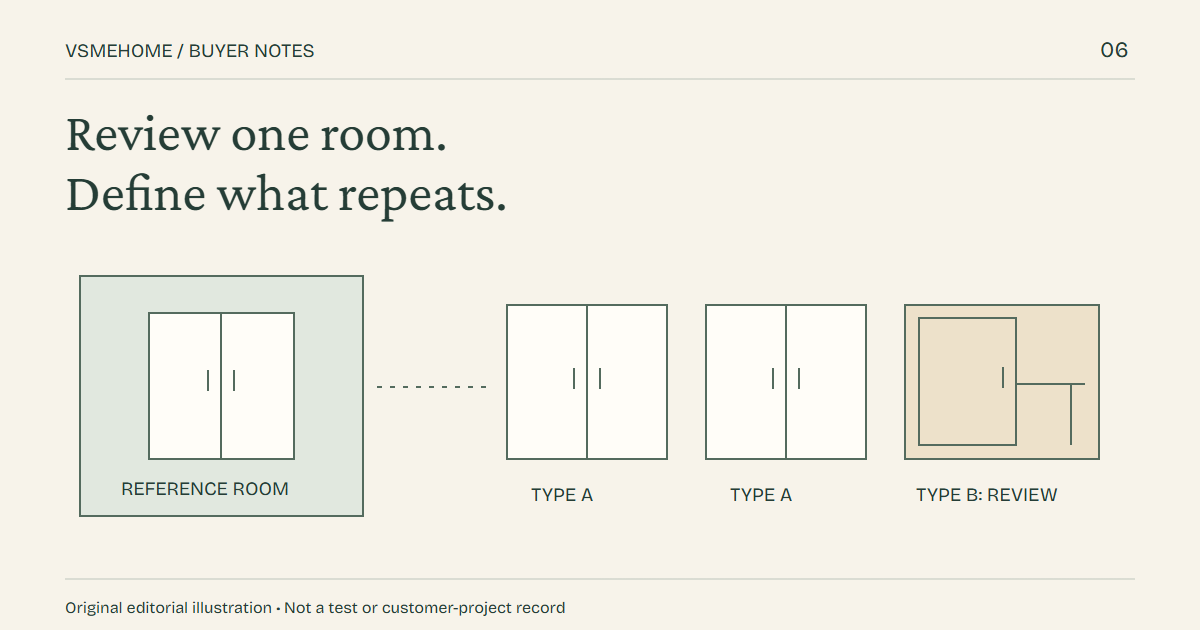
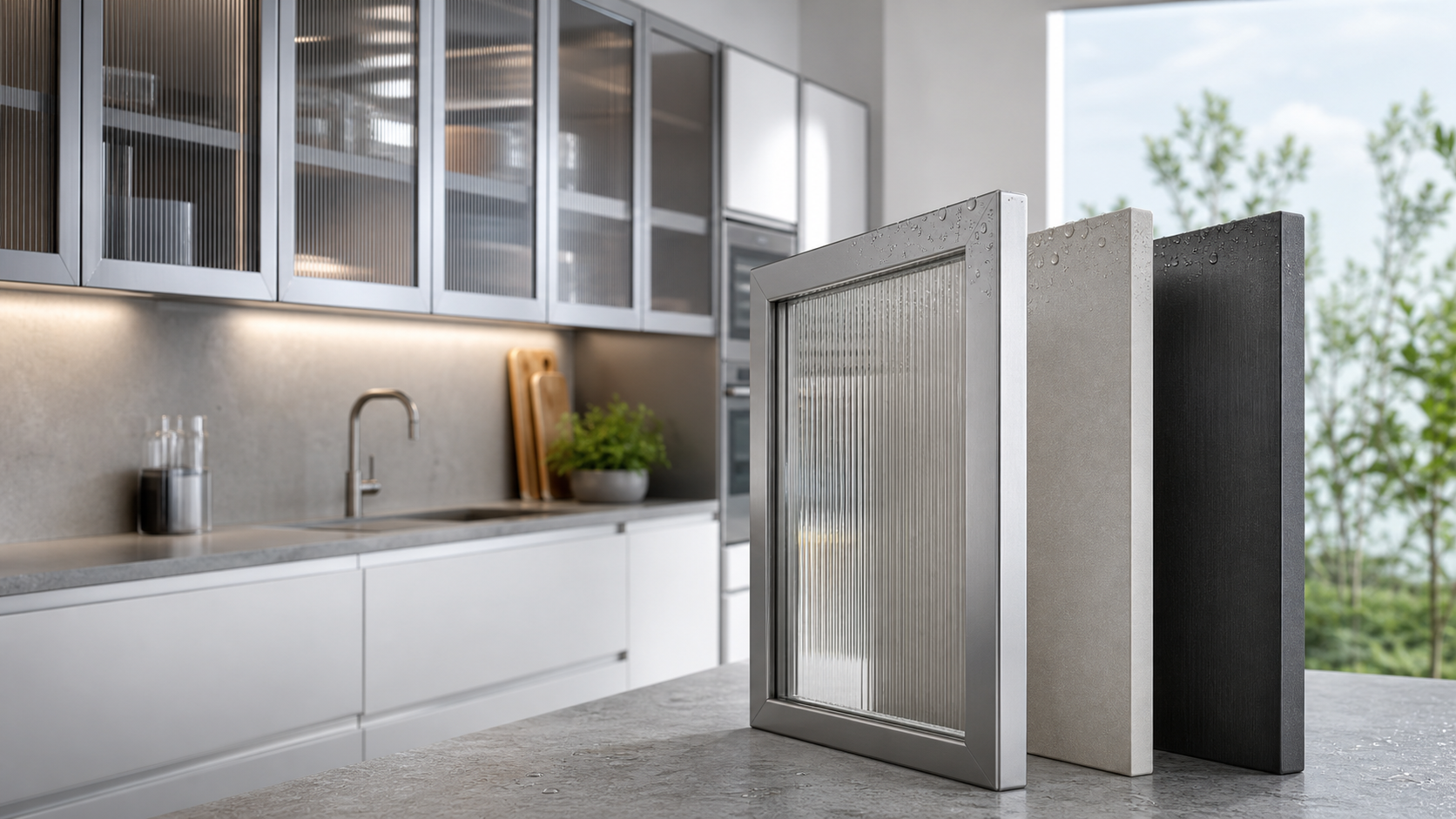
If the evidence concerns a raw panel while the proposed article combines several materials, request an explanation of how it supports the finished-product assessment. Neither automatically rejecting every panel report nor automatically accepting it answers that question. Have the competent reviewer assess its relevance and any additional evidence needed.
Keep the number attached to its test basis
Appendix 14 specifies chamber conditions and steady-state assessment. Where non-reference testing is used under the conditions allowed by the regulation, it requires a scientifically valid correlation. Ask the laboratory to explain the applicable comparison; do not create your own conversion between unrelated tests.
A short review email can identify the report number, the cabinet specification and the unresolved method question. Request a response that names the documents reviewed. “Our board is low emission” is a different answer from a reasoned assessment connecting specific evidence to the ordered construction.
Keep original reports intact. Put explanatory notes in a separate review record so that a later reader can distinguish the laboratory's findings, the supplier's statements and your own questions. Do not edit a certificate image to make its product name or conclusion appear to match the order.
Resolve changes before treating the review as closed
Imagine a hypothetical purchase in which the finish colour remains the same but the proposed door core changes. A colour approval does not tell the compliance reviewer whether the earlier evidence still covers the construction. Flag the changed component and send the revised specification back for assessment. This example is not a claim about VSME's materials or test results.
Use a short issue list: the missing document or explanation, the supplier contact responsible, the reviewer and the decision required. Close an item only when the answer can be found in the file. If a question remains unanswered, state that clearly in the purchasing decision; do not convert it into an assumed pass.
Three questions to settle before order release
Has the responsible reviewer identified the applicable product scope and any claimed exclusion?
Can they explain how the available evidence relates to this cabinet specification and the relevant test basis?
Is there a clear route for reviewing a material or construction substitution before it is accepted?
When contacting VSME about an EU project, include the destination, intended use, cabinet specification and your reviewer's evidence questions. Ask what information can be supplied for that proposal. This article does not assert that any particular VSME product has passed a test, qualifies for an exclusion or meets every destination-market requirement.
We use cookies to offer you a better browsing experience, analyze site traffic and personalize content. By using this site, you agree to our use of cookies. Privacy Policy